The Sacred Origins of Myōken
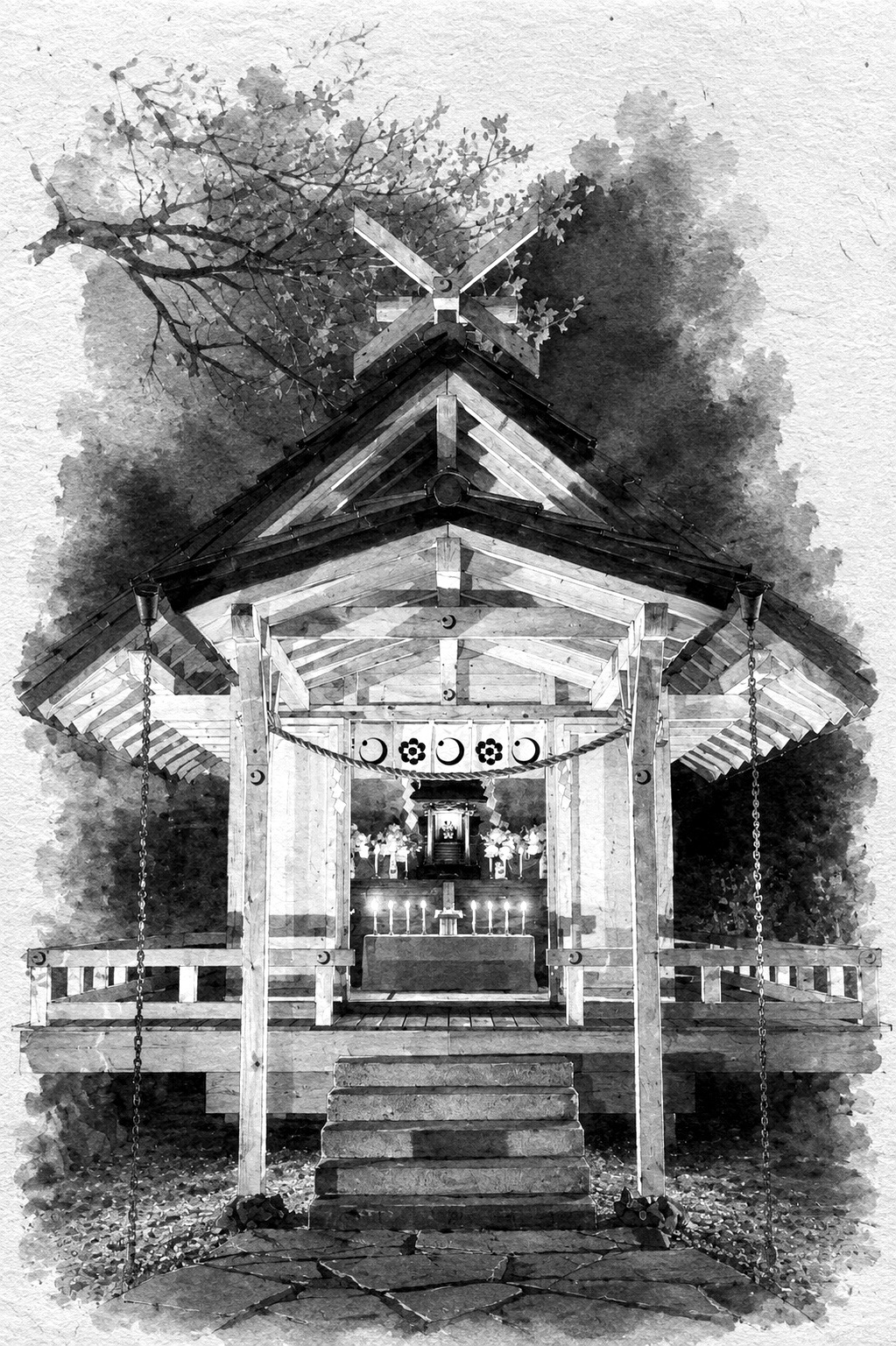
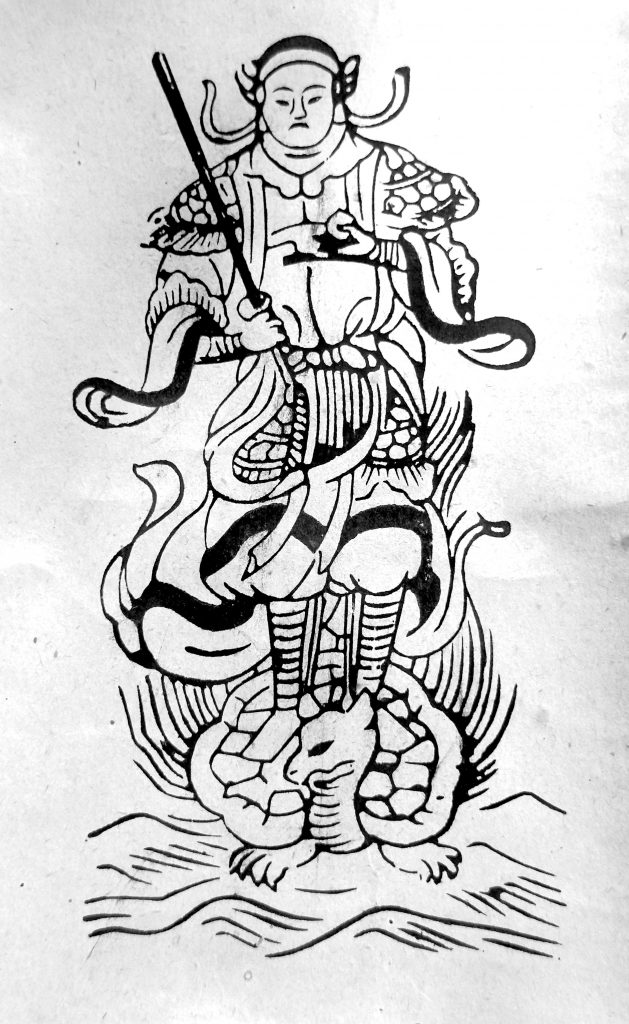
Hokushin Myōken Sonjō-ō (the Venerable Star King Myōken of the North Star / 北辰妙見尊星王), in short often referred to as Myōken (妙見), as venerated at the Hokushin-Jinja (Shrine of the North Star / 北辰神社), is a Japanese kami (deity / 神) whose origins are deeply rooted within the Shinbutsu-Shūgō (神仏習合), the sacred synthesis of Shintō (Japan’s native nature religion / 神道) and Bukkyō (Buddhism / 仏教). The Shinbutsu-Shūgō (syncretism of Shintōism and Buddhism / 神仏習合) emerged following the introduction of Buddhism to Japan from the Asian continent during the Asuka period (538–710).
Both beliefs and their respective deities were merged and harmonized with each other during this time, as it was believed that the newly arrived Bukkyō (Buddhist / 仏教) teachings and the during this time already ancient Japanese Shintō (Japan’s native nature religion / 神道) believes were both complementary manifestations of a single, universal truth. Through this process of reconciliation and mutual illumination, their doctrines and divine figures became closely interwoven. As a consequence, tera (Buddhist temples / 寺) were merged to local jinja (Shintō shrines / 神社) and vice versa, therefore becoming sacred places devoted to both Shintō and Buddhist deities and figures.
Myōken and the Warrior Class
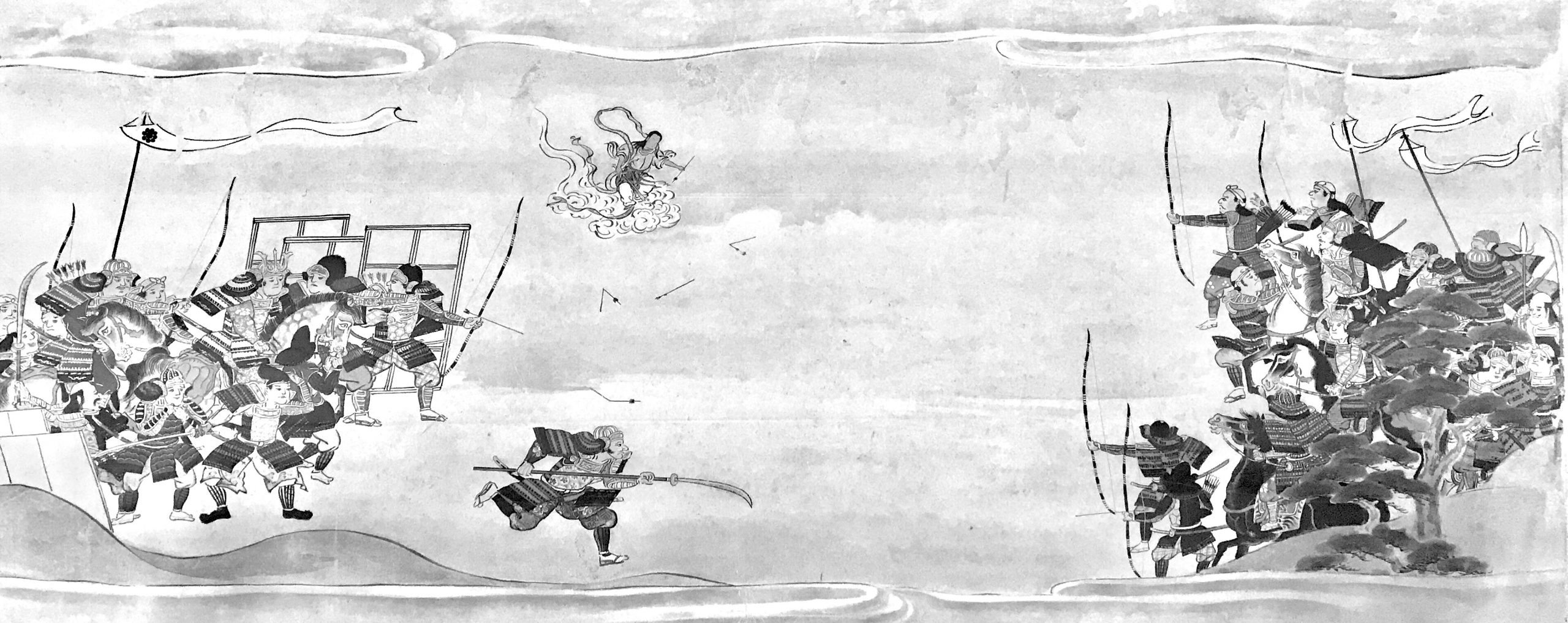
From the Heian period (794–1185) onwards, Myōken came to be revered as the protective kami of the Taira clan, one of the four great ancestral buke (warrior families / 武家) which descended directly from the imperial line of Japan. Alongside the Taira, the Minamoto, Fujiwara, and Tachibana clans formed the four original great warrior houses, each emerging from branches of the Japanese imperial family itself.
These lineages were established through the sons and descendants of emperors who had become too distant from the direct line of succession. To distinguish them from the imperial household while preserving their noble status, new family names such as Taira, Minamoto, Fujiwara, and Tachibana were bestowed upon them, and they were expected to serve the imperial line as warriors. Through time, these noble warrior houses extended far beyond the imperial court and gradually assumed military and administrative responsibilities throughout the provinces, serving to strengthen and extend the imperial authority across the realm.
Over the centuries of Japan’s feudal periods, from these noble lineages, the bushi (warrior / 武士) emerged as a distinct warrior class whose culture, martial traditions, and influence would shape the course of Japanese history for centuries to come.
In the modern western world, these warriors are most commonly known by the term samurai (a warrior who serves / 侍). Within Japan itself, however, the term bushi (warrior / 武士) was often more widely used, particularly in historical contexts, as it emphasized their identity as members of the warrior class rather than merely retainers in service to a lord. The word “samurai” derives from the verb “saburau”, meaning “to serve” or “to attend,” and originally referred to those bushi (warrior / 武士) who served a lord.
Among these ancient warrior lineages, devotion to Myōken became especially strong within the Kanmu-Heishi (Taira line descending from the 50th Emperor of Japan, Kanmu 737-806 / 桓武平氏) and among the many buke (warrior families / 武家) descending from them. For many of these warrior houses, Myōken came to be embraced as their official shugoshin or mamori-gami (protective deity / 守護神 or 守り神). Their faith in Myōken stood as far more than simple devotion: it became the spiritual foundation of their martial heritage and continued prosperity.
Among those buke (warrior families / 武家), the veneration of Myōken became especially widespread in eastern Japan, notably under the Chiba-shi (Chiba clan / 千葉氏), which was a branch line of the Kanmu-Heishi (Taira line descending from the 50th Emperor of Japan, Kanmu 737-806 / 桓武平氏).
Particularly under the shugo (military governor / 守護) of Shimōsa no Kuni (Shimōsa Province; nowadays Chiba Prefecture / 下総国) and head of the Chiba clan, Chiba no Suke Taira no Tsunetane (千葉之介平常胤 / 1118–1201), who was a key figure in establishing the bakufu (military government / 幕府) in the city of Kamakura near nowadays Tōkyō, during the Genpei War (源平合戦 / 1180–1185) under the leadership of Minamoto no Yoritomo (源 頼朝 / 1147–1199), the first shōgun (military ruler of Japan / 将軍). During the Genpei War the Chiba clan, as well as several other Taira branch lines, opposed the greater core of the Taira clan and supported the Minamoto clan under Minamoto no Yoritomo, which emerged victorious. Through Chiba Tsunetane’s youngest son, Chiba Morotsune (千葉師常 / 1139–1205) — who adopted the family name Soma (相馬), became Soma Morotsune (相馬師常 / 1139–1205) and subsequently founded the Soma-shi (Soma clan / 相馬氏) — Myōken worship spread to Tōhoku-chihō (Northeastern Japan / 東北地方) during the Kamakura period (1185–1333).
For nearly a thousand years the Chiba clan, together with several other buke (warrior families / 武家) descending from the Kanmu-Heishi (Taira line descending from the 50th Emperor of Japan, Kanmu 737-806 / 桓武平氏), preserved an unwavering devotion to Myōken. They built shrines and temples beneath his protection, and cultivated traditions that carried his influence across generations. From their faith not only places of worship arose, but also schools of warfare whose spirit and philosophy remained deeply connected to the Hokushin (North Star / 北辰) and its deification Myōken.
Myōken within the Sacred Union of Shinbutsu-Shūgō
As the centuries passed, the devotion to Myōken gradually expanded beyond the bushi-kaikyū (warrior class / 武士階級), to which his worship had become especially prominent. Within the sacred Shinbutsu-Shūgō (syncretism of Shintōism and Buddhism / 神仏習合) traditions of feudal Japan, Myōken was venerated alongside countless kami (deities / 神), butsu (buddhas / 仏), bosatsu (bodhisattvas / 菩薩), and other celestial beings.
Instead of existing in isolation from one another, divine figures were understood as interconnected expressions of a greater cosmic order, each possessing its own role, virtues, and protective presence in human life.
Within this religious landscape, the worship of the Hokushin (North Star / 北辰) and the seven stars of the Hokuto Shichisei (Big Dipper / 北斗七星) flourished alongside local Shintō (Japan’s native nature religion / 神道) traditions and broader Bukkyō (Buddhist / 仏教) practices. Shrines and temples throughout Japan became places where multiple forms of devotion could naturally coexist, allowing worshippers to seek guidance and blessings from many sacred beings according to circumstance, need, and tradition. In this way, Myōken found his place within a vast and living spiritual world that united heaven, nature, and humanity.
The End of a Sacred Union: Myōken Worship in the Meiji Era
Yet, like all things beneath the turning heavens, religious traditions too would eventually encounter change.
With the Meiji Ishin (Meiji Restoration: a revolution that restored imperial rule to Japan / 明治維新) in 1868, Japan entered a period of profound transformation. The newly formed imperial government sought not only to modernize and unify the nation, but also to move beyond the centuries-old social order long shaped by the rule and influence of the bushi (warrior / 武士) class. In reshaping the foundations of the state, political and spiritual reforms unfolded side by side. Among them was the issuance of the Shinbutsu-Hanzenrei (Shintō and Buddhism Separation Order of 1868 / 神仏判然令), which fundamentally reshaped the religious and cultural landscape of Japan. These reforms likewise served a broader political and cultural purpose: to cultivate a unified national identity and restore the sacred centrality of the Tennō (the Emperor of Japan / 天皇). Throughout centuries of bushi (warrior / 武士) rule (1185-1868), in fact, the position of the emperor had often remained primarily symbolic, as the true political authority was exercised by the bakufu (military government /幕府) and the shōgun (military ruler of Japan /将軍) as the highest leading authority within the Japanese warrior class.
The Shinbutsu-Hanzenrei (Shintō and Buddhism Separation Order of 1868 / 神仏判然令) formally established Shintō (Japan’s native nature religion / 神道) as the official state religion, and sought to separate it from all kind of Bukkyō (Buddhist / 仏教) influences, which were increasingly regarded by the new government as foreign elements standing apart from an idealized vision of a unified national identity. Traditions that had coexisted, intertwined, and mutually enriched one another for over a thousand years were now compelled into separation, bringing an end to the sacred union of the Shinbutsu-Shūgō (syncretism of Shintōism and Buddhism / 神仏習合) that had shaped the religious and cultural landscape of Japan for more than a millennium.
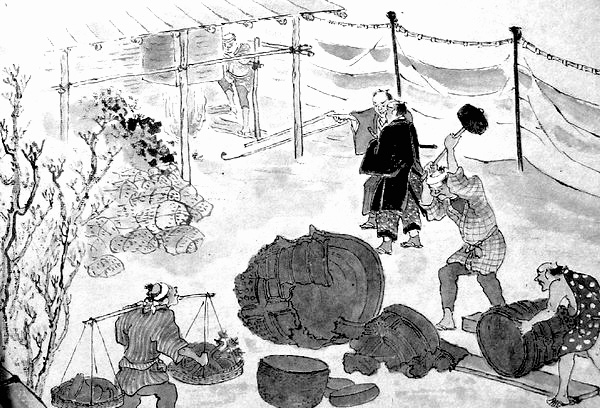
One of the most severe consequences of the Shinbutsu-Hanzenrei (Shintō and Buddhism Separation Order of 1868 / 神仏判然令) was the Haibutsu-Kishaku (Abolish Buddhism and Destroy Buddha / 廃仏毀釈) movement. In the years after the Shinbutsu-Bunri (Separation of Shintō and Buddhism / 神仏分離), the largest persecution and destruction of Buddhist temples, clergy, and religious property in Japanese history took place. The movement caused immense damage to Buddhism throughout Japan, as temples, statues, scriptures, and other Buddhist treasures were confiscated, abandoned, or destroyed on a massive scale across the entire country.
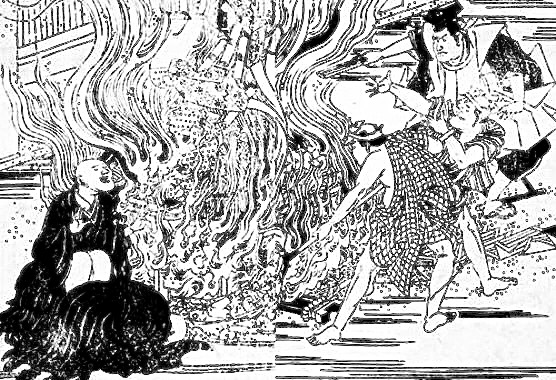
A notable example was the famous Kōfuku-ji (Temple of Flourishing Dharma / 興福寺) in Nara, which suffered greatly during this period. Despite its historical importance, the temple was struck with full force by the movement. Its lands were seized, priests were forced to become Shintō clergy, walls were torn down, trees were planted, and portions of the former temple grounds were incorporated into what became one of the city's public parks. Similar anti-Buddhist actions affected all of the major temples of Nara and countless other religious institutions throughout the country.
The violence and destruction of this movement left a lasting mark on every region of Japan. Between 1872 and 1874 alone, approximately 18,000 temples were eradicated, while many thousands more may have disappeared between 1868 and 1872. During this period, Japanese Buddhism came perilously close to total eradication.
Myōken Worship after the Great Separation of the Shinbutsu-Hanzenrei
The Haibutsu-Kishaku (Abolish Buddhism and Destroy Buddha / 廃仏毀釈) movement also profoundly affected Myōken and many other deities whose worship had developed within the traditions of Bukkyō (Buddhism / 仏教).
Throughout Japan, numerous kami (deities / 神) and divine figures whose origins had long been intertwined with Bukkyō (Buddhism / 仏教) had become deeply rooted within Japanese culture and identity itself. Through generations of devotion, local traditions, and shared spiritual practice, distinctions between native and imported beliefs had gradually faded. Kami (deities / 神) such as Hachiman (Shintō-Buddhist deity of war, archery and divine protection; protective deity of the Minamoto clan and its descendants / 八幡), Fudō-Myō-ō (Buddhist deity regarded as the ”Immovable Wisdom King” / 不動明王) and Myōken (Shinto-Buddhist deity; protector of warriors, horses, farmers, travellers; protective deity of the Taira clan and its descendants / 妙見) which were once introduced by or closely connected to Bukkyō (Buddhist / 仏教) traditions had become inseparable from the spiritual landscape of Japan, thus they were no longer perceived as foreign, but as enduring sacred presences woven into the life of the nation.
As jinja (shrines / 神社) and tera (Buddhist temples / 寺) were forcibly reorganized under the religious reforms of the Meiji Government, many jinja dedicated to Myōken underwent significant transformation. In order to survive the persecution and conform to the new policies, numerous places of Myōken worship were reidentified with the Shintō (Japan’s native nature religion / 神道) deity Ame no Minakanushi no Mikoto (the Heavenly Deity at the Center of the Cosmos / 天御中主尊), resulting in the gradual disappearance of Myōken's name from many shrines throughout Japan.
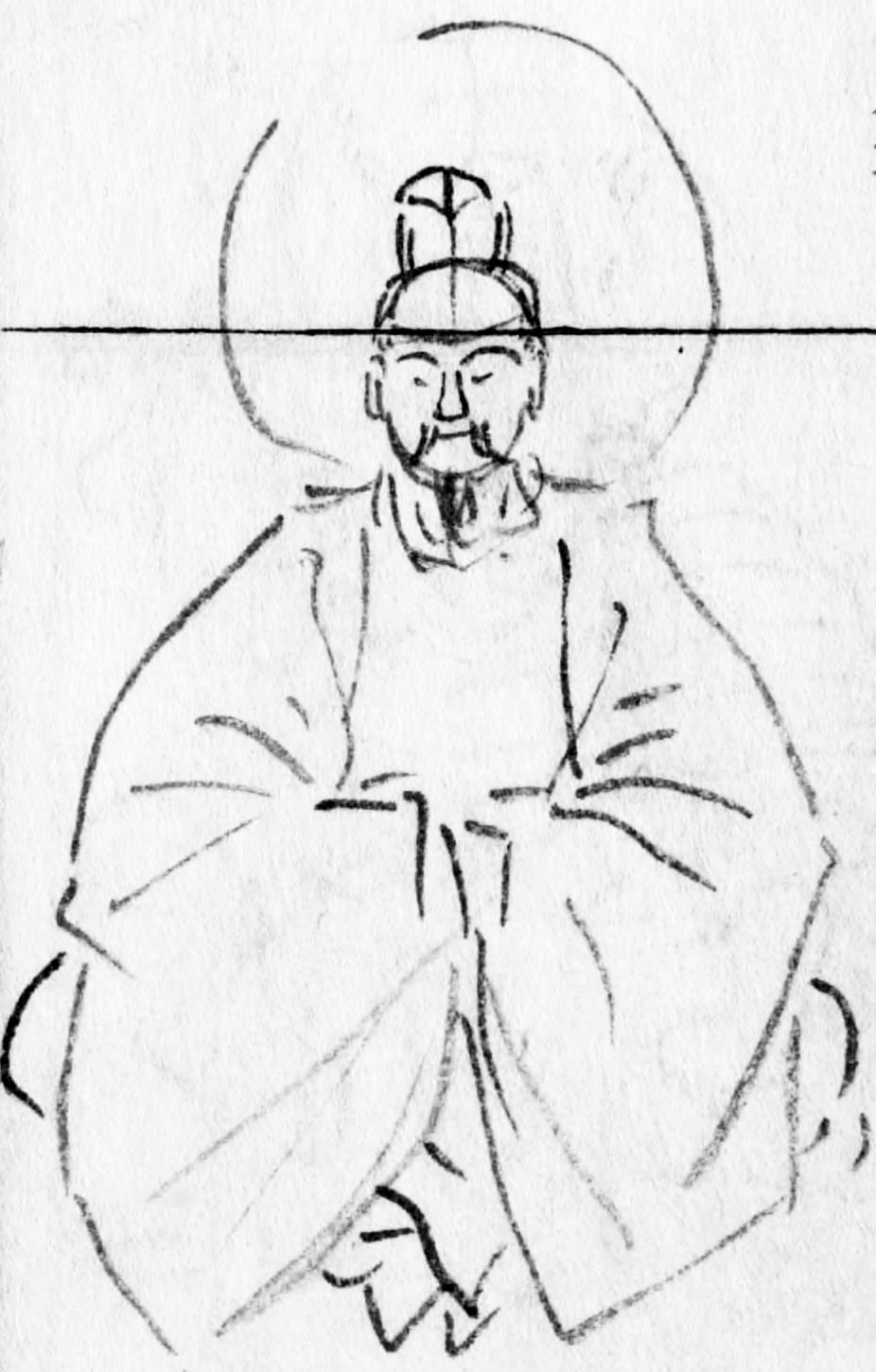
According to the Kojiki ("Records of Ancient Matters"; written in 711–712 /古事記) and the Nihon Shoki (“The Chronicles of Japan”; written in 720 /日本書紀), Ame no Minakanushi was the first — or among the first — deities to manifest at the moment of the creation of heaven and earth. Yet despite this exalted cosmological position, there exists no undisputed historical evidence that Ame no Minakanushi was widely worshipped at ancient shrines. The Engishiki ("Procedures of the Engi Era"; written in 927 /延喜式), one of the most important records concerning shrine institutions and ritual practice in early Japan, contains no mention of shrines dedicated to this deity. This absence, combined with the scarcity of references outside documents closely associated with the imperial court — such as the Kojiki and Nihon Shoki, which themselves mention Ame no Minakanushi only briefly —led some scholars to regard Ame no Minakanushi as an abstract deity: a divine figure existing primarily within cosmological texts rather than through a distinct historical tradition of worship or an established cult at an official jinja (shrine / 神社).
During the Meiji period (1868–1912), however, Ame no Minakanushi underwent a significant reinterpretation as part of the broader religious reforms of the new Imperial Government. In an effort to suppress the longstanding worship of Myōken and separate Shintō from Buddhist influences, Ame no Minakanushi came to be associated with the celestial symbolism of the Hokushin (North Star / 北辰) and the Hokuto Shichisei (Big Dipper / 北斗七星), gradually assuming many of the religious roles and cosmological functions that had for centuries been connected to Myōken.
Through this process, many of the ancient traditions and symbolism of Myōken worship were not actually abolished, but instead absorbed and redefined within a newly established Kokka Shintō (State Shintō / 国家神道) framework. As a consequence, many former Myōken shrines throughout Japan were forcefully transformed under a new religious identity.
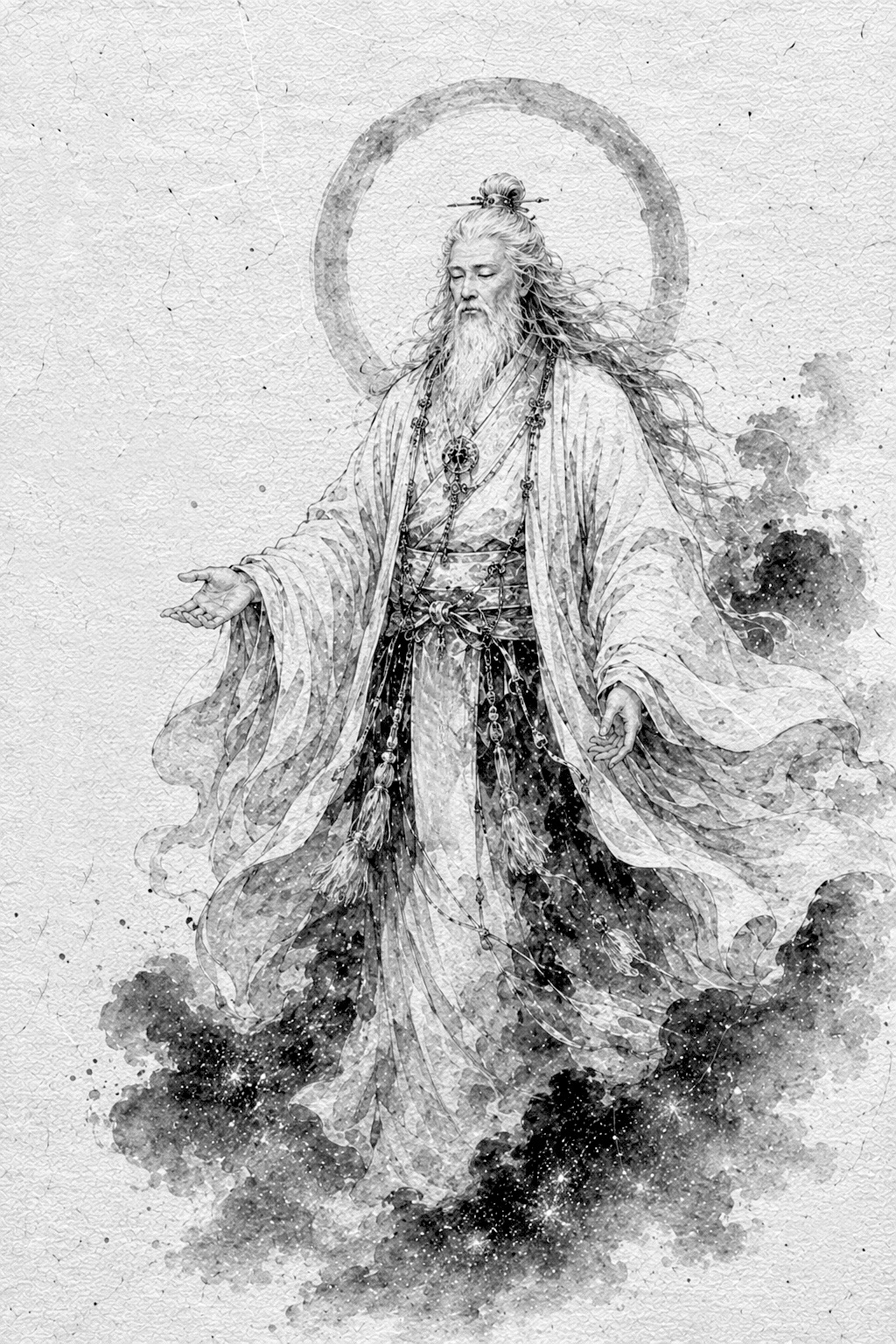
Although names and outward forms have changed, the celestial symbolism and sacred ideology surrounding the northern heavens and Myōken worship continued to exist beneath the surface.
The Enduring Light of the North Star
Despite these profound historical changes, the veneration of Myōken never disappeared, continuing quietly and powerfully across the now separated religious worlds of Shintō (Japan’s native nature religion / 神道) and Bukkyō (Buddhism / 仏教). Not even such ground-shaking political transformations could erase over a millennium of faith and tradition. Regardless of the Shinbutsu-Hanzenrei (Shintō and Buddhism Separation Order of 1868 / 神仏判然令) issued by the Imperial Japanese Government, the worship of Hokushin Myōken Sonjō-ō (the Venerable Star King Myōken of the North Star / 北辰妙見尊星王) endured in many forms. It continued through temples and shrines, regional customs, martial traditions and family practices, and among those who privately continued to preserve the ancient Shinbutsu-Shūgō (syncretism of Shintōism and Buddhism / 神仏習合) reverence for the North Star.
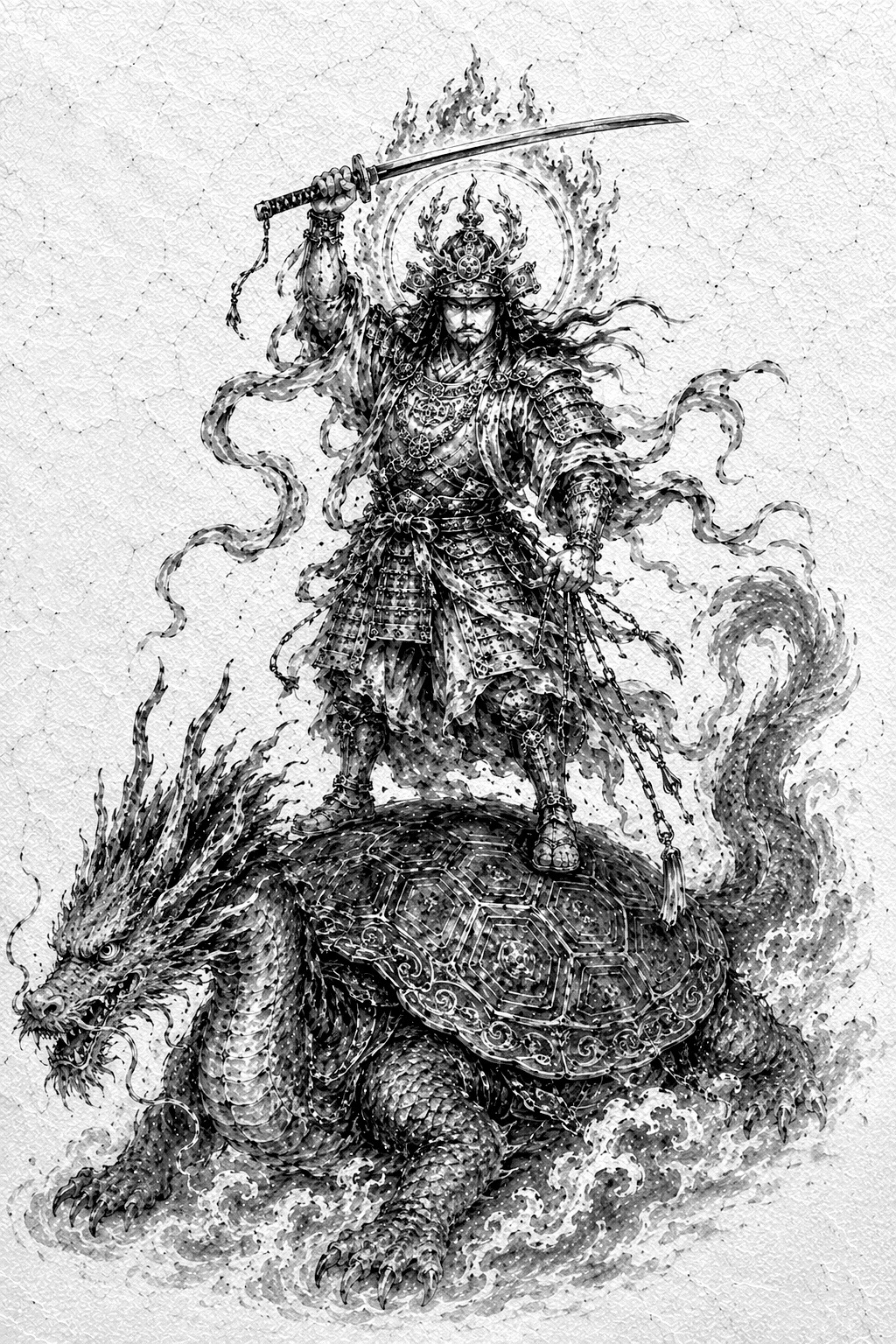
Among those who carried this ancient devotion to Myōken forward were also martial traditions whose teachings and spirit had, for centuries, remained deeply intertwined with the worship of the North Star and Hokushin Myōken Sonjō-ō. Foremost among them was the Hokushin Ittō-ryū Hyōhō (North Star One-Sword School of Strategy / 北辰一刀流兵法), — in short often referred to as Hokushin Ittō-ryū (北辰一刀流) — one of Japan’s most renowned koryū (old samurai schools of warfare founded before 1868 / 古流).
Although formally founded in 1820 by the Kensei (Sword Saint / 剣聖) Chiba Shūsaku Taira no Narimasa (千葉周作平成政 / 1792–1856), the spiritual foundations of the Hokushin Ittō-ryū reached much further into the past. Its roots extended into the ancient martial and spiritual traditions of the Chiba clan, most notably to the Hokushin-ryū (North Star School / 北辰流), which was founded by Chiba no Suke Taira no Tsunetane (千葉之介平常胤 / 1118–1201) as his clan’s military and spiritual education system. For centuries, the Chiba clan maintained a profound devotion to Myōken, whose guidance was believed to accompany and protect generations of warrior families beneath the Hokushin (North Star / 北辰) and the Hokuto Shichisei (Big Dipper / 北斗七星). Through this enduring connection, martial discipline, technique, and spiritual devotion became inseparably intertwined. As a living continuation and embodiment of the ancient teachings of the Hokushin-ryū, the Hokushin Ittō-ryū Hyōhō came to preserve not merely a martial tradition, but also a sacred heritage shaped by Myōken, the school’s shugoshin or mamori-gami (protective deity / 守護神 or 守り神)
This enduring relationship between Myōken and the Hokushin Ittō-ryū continued to be preserved through generations and remained alive within the school’s sōke (headmaster / 宗家) lineage up to the present day. Within this famous samurai school, the ancient traditions surrounding Hokushin Myōken Sonjō-ō and the original spirit of the Shinbutsu-Shūgō continued to be carefully transmitted, preserving not only martial teachings, but also the spiritual foundations from which they emerged.