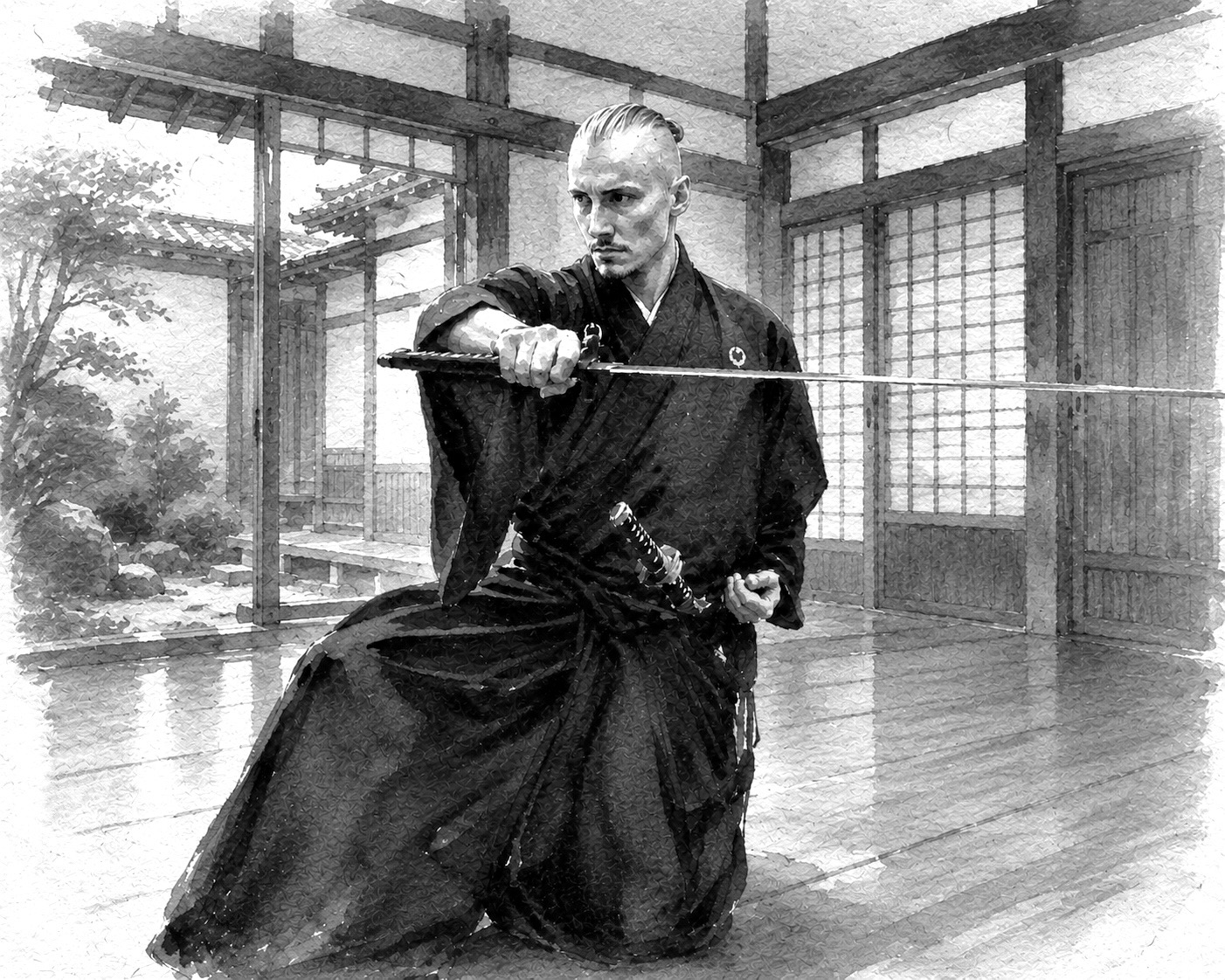
Sword and Kami
The Sacred Significance of the Sword
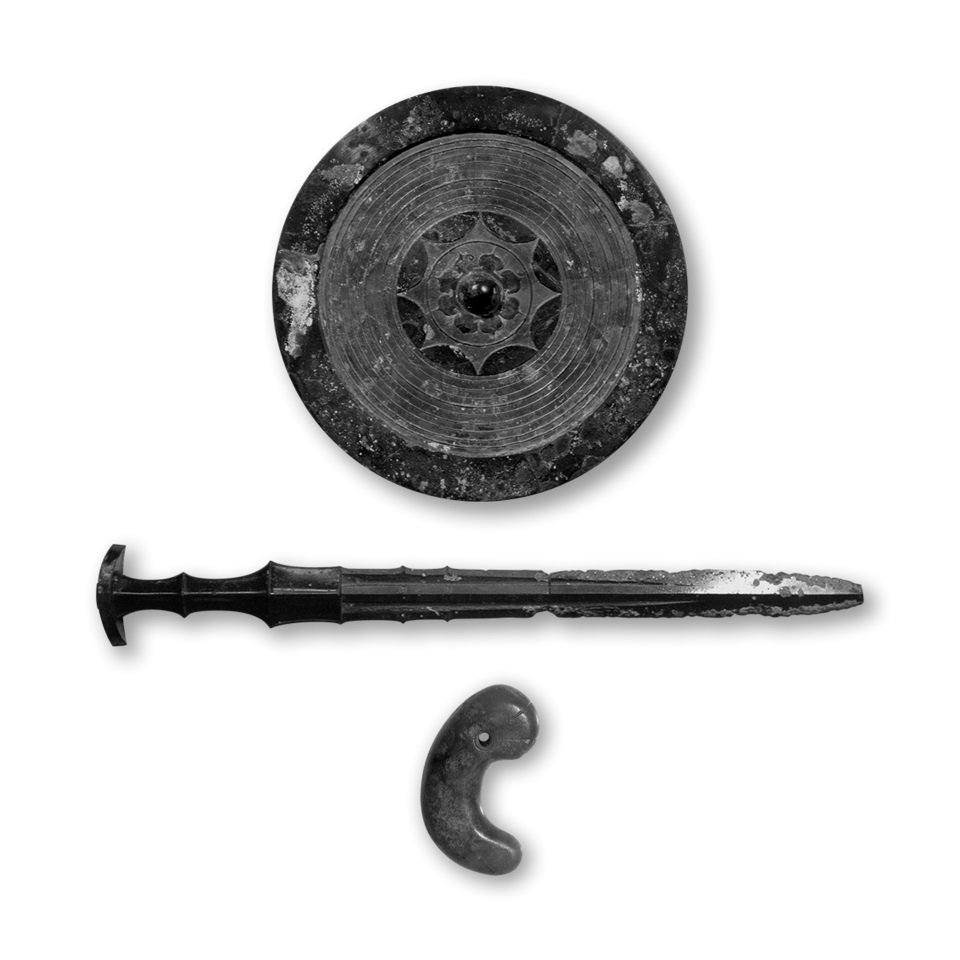
Among all objects associated with Shintō (Japan’s native nature religion / 神道), few possess a sacred significance equal to that of the sword. Throughout Japanese history, the sword was considered not merely as a weapon, but as a symbol of divine authority, purity, protection, and the heavenly order itself. This sacred status is perhaps most famously embodied by the Kusanagi no Tsurugi (Grass-Cutting Sword / 草薙剣), one of the Sanshu no Jingi (Three Imperial Regalia of Japan / 三種の神器), together with the Yata no Kagami (Eight-Spanned Mirror / 八咫鏡) and the Yasakani no Magatama (Curved Jewel of Yasakani / 八尺瓊勾玉) which continue to symbolize the divine legitimacy of the Tennō (Emperor of Japan / 天皇).
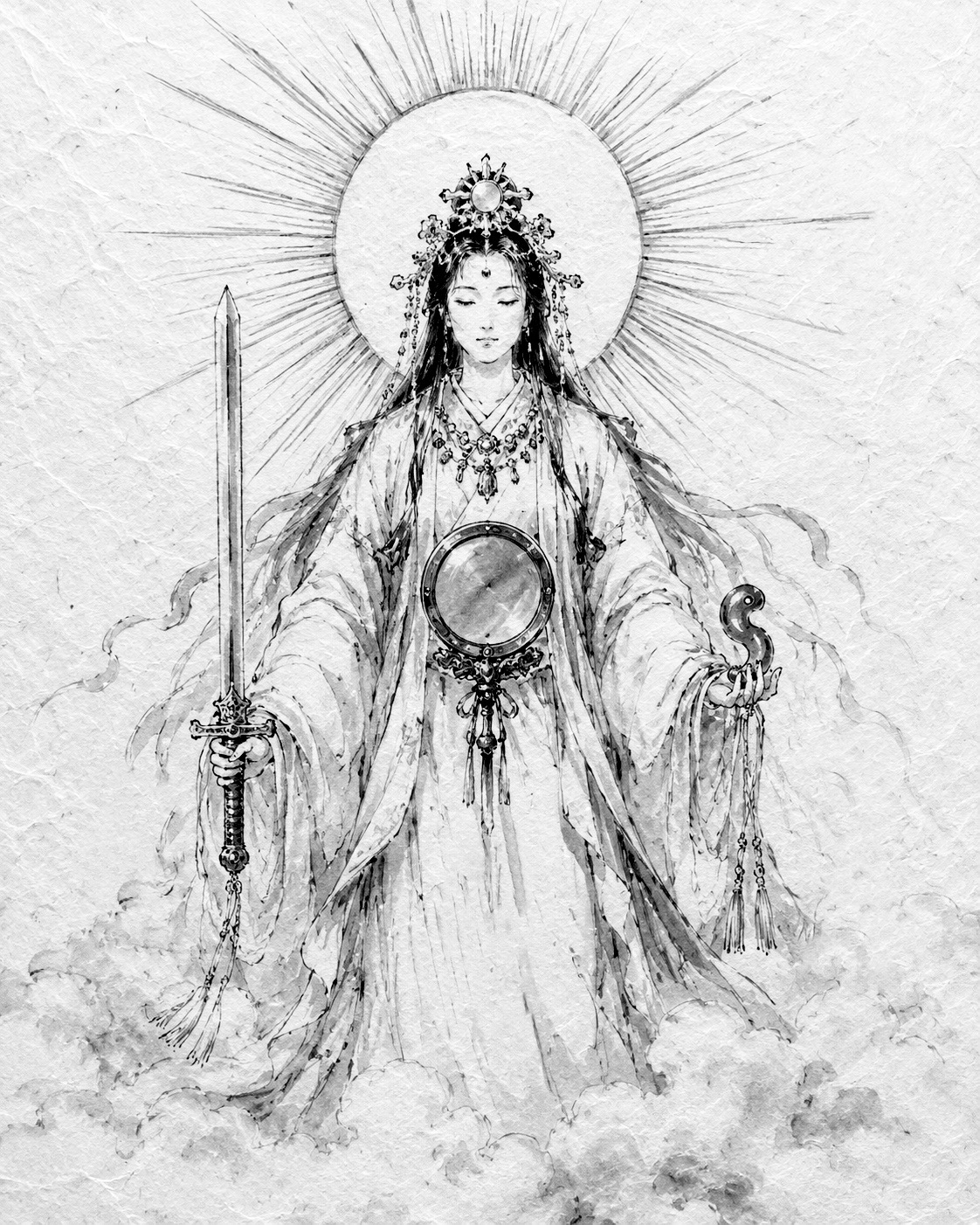
For centuries, swords have been offered to kami (deities / 神), enshrined within jinja (shrines / 神社), and revered as sacred objects through which the divine presence of heaven could be honoured and approached. Particularly among the bushi (warriors / 武士) of Japan, the sword came to occupy a unique position at the intersection of martial discipline and spiritual devotion, serving not only as an instrument of warfare, but also as an expression of faith, reverence, and dedication to the divine.
In the modern western world, these warriors are most commonly known by the term samurai (a warrior who serves / 侍). Yet within Japan itself, the term bushi (warrior / 武士) was historically more widely used, as it emphasized their identity as members of the warrior class rather than merely retainers in service to a lord. The word samurai derives from the verb saburau, meaning “to serve” or “to attend,” and originally referred to those bushi who served a noble household.
The War Gods and the Way of the Sword
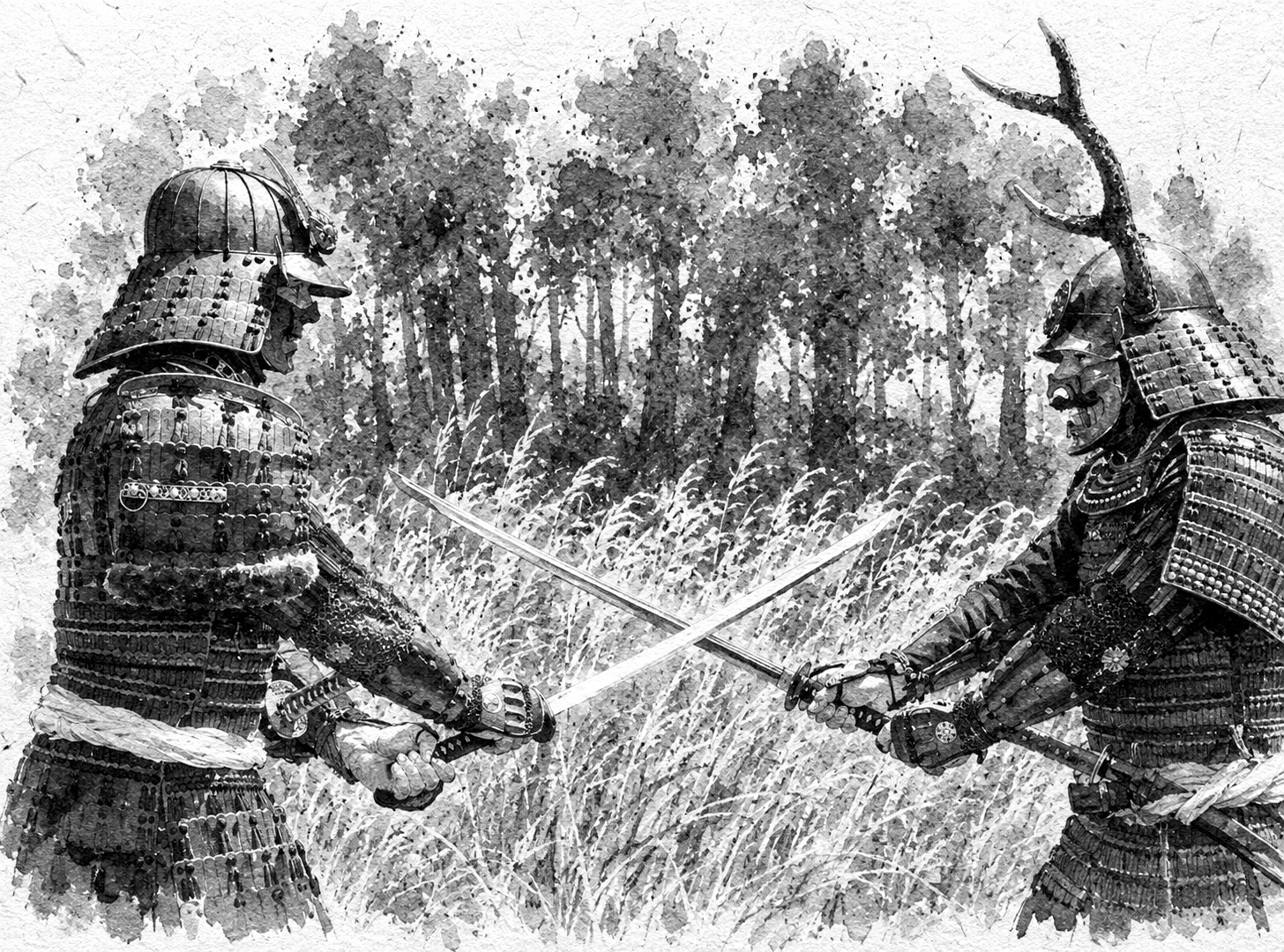
Throughout medieval Japan, warrior deities such as Myōken (妙見), Takemikazuchi no Ō-Kami (建御雷大神), Marishiten (摩利支天), and Hachiman (八幡) were not worshipped through prayer alone, but also through the disciplined study of the arts of warfare, such as kenjutsu (the art of the sword / 剣術), battōjutsu (the art of drawing the sword / 抜刀術), naginatajutsu (the art of the glaive / 長刀術), sōjutsu (the art of the spear / 槍術), jūjutsu (the art of flexible combat and grappling / 柔術), and many others. The shrines and temples of such deities became places where technical mastery and spiritual cultivation existed side by side.
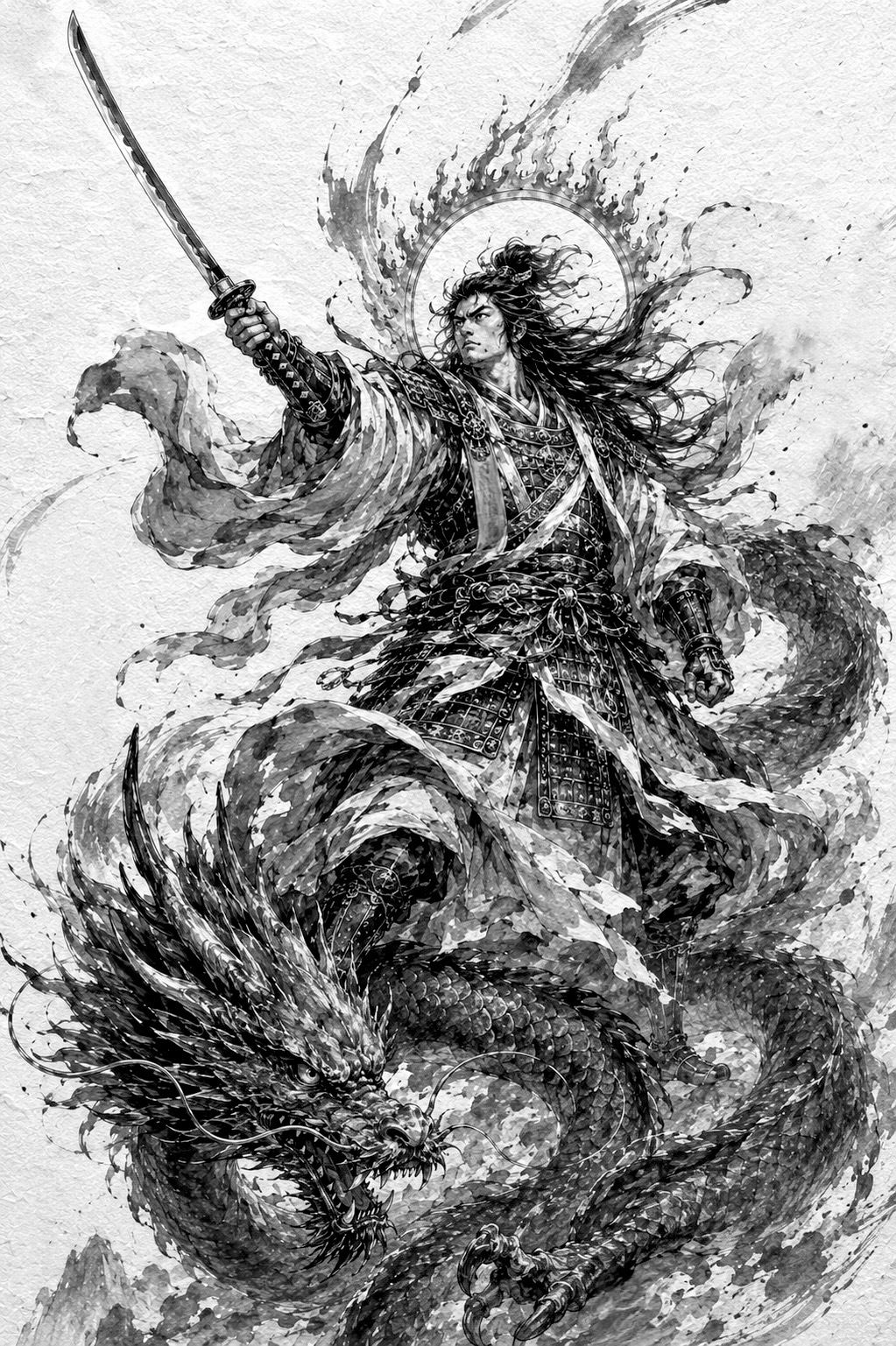
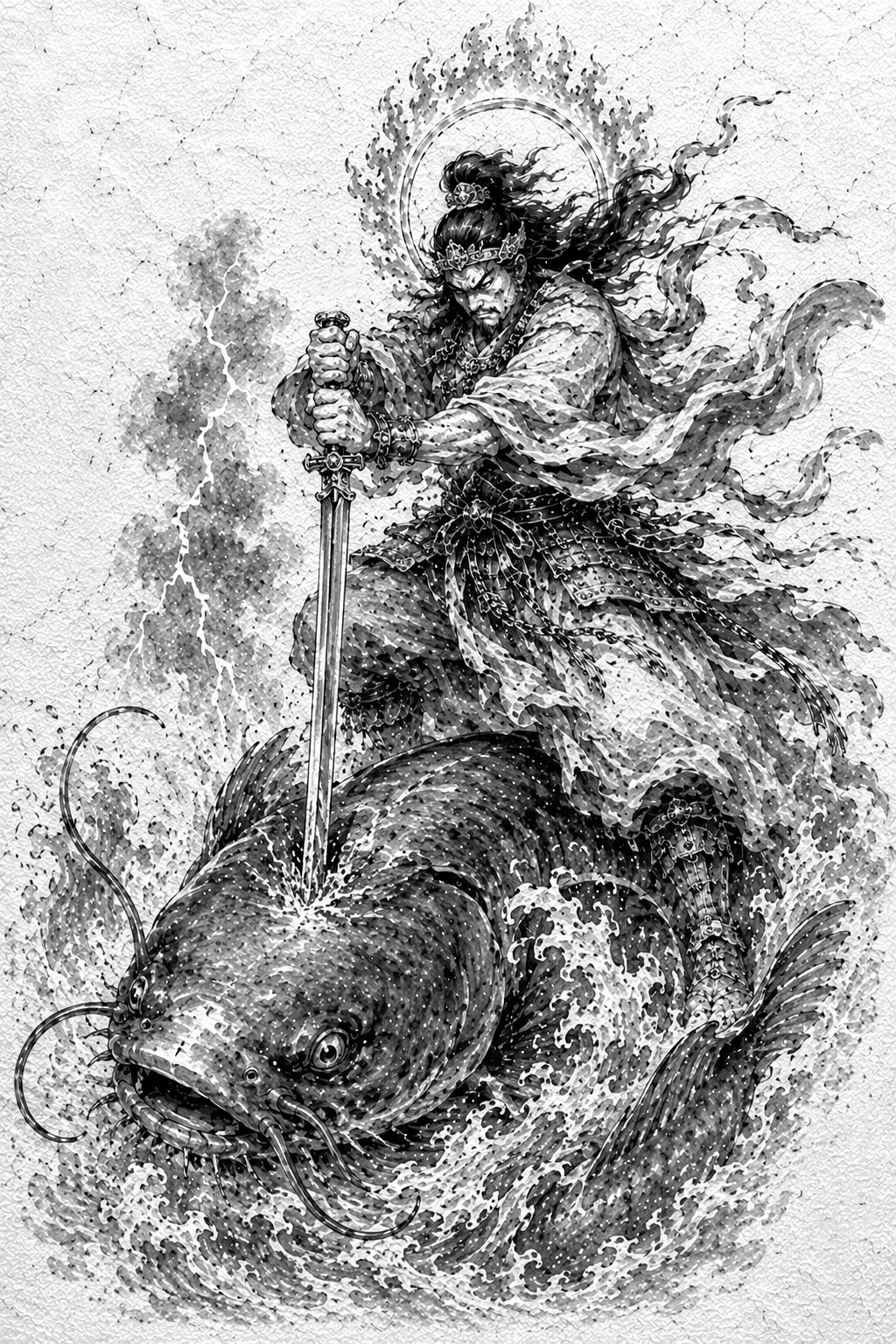
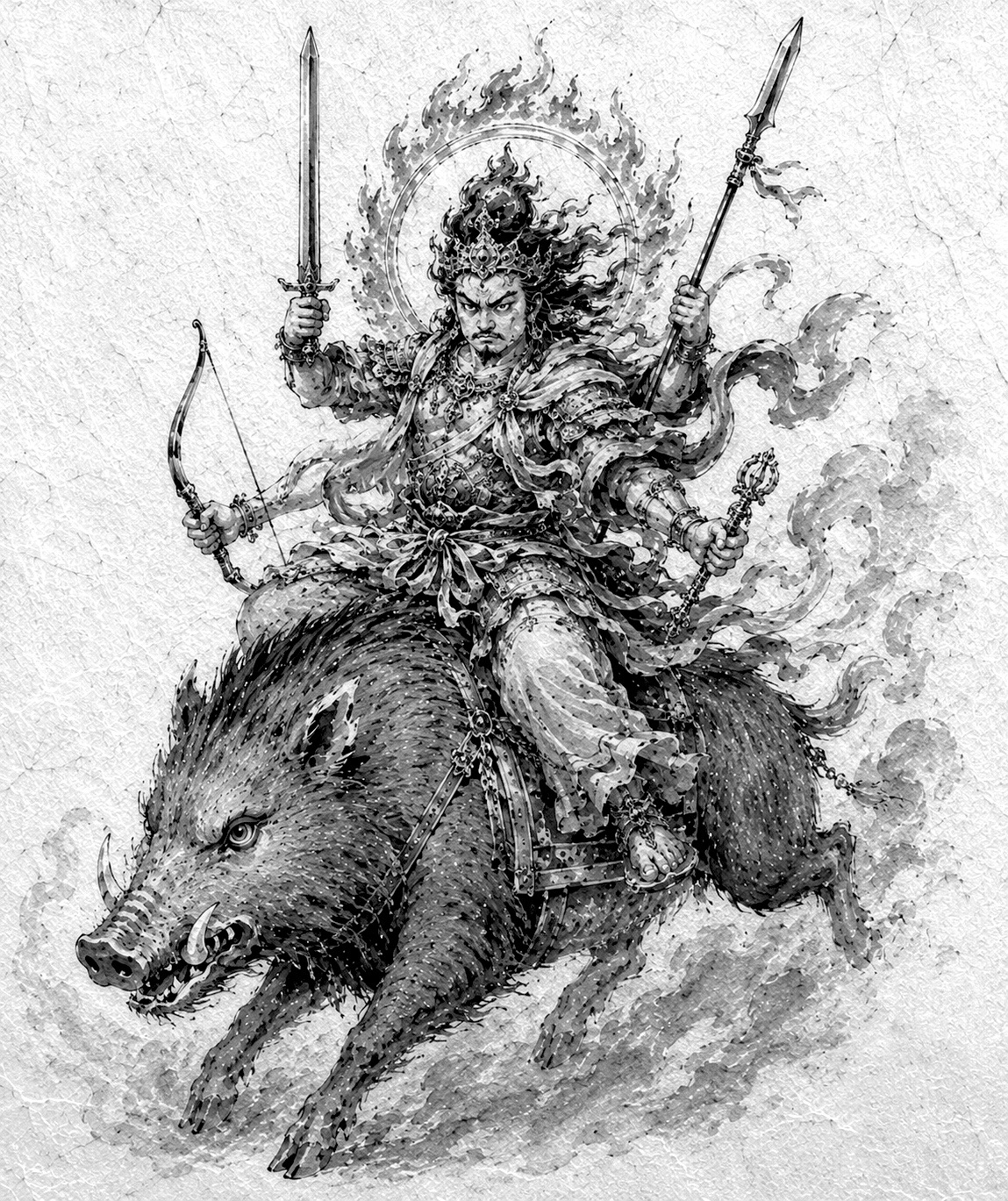
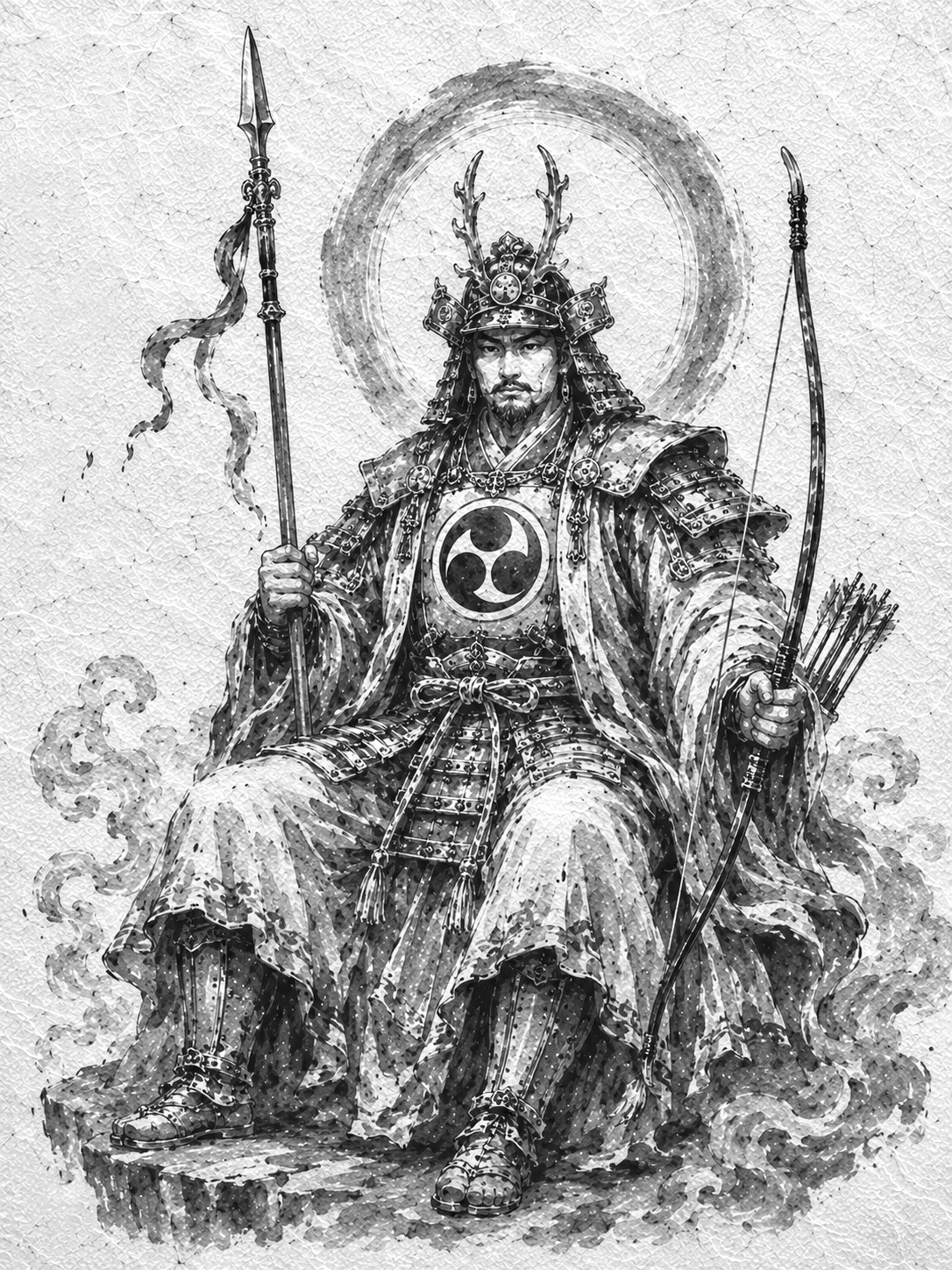
Within these traditions, nature itself was regarded as a divine teacher. Wind, rain, snow, heat and cold were not seen as obstacles, but as forms of instruction through the kami (deities / 神). Those bushi (warriors / 武士) who sought to master the arts of bujutsu (warfare / 武術) were expected to harmonize themselves with the forces of nature, which in the sacred world of Shintō (Japan’s native nature religion / 神道) and Bukkyō (Buddhism / 仏教) were regarded as an expression of kami (deities / 神), butsu (buddhas / 仏) and bosatsu (bodhisattvas / 菩薩).
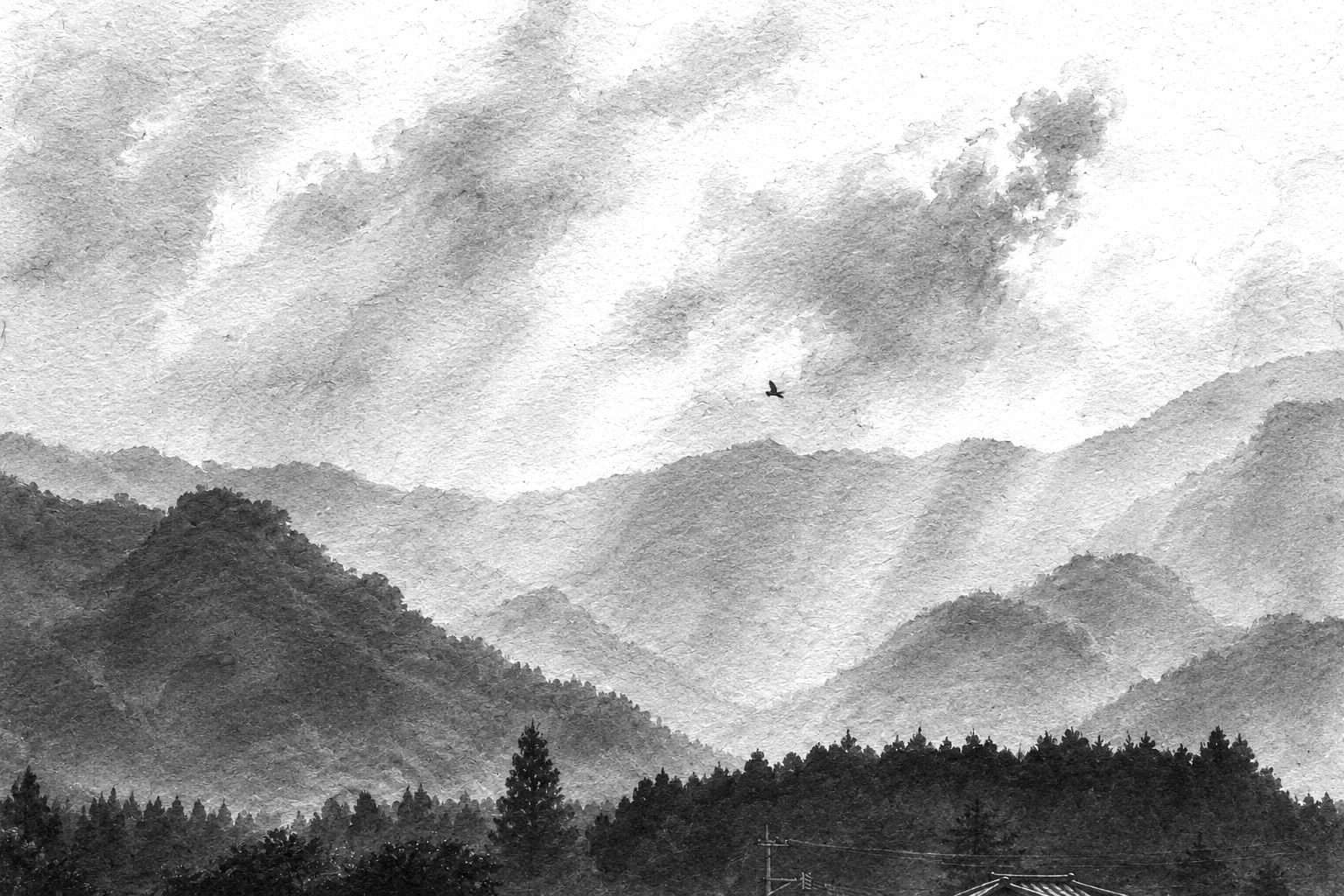
This understanding emerged through the Shinbutsu-Shūgō (syncretism of Shintōism and Buddhism / 神仏習合), which shaped Japanese spiritual culture from the Asuka period (538–710) until the beginning of the Meiji period (1868-1912) for over a thousand years. In this world where Shintō (Japan’s native nature religion / 神道) and Bukkyō (Buddhism / 仏教) were regarded as a complementary and interwoven manifestation of a single universal vision, it was natural for the martial arts themselves to integrate the spiritual teachings in their curriculum, as well as to develop deep connections with shrines and temples alike.
For many bushi (warriors / 武士) traditions, the way of the sword never consisted solely of technical ability. Through training, one sought not only precision and physical control, but also concentration, discipline, composure, and mastery over oneself. Numerous koryū (old samurai schools of warfare founded before 1868 / 古流) maintained close relationships with jinja (shrines / 神社) and tera (Buddhist temples / 寺).
Divine Transmission and the Martial Traditions of Japan
Some bushi (warriors / 武士) and founders of certain koryū (old samurai schools of warfare founded before 1868 / 古流) formed bonds so deep with particular warrior kami (deities / 神) and their respective jinja (shrines / 神社) that these sacred relationships came to define their very martial lineages. In rare but striking cases, entire ryūha (schools / 流派) were named in reverence to the divine power they served.
One of the most renowned examples in Japanese history is the Tenshin Shōden Katori Shintō-ryū (Heavenly True Transmission of the Divine Way of Katori / 天真正伝香取神道流). Founded in 1447, its very name reflects the profound connection between this ryūha (school / 流派), the deity Futsunushi no Ō-Kami (Great Deity Futsunushi / 経津主大神), and the sacred traditions of this deity’s major shrine, the Katori-Jingū (Katori Grand Shrine / 香取神宮). According to the preserved traditions of this school, its founder Iizasa Chōisai Ienao (飯篠長威斎家直 / 1387–1488) is said to have undertaken rigorous shugyō (austere spiritual and physical training; disciplined cultivation through hardship / 修行) at the Katori-Jingū. Following many days of prayer, purification, and martial practice devoted to Futsunushi no Kami, he reportedly received a divine revelation and transmission of the art of warfare directly from the deity itself. Through this divine encounter, the Tenshin Shōden Katori Shintō-ryū came to be regarded not merely as a martial tradition, but as a heavenly transmission entrusted to humanity through the divine protection and wisdom of Futsunushi no Ō-Kami.
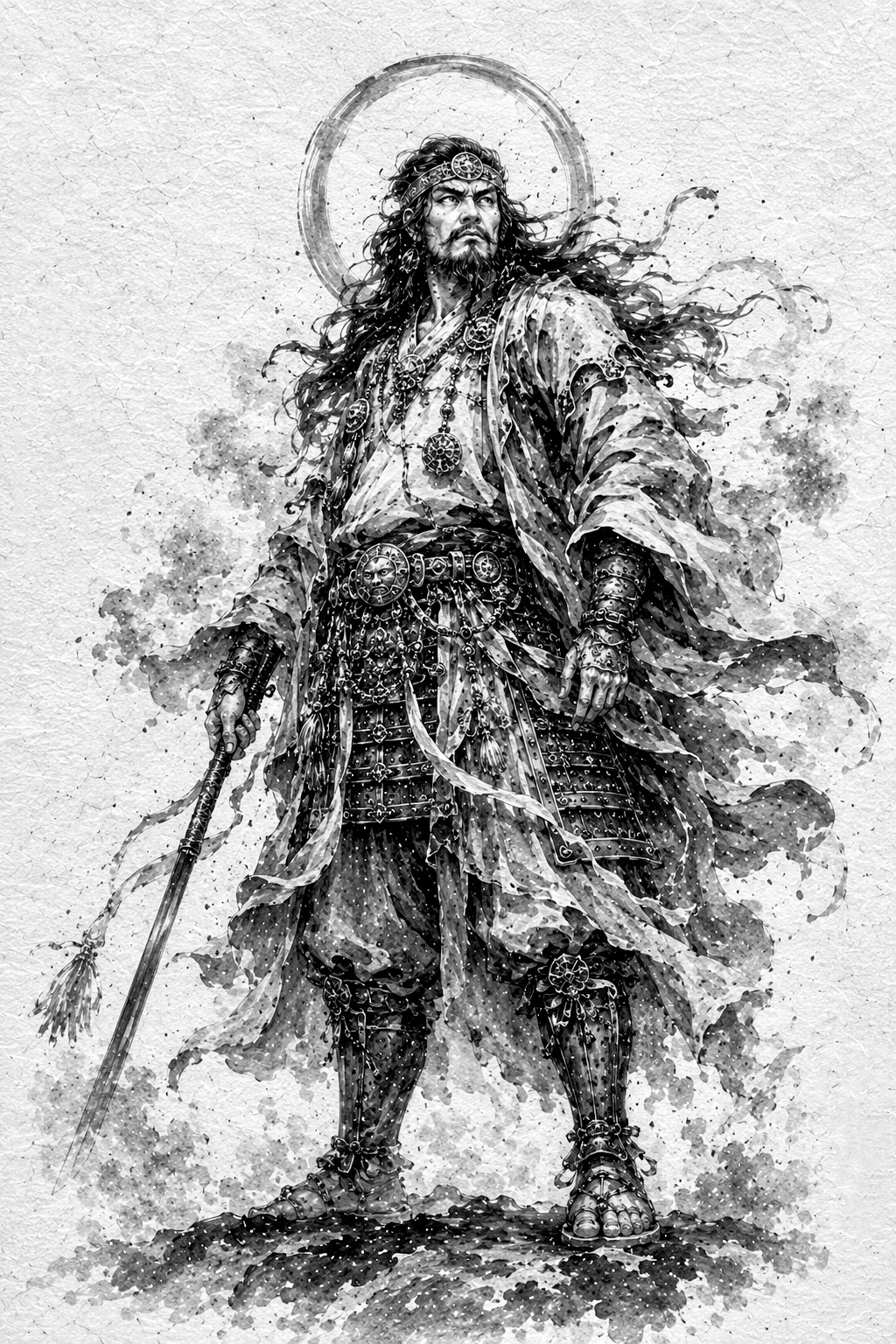
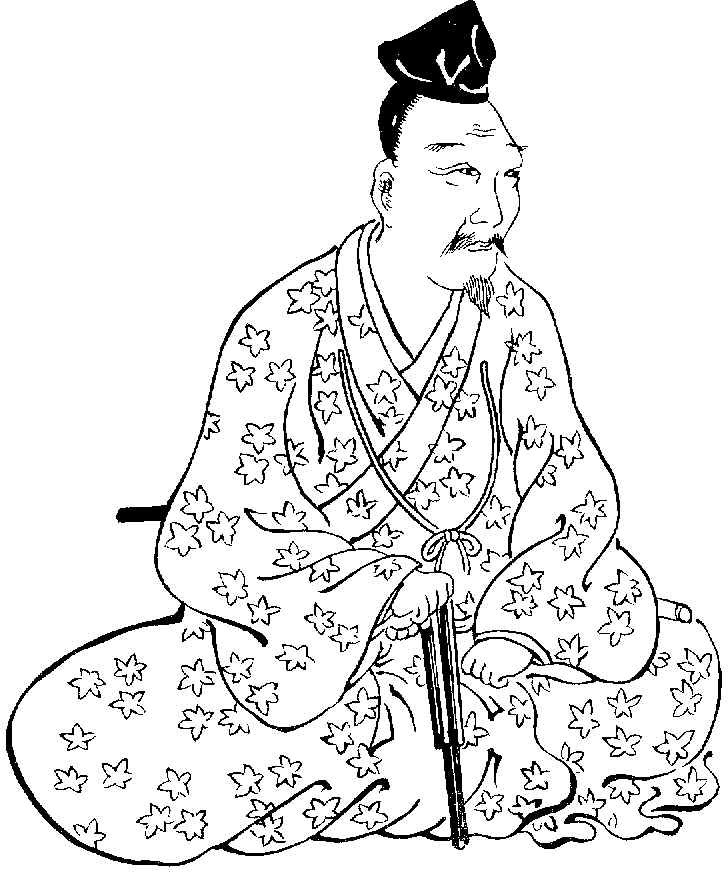
Many koryū (old samurai schools of warfare founded before 1868 / 古流) preserve legends, oral traditions, or historical claims of divine inspiration, revelation, or transmission. In the majority of cases, such traditions did not necessarily understand shinden (divine transmission / 神伝) in the modern western sense of “supernatural revelation” alone. Rather, it often referred to spiritual insight attained through years of austerity, prayer, meditation, ritual purification, and martial discipline conducted beneath the protection of specific deities, sacred places, and nature itself.
The Sword as an Offering to the Kami
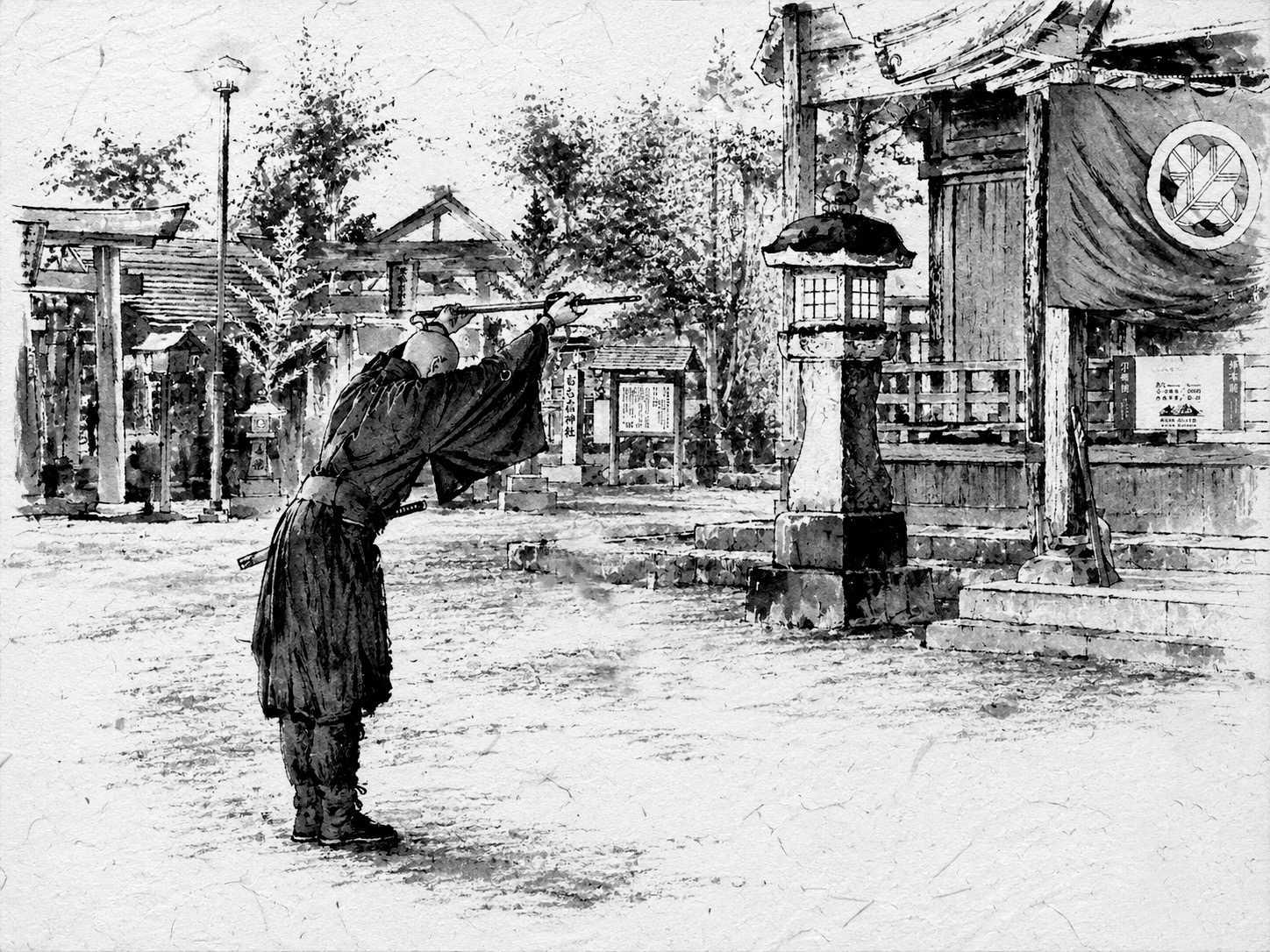
Historically, kensei (sword saints / 剣聖) such as Miyamoto Musashi (宮本武蔵 / 1584–1645), Itō Ittōsai (伊藤一刀斎 / 1560 – 1653), Kamiizumi Nobutsuna (上泉 信綱 / 1508 – 1572), Yagyū Sekishūsai (柳生石舟斎 / 1527 – 1606) and Chiba Shūsaku (千葉周作/ 1792–1856) trained upon the grounds of shrines and temples and engaged there in duels upon sacred soil. Hōnō-enbu (dedicatory martial demonstrations / 奉納演武) and hōnō-jiai (ritual duels dedicated to the deities / 奉納試合) were traditionally performed upon the open grounds before the haiden (hall of worship / 拝殿) of jinja (shrines / 神社) as sacred offerings to the kami (deities / 神). Such practices formed an important expression of devotion among many bushi (warriors / 武士) during Japan’s feudal eras, and many koryū (old samurai schools of warfare founded before 1868 / 古流) continue this tradition and form of worship up to the present day.
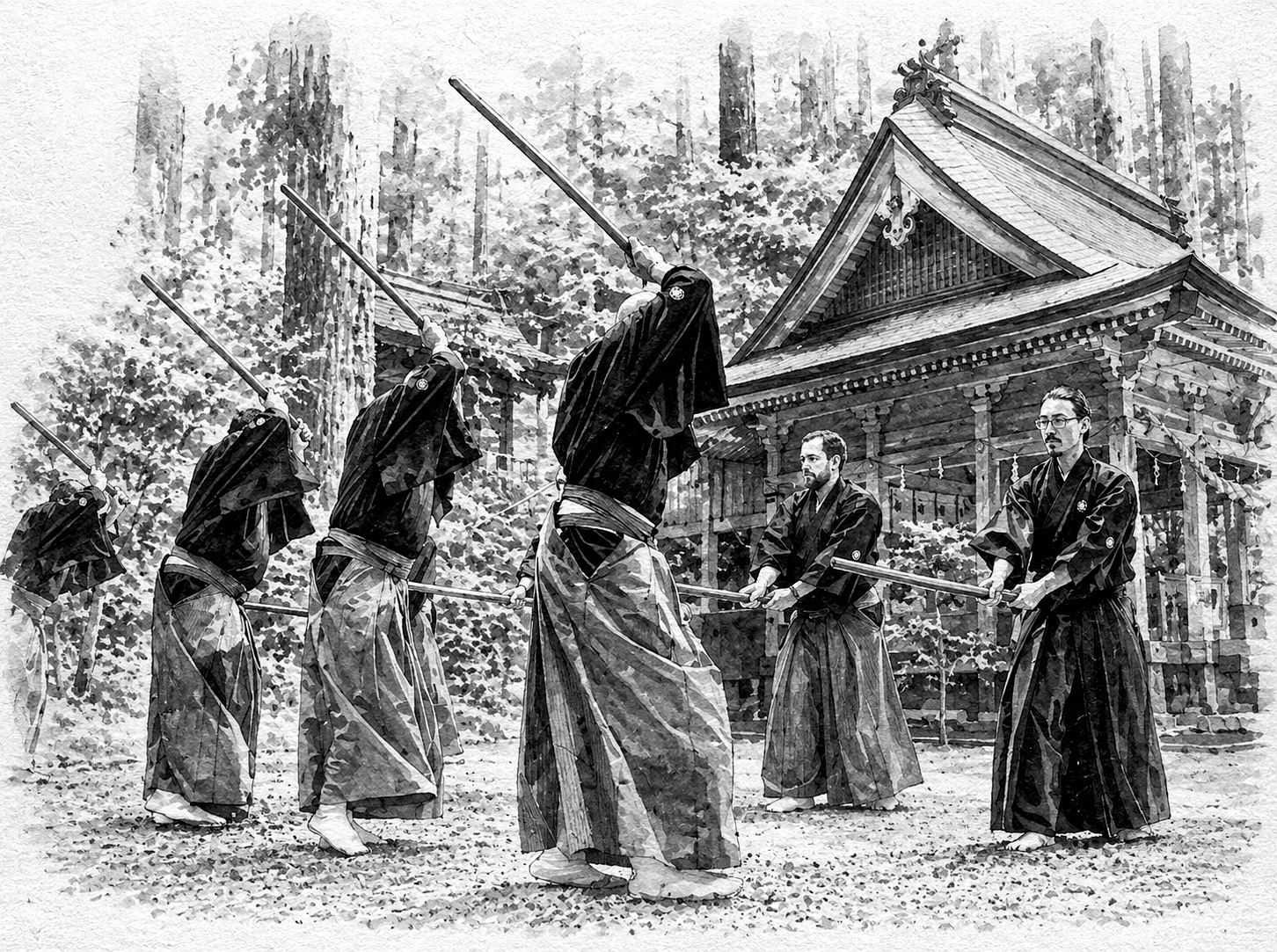
Within this sacred relationship between ken (sword / 剣) and kami (deities / 神), not only demonstrations and ritual combat were offered to the kami, but also hōnō-tō (swords as offerings to the deity / 奉納刀). Throughout Japanese history, swords, bows, arrows, wooden practice weapons, and other objects related to bujutsu (warfare / 武術) were commonly presented to warrior deities at their respective shrines as sacred offerings expressing devotion and gratitude, as well as prayers for protection and victory in battle. In this way, the sword itself came to be understood not merely as a weapon of war, but as an object capable of embodying divinity or divine strength. This led to many deities being depicted wielding or carrying swords as instruments or embodiment of their divine strength and authority within Japanese mythology.
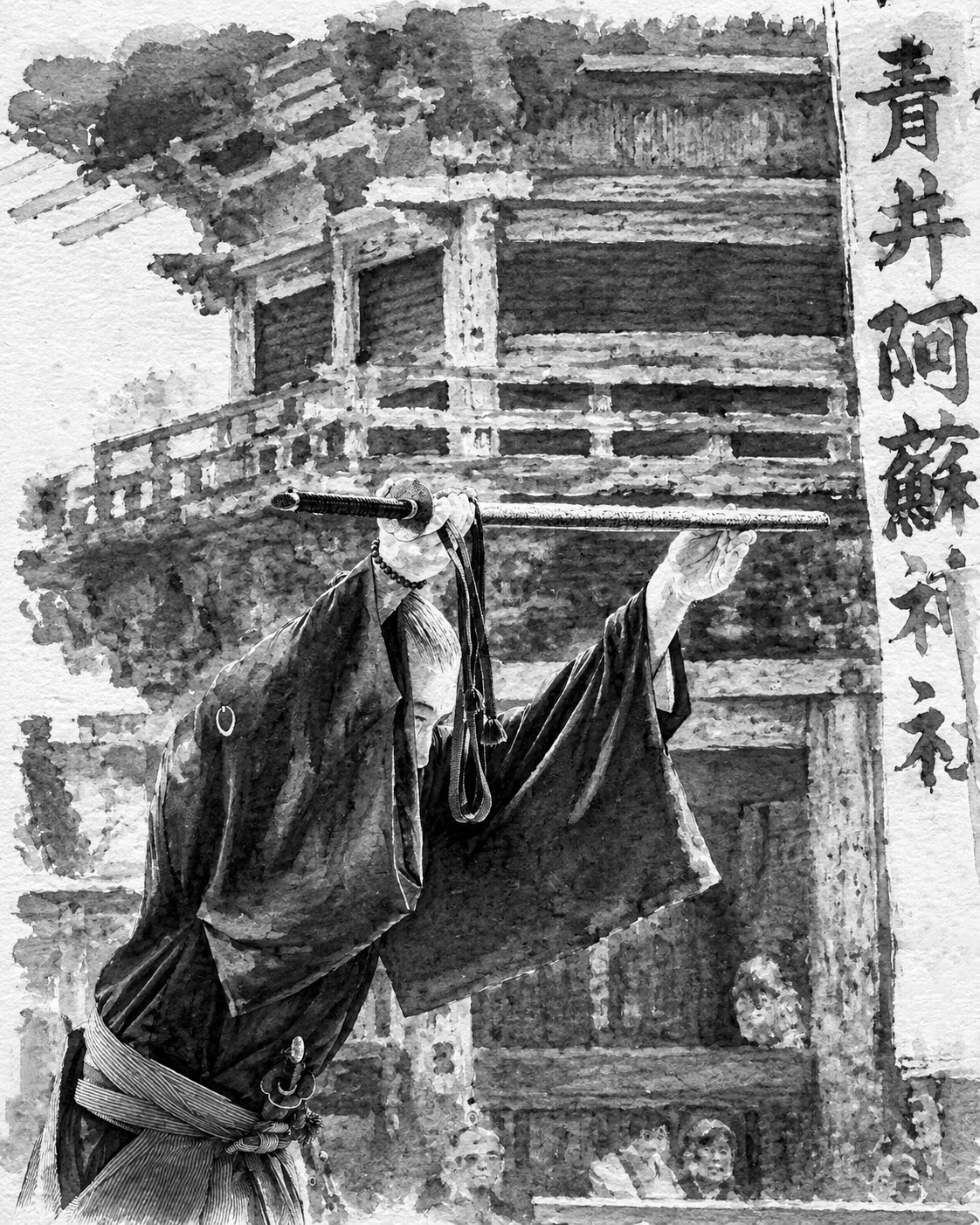
In Shintō (Japan’s native nature religion / 神道) traditions hōnō-tō (swords as offerings to the deity / 奉納刀) could furthermore become a go-shintai (heavenly body: sacred objects inhabited by the spirit of a kami / 御神体). According to such traditions, the blade becomes a sacred vessel of the deity through ritual consecration, transforming the sword into a holy object where a divine presence of the kami (deities / 神) comes to reside. No longer merely a weapon or offering, it becomes a go-shintō (sacred sword of a deity / 御神刀), an embodiment of the deity itself, and a focal point through which the divine can manifest within the shrine.
This process is traditionally accomplished through a kanjō (ceremony of invitation and transfer of a divine presence into an object / 勧請), a sacred rite through which a bunrei (part of the celestial body of the deity / 分霊) of a kami (deities / 神) is invited to be enshrined within the go-shintai (heavenly body: sacred objects inhabited by the spirit of a kami / 御神体). During the ceremony, norito (ritual prayers / 祝詞) are recited, humbly inviting the divine presence of the kami (deities / 神) to descend and take up residence within the sacred object. Through the act known as mitama-ire (installation of the sacred spirit / 御霊入れ), the object is ritually enlivened and transformed into a vessel of divine presence.
Within this understanding, the kami does not abandon its original place of worship, but rather extends its presence through the bunrei (part of the celestial body of the deity / 分霊), allowing the same sacred deity to reside simultaneously in multiple shrines and objects without diminishing its original form.
Through the kanjō (ceremony of invitation and transfer of a divine presence into an object / 勧請), the nature of an ordinary object ceases to be solely material and becomes a sacred bridge between the human and divine worlds. When a sword is consecrated in this manner, it is revered not simply as a blade, but as a holy object through which the spirit, protection, and blessings of the kami may be approached and honoured.
The Sacred Sword of the Kami
In some shrine traditions, a gō-shintō (sacred sword of a deity / 御神刀) is not only enshrined as a sacred object, but also plays an active role within the religious life of the jinja (shrine / 神社). During important ceremonies, festivals, and other sacred occasions, such swords may be ceremonially carried, worn, or displayed as visible manifestations of the presence and protection of the kami (deities / 神) residing within them. In this capacity, the gō-shintō serves not merely as a symbol, but as a sacred vessel through which the divine authority, blessings, and spiritual power of the deity may accompany and protect the community of worshippers.
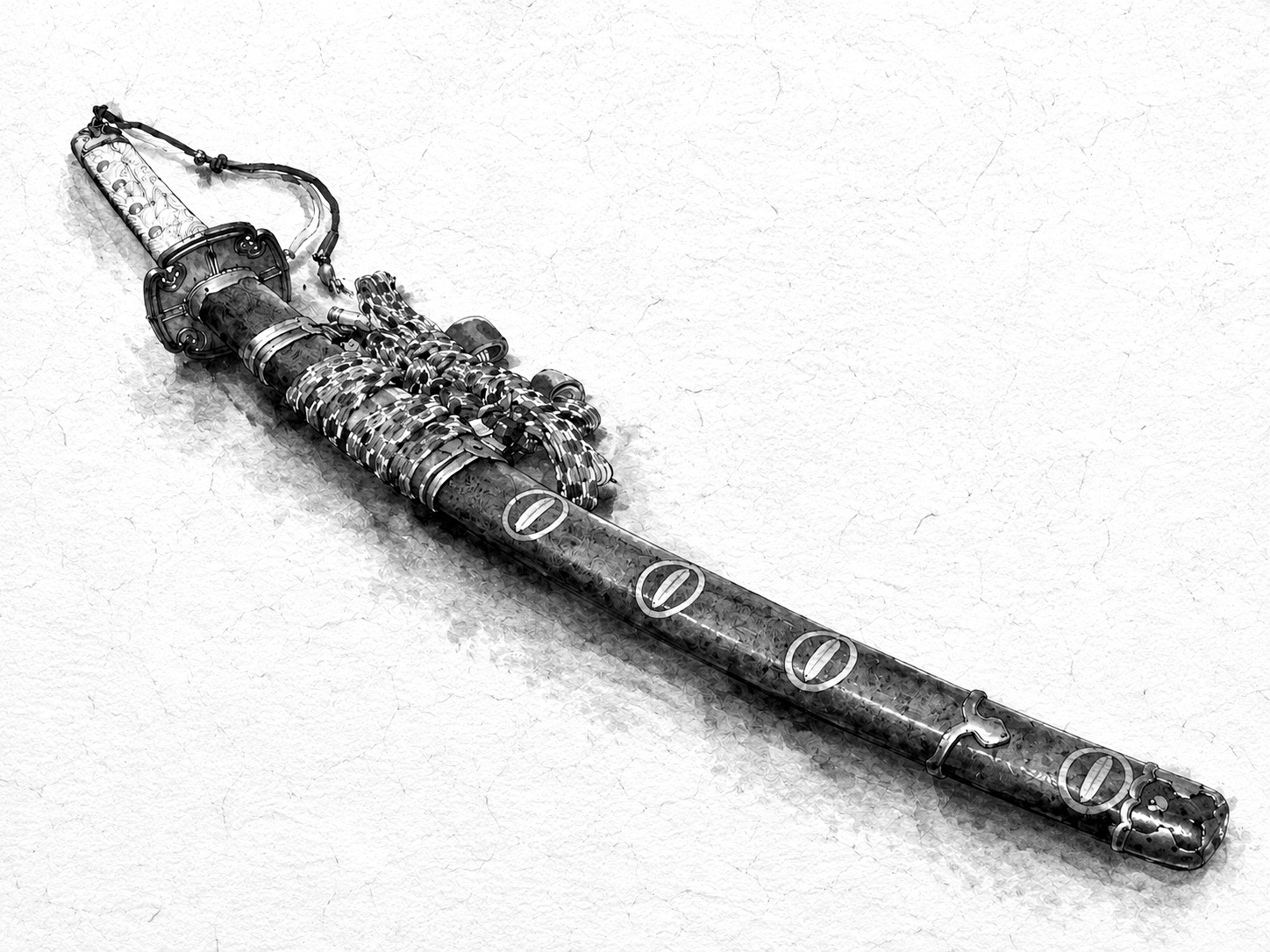
Historically, gō-shintō (sacred sword of a deity / 御神刀) were also believed to protect shrines, temples, and the deities enshrined within them from evil forces. Some legends tell of priests or bushi (warriors / 武士) wielding the gō-shintō (sacred sword of a deity / 御神刀) of a jinja (shrine / 神社) in its defence and overcoming human or demonic enemies with it. Many gō-shintō (sacred sword of a deity / 御神刀) came to be revered as possessing supernatural qualities bestowed by the kami themselves. According to these traditions, a gō-shintō (sacred sword of a deity / 御神刀) could grant its bearer divine strength, protection, and martial skill beyond that of ordinary men, making the sacred sword not only a vessel of the kami (deity / 神), but also an instrument through which the power of the deity could manifest within the person wielding the gō-shintō (sacred sword of a deity / 御神刀) in its will.
The Enduring Bond Between Sword and Kami
Although the era when the bushi (warriors/samurai) dominated Japanese society has long since passed, the spiritual connection between the ken (sword) and the kami (deities) continues to be preserved within many koryū (traditional schools of samurai martial arts founded before 1868)—led by old buke (warrior families)—throughout Japan and beyond.
Far from being mere historical relics, those koryū—traditional schools of samurai martial arts founded before 1868 that have maintained an unbroken lineage—are taught today in the same manner as they were during Japan’s feudal eras. Rather than having been transformed into modern sports or contemporary martial arts, these schools are often preserved as karyū (family traditions) within ancient buke (warrior families). They retain their techniques, strategies, and teachings within the original context for which they were developed: the reality of armed conflict and personal survival. Consequently, the preservation of a koryū extends far beyond the mere transmission of combat techniques. Embedded within these traditions are centuries of accumulated knowledge, cultural values, philosophical principles, and spiritual insights, all carefully passed down from generation to generation.
For this reason, the faithful preservation of a koryū (old samurai school of warfare founded before 1868 / 古流) through direct and uninterrupted transmission from master to student is a profound responsibility. Each generation serves not merely as a practitioner, but as a warden of a living cultural inheritance, entrusted with safeguarding the teachings of the past and transmitting them unchanged to the future. In this way, some koryū (old samurai schools of warfare founded before 1868 / 古流) remain living traditions, preserving the physical and spiritual cultural heritage of Japan’s warrior class.
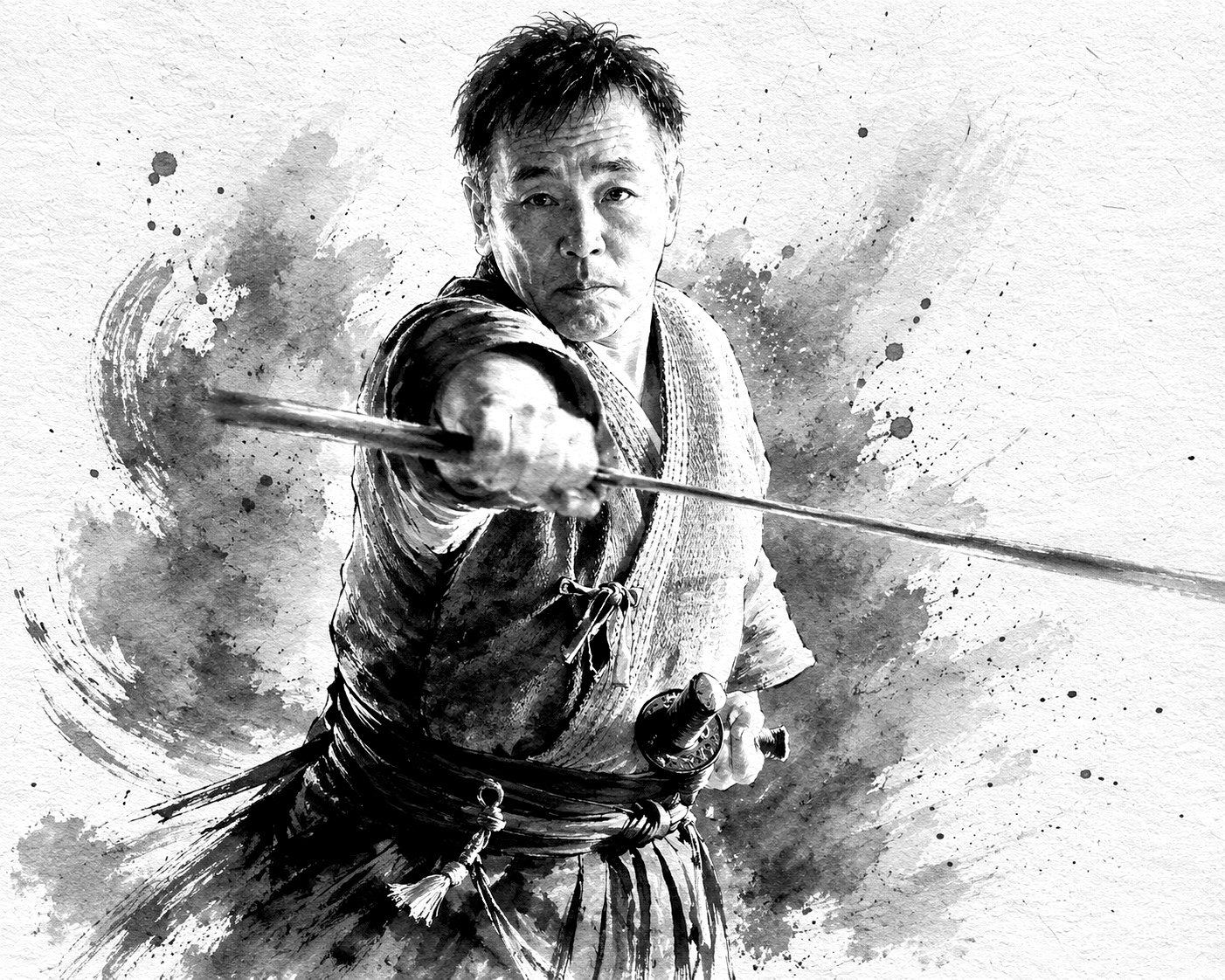
One of the most enduring aspects of this heritage is the ancient relationship between the sword (ken) and the kami (deities). Those koryū—traditional samurai martial arts schools founded before 1868—that preserve the spiritual foundations upon which their traditions were built also maintain the ancient connection between the martial arts and the divine. Consequently, the relationship between bujutsu (martial arts) and the veneration of the kami remains visible to this day within numerous traditional schools.
The Kamidana of Traditional Dōjō
This connection between the sword and the deities remains visible up to the present day within numerous traditional dōjō (training halls / 道場), where kamidana (small indoor shrines / 神棚) enshrining the shugoshin or mamori-gami (protective deity / 守護神 or 守り神) of a particular ryūha (school / 流派) continue to be revered. Members of those dōjō (training halls / 道場) traditionally offer prayers and offerings before the kamidana (small indoor shrines / 神棚), while the reihō (etiquette and formalities / 礼法) at the beginning and end of keiko (training / 稽古) commonly includes bows or prayers directed towards the deity and its kamidana (small indoor shrine / 神棚).
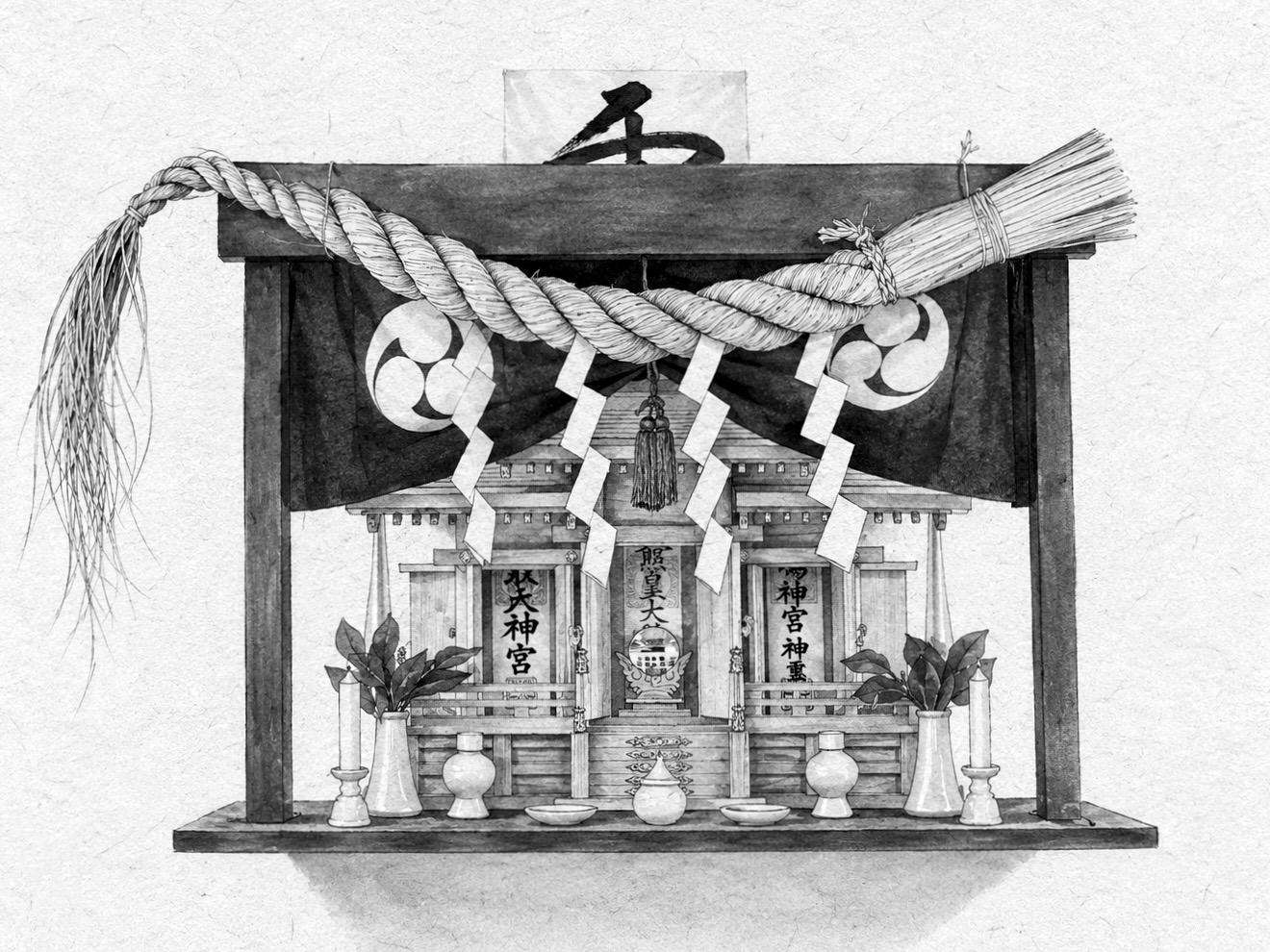
In this way, the kamidana (small household shrine) serves as a constant reminder that martial arts were never viewed merely as systems of combat, but rather as paths of self-cultivation practiced under divine protection and guidance. Within many koryū (traditional schools of samurai martial arts established prior to 1868), the transmitted teachings are still regarded as something far greater than a mere collection of techniques. They constitute a path of shugyō (rigorous mental and physical training; disciplined tempering through hardship), through which one strives not only for technical proficiency but also for the refinement of character, spirit, and one's understanding of the universe.
Shugyō Through the Sacred Power of Nature
Among the traditional forms of shugyō (austere spiritual and physical training; disciplined cultivation through hardship / 修行) preserved within certain koryū (old samurai schools of warfare founded before 1868 / 古流) are the practices of misogi (ritual water purification in cold rivers, lakes or the ocean / 禊) and takigyō (waterfall meditation / 滝行). Rooted in ancient Shintō (Japan’s native nature religion / 神道) practices and later influenced by various Shugendō (the Way of Ascetic Practice / 修験道) traditions, these disciplines seek not merely physical endurance, but spiritual purification and harmony with the natural world of the kami (deities / 神).
Through immersion in cold rivers, the sea, or beneath waterfalls, practitioners confront discomfort, fear, and the limitations of the self. Within the traditional understanding of these practices, the flowing waters are not regarded simply as natural phenomena, but as manifestations of the purifying power of the kami (deities / 神) themselves. By enduring the forces of nature directly, one seeks to cultivate sincerity, humility, perseverance, and clarity of mind.
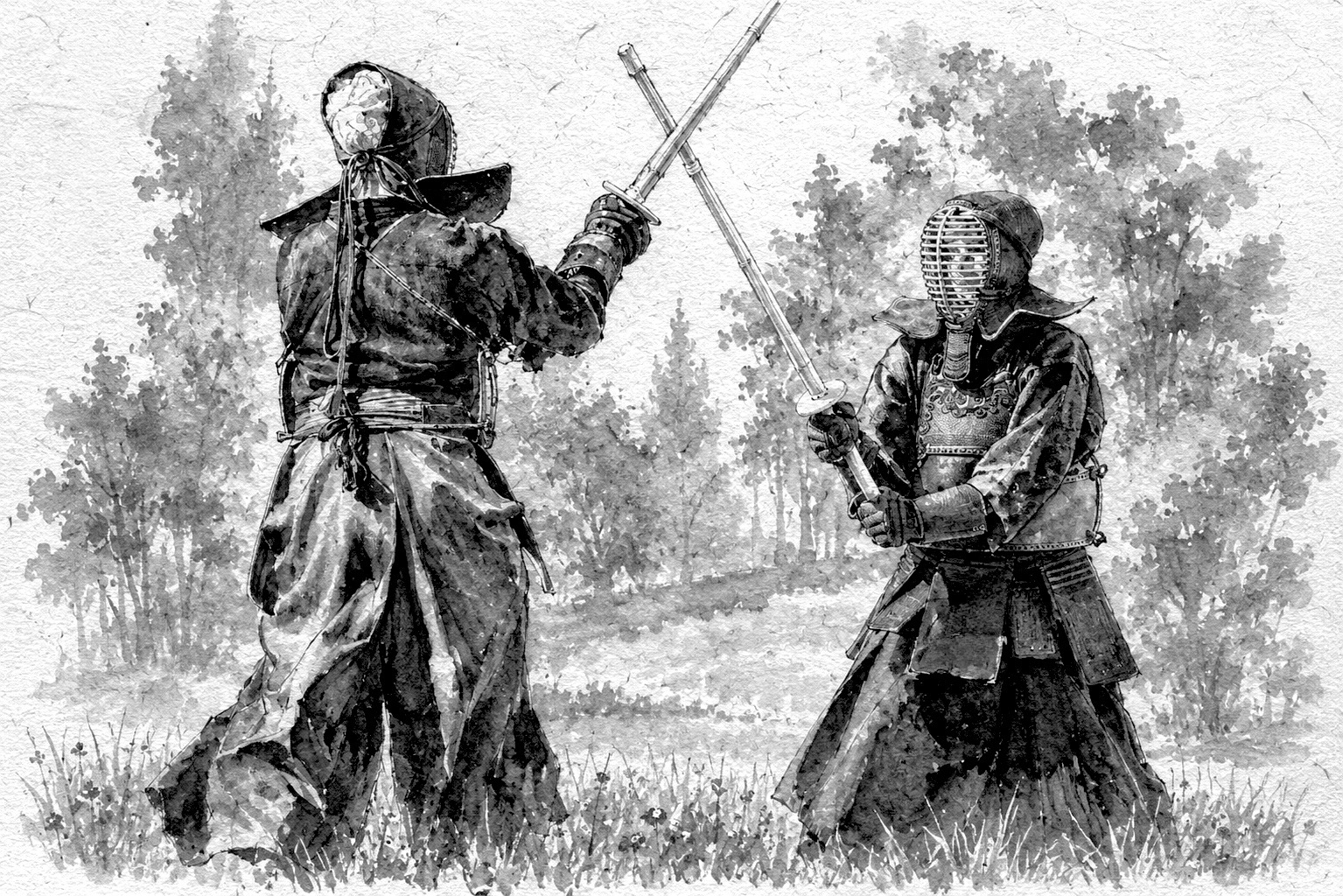
Likewise, a number of koryū (old samurai schools of warfare founded before 1868 / 古流) continue to preserve the tradition of yagai-geiko (outdoor training / 野外稽古), conducting practice in forests, mountains, and other natural environments. Members of traditional schools such as the Hokushin Ittō-ryū Hyōhō (North Star One-Sword School of Strategy / 北辰一刀流兵法) continue to hone their skills in the arts of warfare beneath the open sky, exposed to wind, rain, snow, heat, and cold just as the bushi (warrior / 武士) of earlier generations once did.
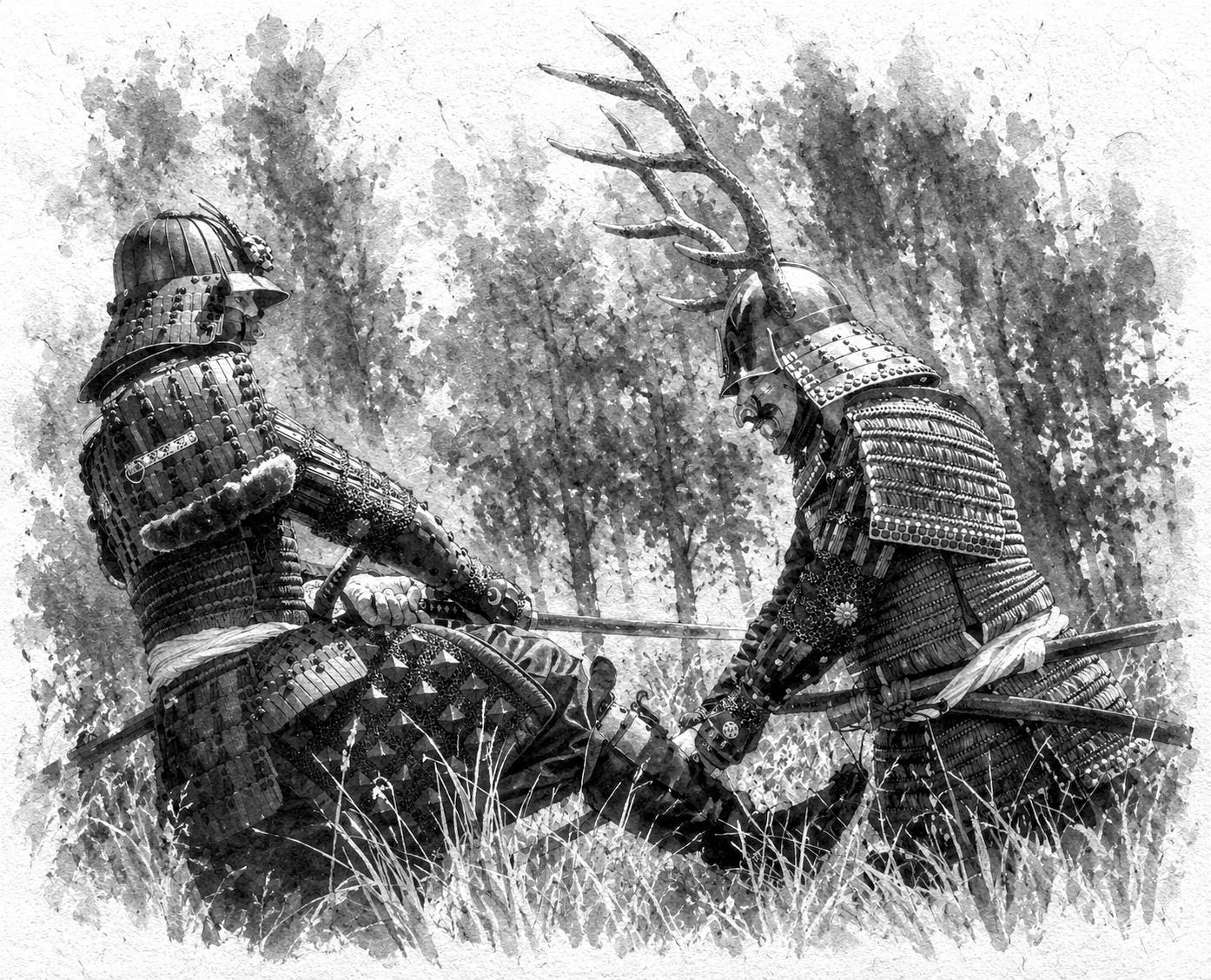
Such training serves not only practical purposes to train for the realities of mortal combat, but also to receive instruction through the forces of nature and thus through the kami (deities / 神). Within the vastness of the mountains and the wilderness of deep forests, practitioners are confronted with the reality of how small the individual is in comparison to the greater forces of nature and the universe.
For many koryū (old samurai schools of warfare founded before 1868 / 古流) and their members, shugyō (austere spiritual and physical training; disciplined cultivation through hardship / 修行) through misogi (ritual water purification in cold rivers, lakes or the ocean / 禊), takigyō (waterfall meditation / 滝行) and yagai-geiko (outdoor training / 野外稽古) represent a return to the ancient understanding that nature itself is sacred. Mountains, forests, rivers, wind, and water are approached not as obstacles to overcome, but as severe teachers through which one may deepen one's connection to the kami (deities / 神). In this way, these practices embody the same spiritual principles that have long underlain the martial traditions of Japan: the pursuit of self-mastery through harmony with nature, reverence towards the divine, and the continual refinement of body, mind, and spirit.
The Eternal Bond Between the Warrior Traditions and the Divine
The ancient relationship between several koryū (old samurai schools of warfare founded before 1868 / 古流) and the divine likewise continues through the enduring, sometimes centuries old bonds which they maintain with historical jinja (shrines / 神社) or tera (Buddhist temples / 寺). Practitioners regularly participate there in hōnō-enbu (dedicatory martial demonstrations / 奉納演武), offering demonstrations of their traditions before the kami (deities / 神), butsu (buddhas / 仏) and bosatsu (bodhisattvas / 菩薩) as acts of gratitude, devotion, and cultural preservation.
In certain traditions, these acts of remembrance extend beyond shrines and temples to the gravesites of the founders and former sōke (headmasters / 宗家) who created, preserved and transmitted their respective schools. There, practitioners perform hōnō-enbu (dedicatory martial demonstrations / 奉納演武) before those graves as expressions of gratitude, respect, and continued devotion to the lineage from which their teachings descend. A notable example for this practice is the Hyōhō Taisha-ryū (Strategy School of Taisha / 兵法タイ捨流), whose members conduct hōnō-enbu (dedicatory martial demonstrations / 奉納演武) as well as the official shinsa (grading examinations / 審査) of their students before the grave of the school's founder, Marume Kurandō (丸目蔵人 / 1540–1629), in Hitoyoshi (Hitoyoshi city in the Kumamoto Prefecture/ 人吉市) on Kyūshū (the third-largest and most southerly of Japan's four main islands/ 九州). Through such practices, the bond between past and present remains alive, affirming that the preservation of a koryū (old samurai school of warfare founded before 1868 / 古流) is inseparable from honouring those who entrusted it to future generations.
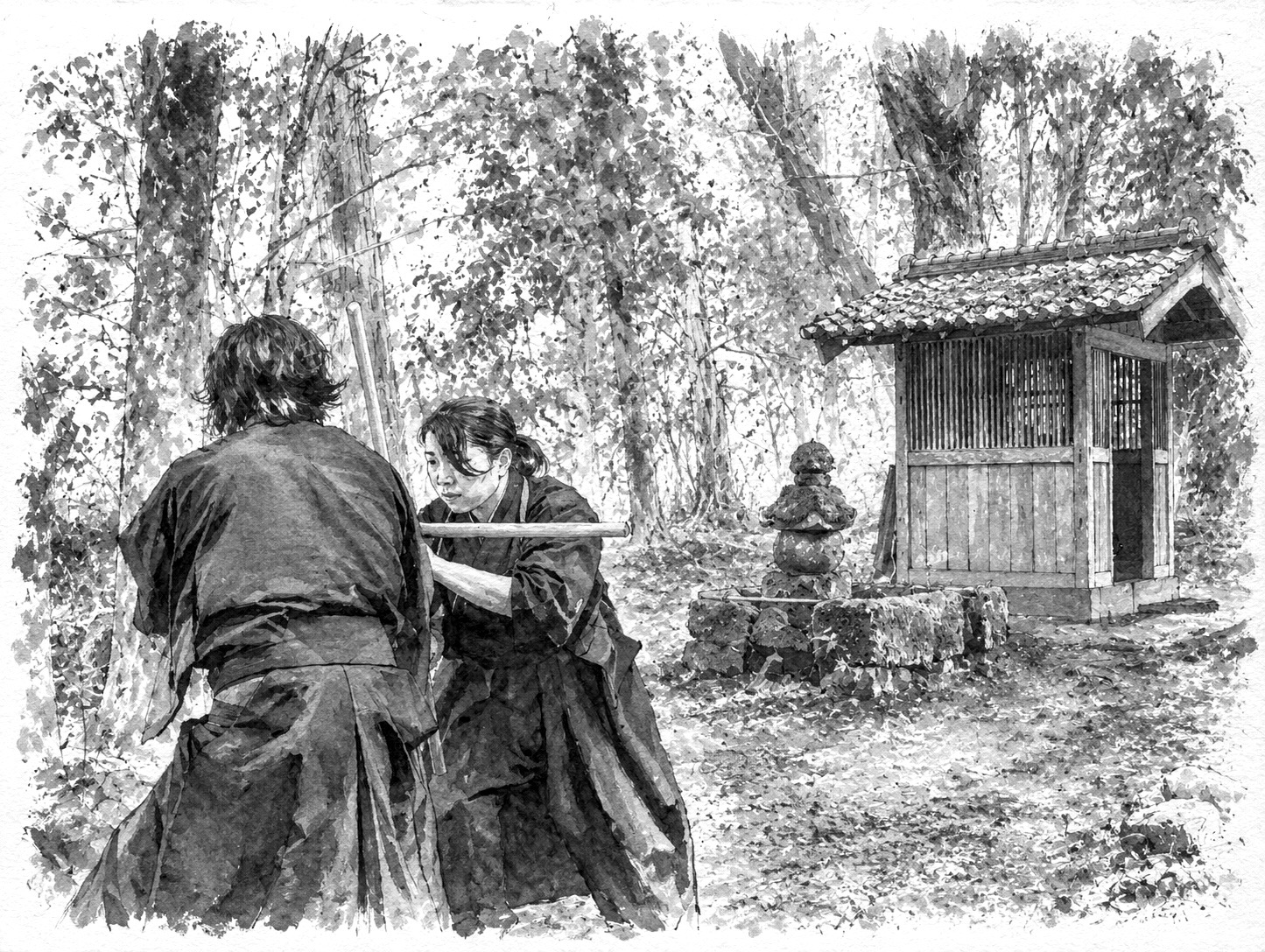
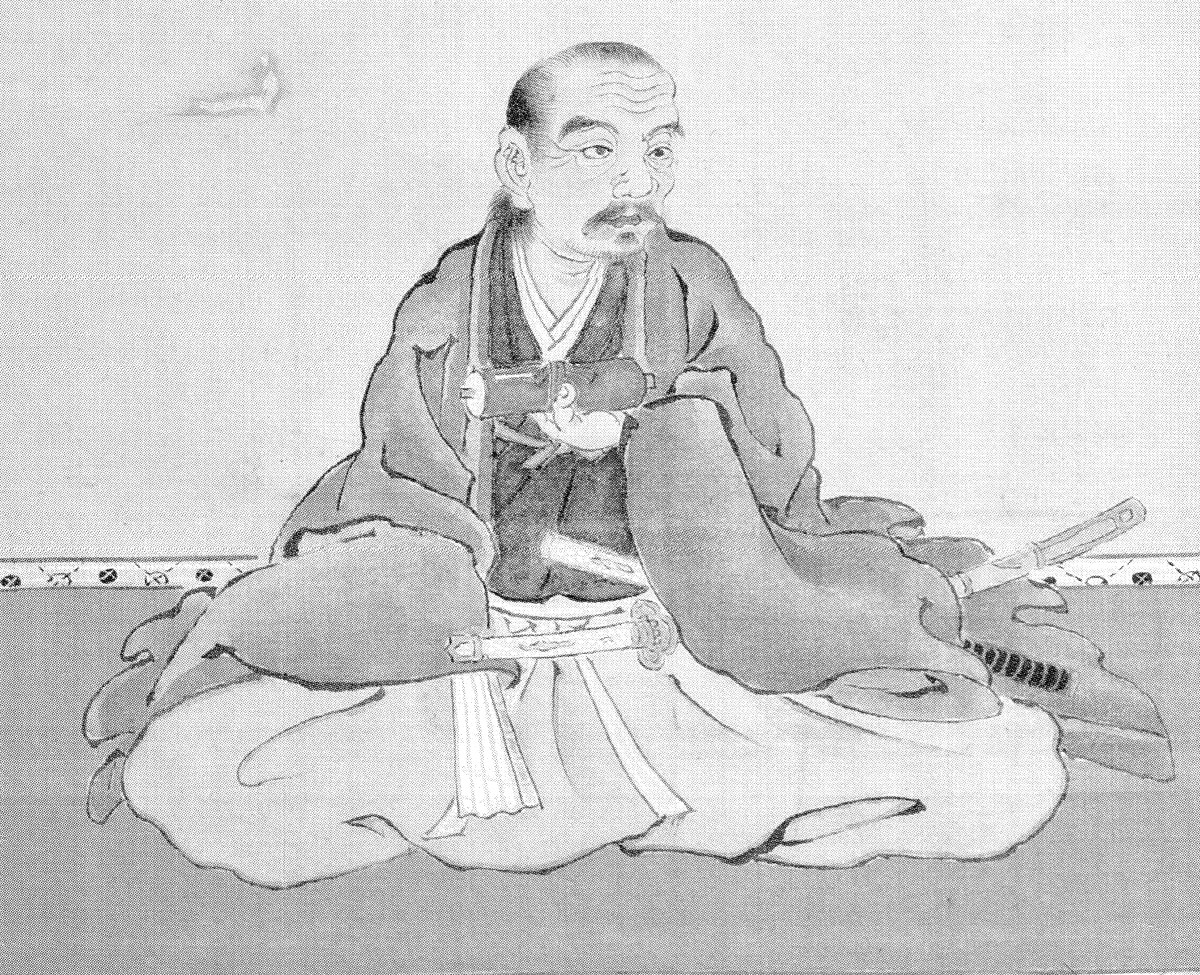
Such practices are further rooted in the traditional Japanese understanding that the bond between the living and the departed does not end with death. Within Shintō (Japan’s native nature religion / 神道), the veneration of ancestral spirits, known as sorei-shinkō (ancestor worship / 祖霊信仰), has long formed an important part of religious life. These ancestral spirits are traditionally regarded as protective spirits of their descendants and communities, that continue to watch over the living after death. Some of those, according to ancient Shintō (Japan’s native nature religion / 神道) believes, might eventually come to be revered not merely as ancestral spirits, but as kami (deities / 神) or uji-gami (family deities / 氏神). Exceptional individuals who rendered great service to their communities, families, schools, or nation could come to be venerated as kami (deities / 神) as well, following their passing.
One of the most famous examples is Sugawara no Michizane (菅原道真 / 845–903), a scholar, poet, and statesman of the Heian period (794–1185). After falling victim of a political intrigue, he was stripped of his offices and exiled far from the imperial court, where he died in relative isolation. In the years following his death, a series of calamities struck the capital. Epidemics and droughts spread throughout the land, several sons of Emperor Daigo died in succession, and the hall for state ceremonies within the Imperial Palace was repeatedly struck by lightnings. Weeks of violent storms and floods further afflicted Kyōto. These disasters came to be attributed to the wrathful onryō (vengeful spirit / 怨霊) of Sugawara no Michizane, who was believed to have returned in the form of Raijin (the deity of thunder and lightning / 雷神). In response, the imperial court sought to appease his spirit. Sugawara no Michizane was posthumously restored to his former ranks, offices, and honours, while references to his exile were removed from official records. The Kitano Tenman-gū (Kitano Shrine of the Heavenly Deity / 北野天満宮) was established in Kyōto and dedicated to his veneration. Over time, he came to be worshipped as Tenjin (Heavenly Deity / 天神), the deity of learning, scholarship, poetry, and the arts. Today, thousands of Tenman-gū (Shrines of Tenjin / 天満宮) throughout Japan continue to honour him, making Sugawara no Michizane one of the most prominent historical figures who ascended to become a kami (deity / 神) after death.
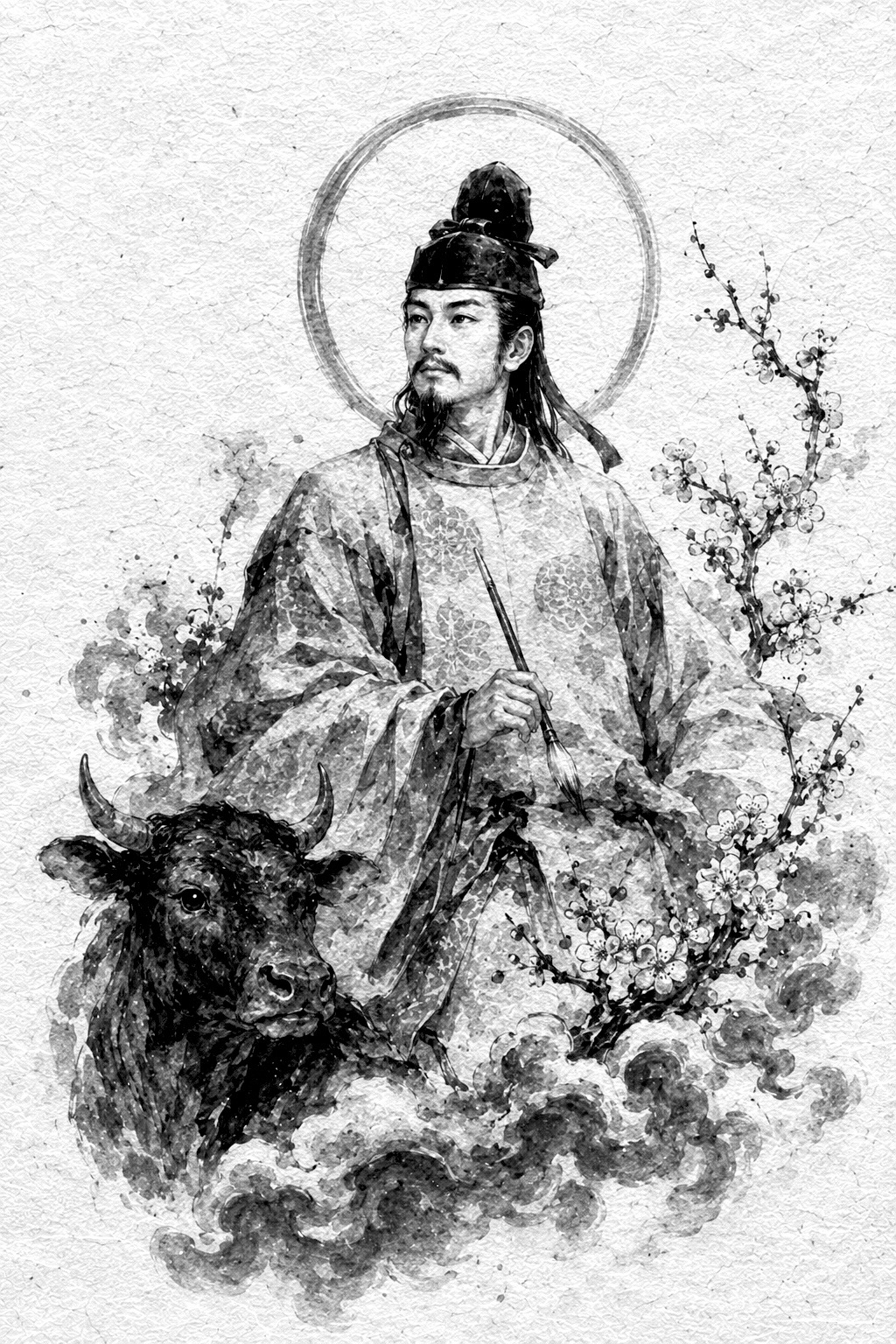
The influence of the deity Tenjin (Heavenly Deity / 天神) extended far beyond the realms of scholarship and literature. One notable example can be found within the martial traditions of Japan through the Tenjin Shin'yō-ryū (Divine True Willow School / 天神真楊流), one of the most influential schools of jūjutsu (the art of flexible combat and grappling / 柔術) in Japanese history and a main predecessor of modern Jūdō (the Way of Gentleness / 柔道). Founded in 1830 by Iso Mataemon Ryūkansai Minamoto no Masatari (磯又右衛門柳関斎源正足 / 1787–1866), the school reflects both martial and deep spiritual influences. Before establishing the Tenjin Shin'yō-ryū, Iso Mataemon undertook a period of intensive seishin-tanren (spiritual and physical discipline / 精神鍛錬) at the Kitano Tenman-gū (Kitano Shrine of the Heavenly Deity / 北野天満宮), where he refined his martial research and brought together the teachings that would form his new system. After receiving shinden (divine transmission / 神伝) from the deity Tenjin, he incorporated the name of the deity into the title of his newly founded school, thus forever placing his tradition under the protection of one of Japan’s most revered kami (deity / 神).
Likewise, within the traditions of Japanese Buddhism it is taught that through spiritual cultivation and merit the deceased might attain enlightenment, be reborn within a Pure Land, or become united with a particular butsu (buddha / 仏) or bosatsu (bodhisattva / 菩薩) to whom they had devoted themselves during life. In this understanding, death is not regarded as an end, but as a return to the divine reality towards which one had directed one's life.
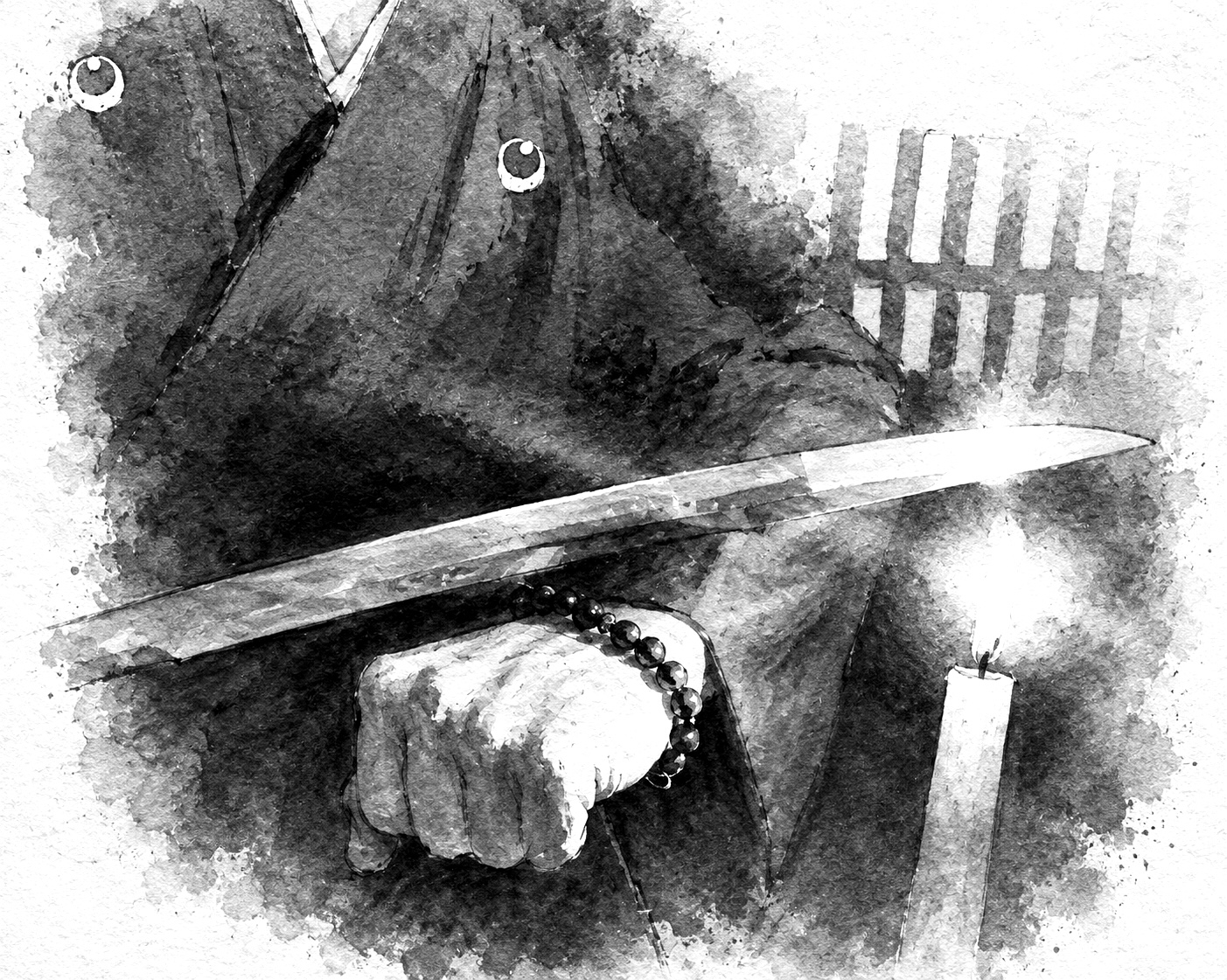
A very famous example for a koryū (old samurai school of warfare founded before 1868 / 古流) where this belief has since its founding held particular significance was the Hokushin Ittō-ryū Hyōhō, whose spiritual traditions are deeply rooted in the veneration of Hokushin Myōken Sonjō-ō (the Venerable Star King Myōken of the North Star / 北辰妙見尊星王). As the school's shugoshin or mamori-gami (protective deity / 守護神 or 守り神), Myōken has for centuries been regarded not only as a source of divine protection and guidance, but also as the spiritual centre around which the school itself is united. This understanding is reflected in the traditional saying of the school: “Ware-ra wa Hokushin no Hito!” (We are the people of the North Star! / 我らは北辰の人!). More than a declaration of belonging to the school, these words express the idea that all members of the Hokushin Ittō-ryū are part of a single spiritual lineage extending across space and time beneath the protection of Myōken. According to the traditions preserved within the school, those who dedicate themselves wholeheartedly to the teachings of the Hokushin Ittō-ryū should aspire to become, through their conduct, character, and mastery of the sword, living embodiments of the virtues represented by Hokushin Myōken Sonjō-ō. Through lifelong shugyō (austere spiritual and physical training; disciplined cultivation through hardship / 修行), they should seek to align themselves ever more closely with the spirit and principles of the North Star, striving to reflect within themselves the wisdom, constancy, strength, and guidance embodied by Myōken. Within the spiritual traditions of the school, it is further held that those who faithfully follow this path may ultimately return to and become united with Myōken after death. For this reason, the veneration of Myōken within the Hokushin Ittō-ryū may also be understood as an act of remembrance towards the lineage of the school itself. To stand before Myōken is to stand before the spiritual source from which the school emerged, and to honour all those individuals who preserved it. The founder Chiba Shūsaku, the generations of successors who followed him, and the innumerable kenshi (swordsman / 剣士) who dedicated their lives to the school, are regarded as remaining united beneath the eternal light of the Hokushin (North Star / 北辰).
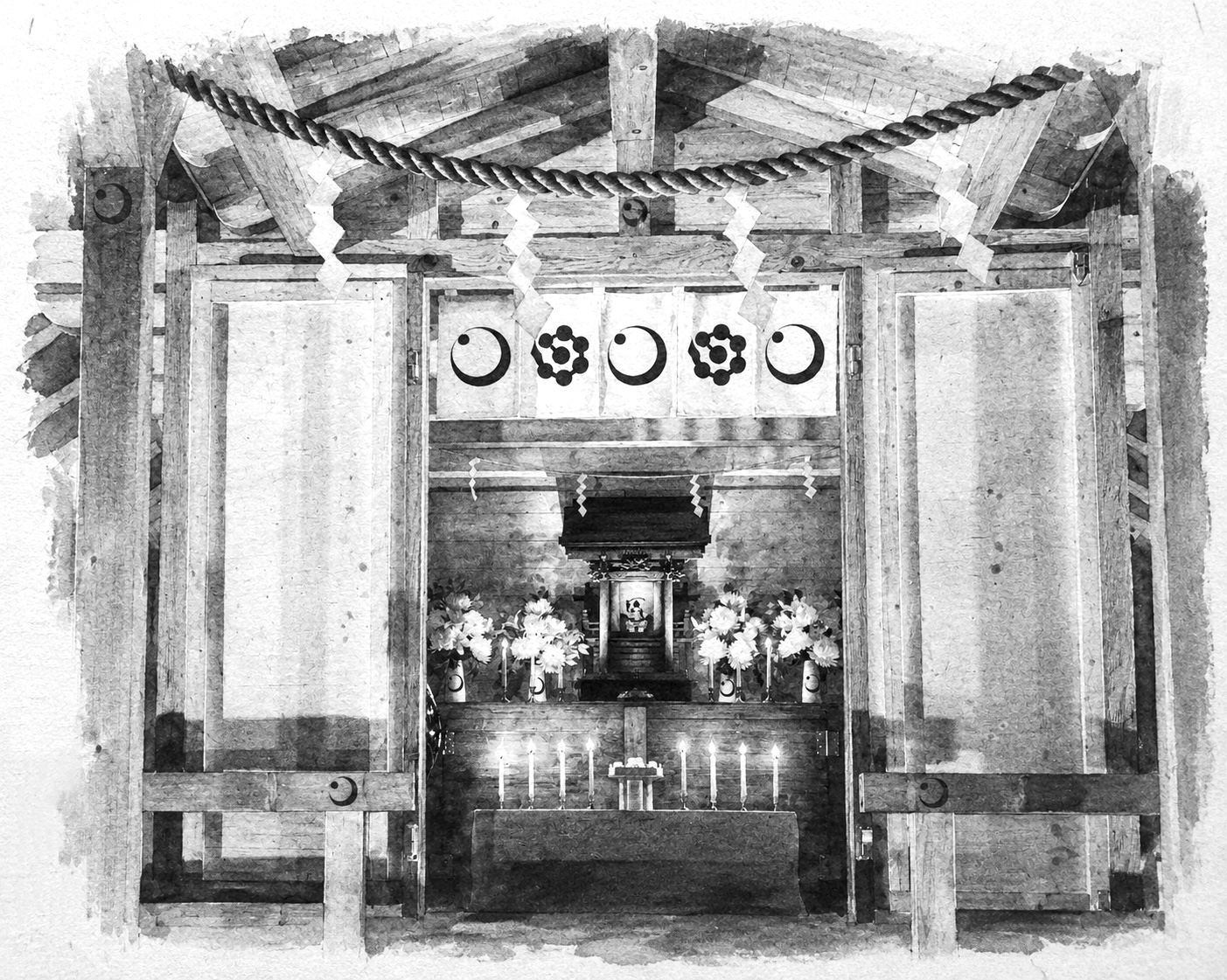
For all these reasons, the continued veneration of founders and former sōke (headmasters / 宗家) in various ryūha (schools / 流派) was and still is often understood as far more than an act of historical remembrance alone. Through offerings, prayers, and hōnō-enbu (dedicatory martial demonstrations / 奉納演武), members express gratitude not only towards the individuals who transmitted the tradition, but also towards the enduring spiritual presence believed to continue protecting and guiding the school they belong to. In this way, the martial traditions of Japan preserve a profound sense of continuity between past and present, honouring both the teachings that have been transmitted and the generations of men and women through whom they have been preserved.
Through such religious and martial traditions preserved within several koryū (old samurai school of warfare founded before 1868 / 古流) in their various forms, the invisible sacred bond between ken (sword / 剣) and kami (deities / 神) is preserved and carried forward into the future by each practitioner studying such a ryūha (schools / 流派).