The Deity Myōken
Hokushin Myōken Sonjō-ō (the Venerable Star King Myōken of the North Star / 北辰妙見尊星王), in short often referred to as Myōken (妙見), is the divine Shinbutsu-Shūgō (syncretism of Shintōism and Buddhism / 神仏習合) embodiment of the North Star, known in Japan as Hokushin (North Star / 北辰) or Hokkyokusei (North Pole Star / 北極星), the unmoving axis of the heavens. The worship of Myōken is referred to as Hokushin-Shinkō (worship of the North Star / 北辰信仰).
The King of Stars and the Northern Heavens
From ancient times, the North Star has been standing immovable in the turning heavens, a symbol of cosmic order and unwavering orientation. As its divine embodiment, Myōken has since more than 1,500 years ago been revered by warriors, travellers, and seekers of clarity alike, offering protection and guidance in times of conflict and uncertainty, as well as strength in battle and in moments which require decisive action.
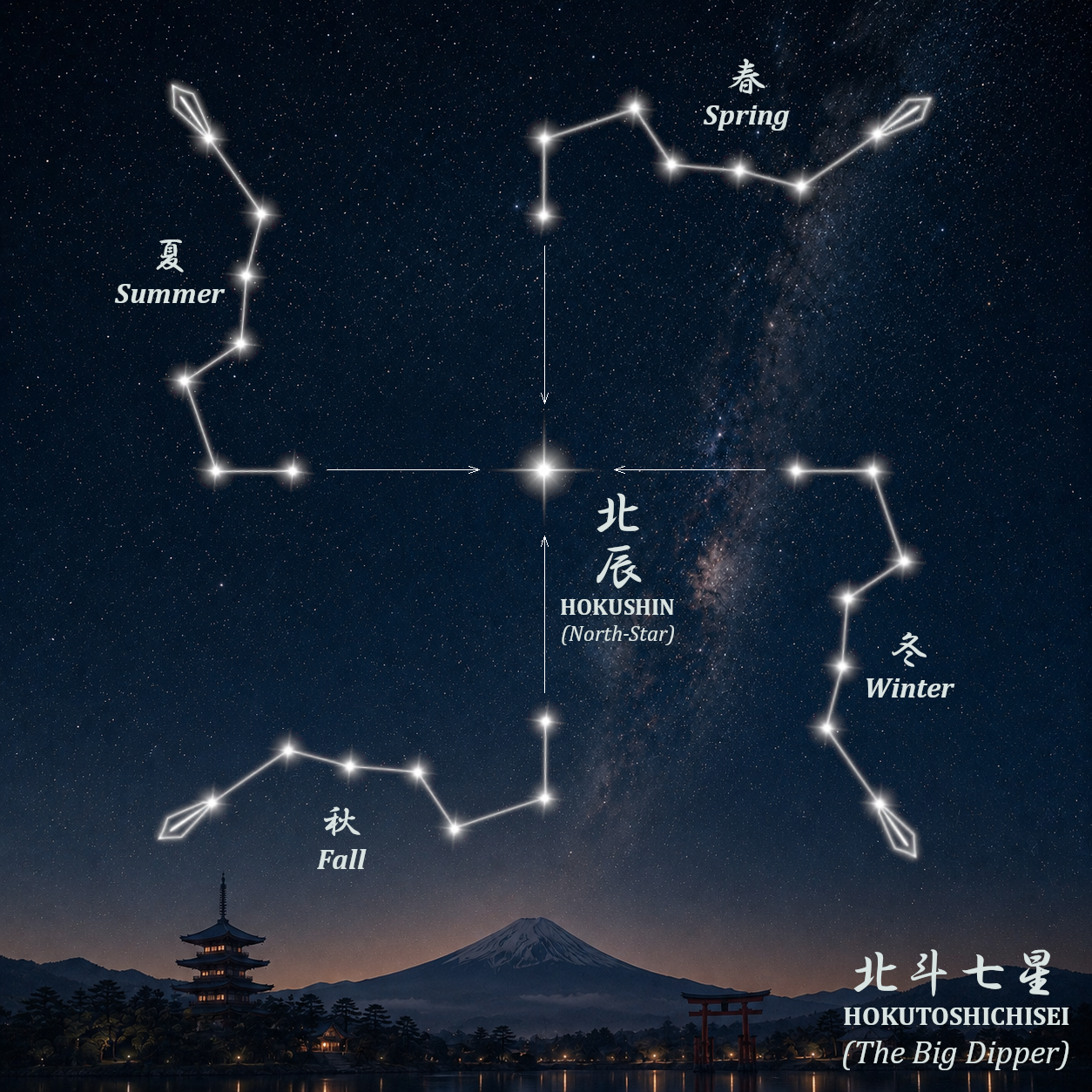
The kami (deity / 神) Myōken is also inseparably linked to the seven stars of the constellation of the Hokuto Shichisei (Big Dipper / 北斗七星), whose eternal rotation around the Hokushin (North Star / 北辰) has been perceived as the celestial order governing time, seasons, fate, and the rhythm of life itself. From this sacred vision of the northern sky arose the concept of the Seiō (King of Stars / 星王), a title by which Myōken himself is also known. As the celestial sovereign at the center of the heavens, the North Star came to embody Myōken as the astral pivot around which all other stars revolve — the divine center commanding celestial order and maintaining harmony within the universe.
The Protection and Guidance of Myōken
Myōken has been and continues to be venerated in particular as the guardian kami (deity / 神) of warriors and horses, whose lives on the battlefield depended on courage, strength and endurance. Furthermore, Myōken is also revered as the silent protector of farmers, whose lives, in their own way, are likewise shaped by courage, strength, perseverance and steadfast determination amidst the changing heavens and seasons.
As the deification of the North Star, Myōken was also revered as the divine protector of travelers, seafarers, and navigators. Long before the age of maps and compasses, the North Star guided humanity through darkness and uncertainty. Myōken became the embodiment of this guiding force—ensuring safe passage across seas, mountains, and unknown paths—and thus remains to this day a deity to whom journeys, both physical and spiritual, are entrusted.
At the heart of the veneration of Myōken lies a truth that is both simple and profound: the only constant in the universe is change. Whilst all things change, the Hokushin (North Star / 北辰) remains unmoving. Myōken is the divine embodiment of this constancy: the eye that never wavers, the guide who never leaves his post. To stand before Myōken is to realign oneself with the axis of the heavens, to find one’s bearings again in a spinning world, and to entrust one’s life to the eternal order inscribed in the stars.
The Divine Imagery of Myōken
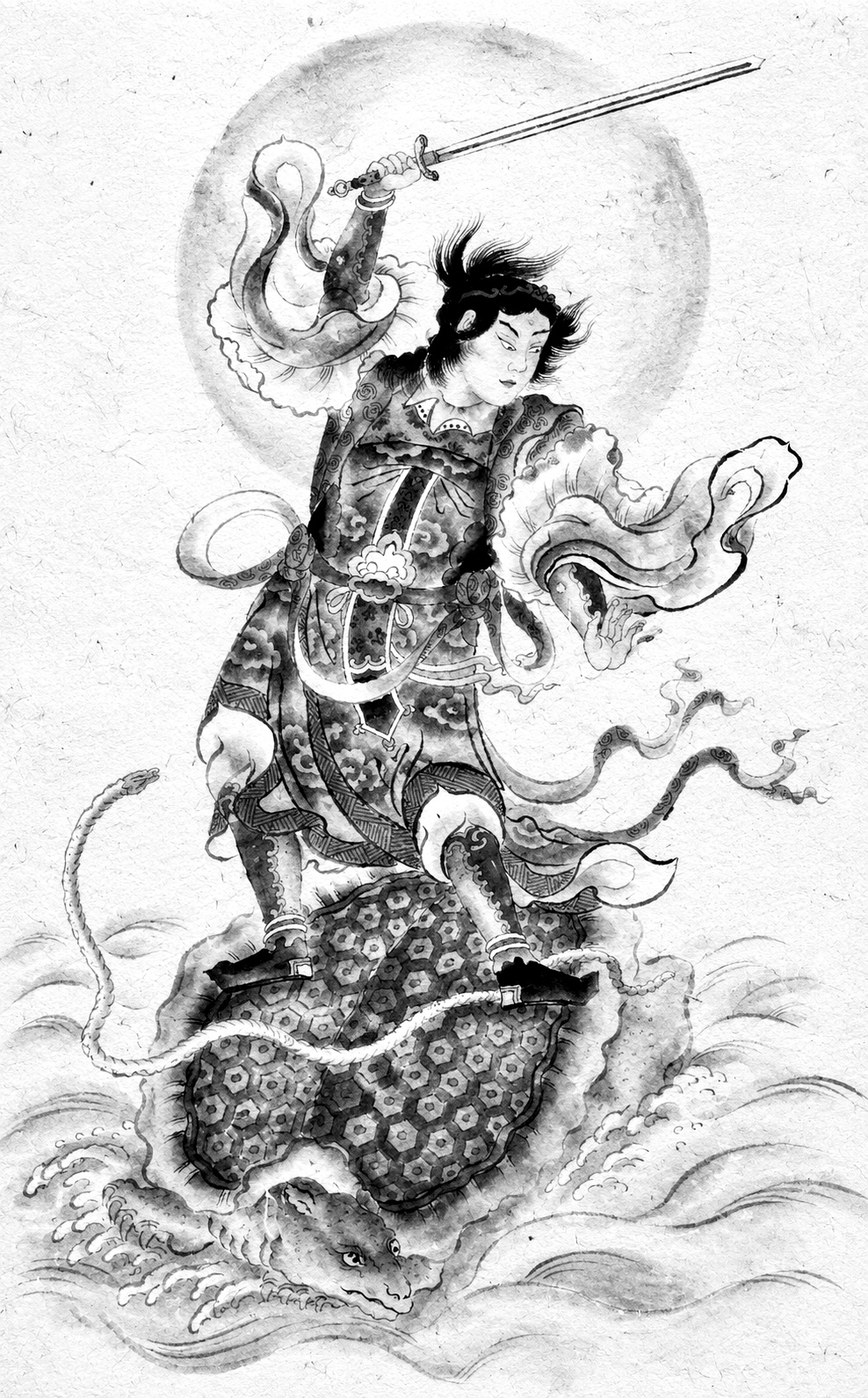
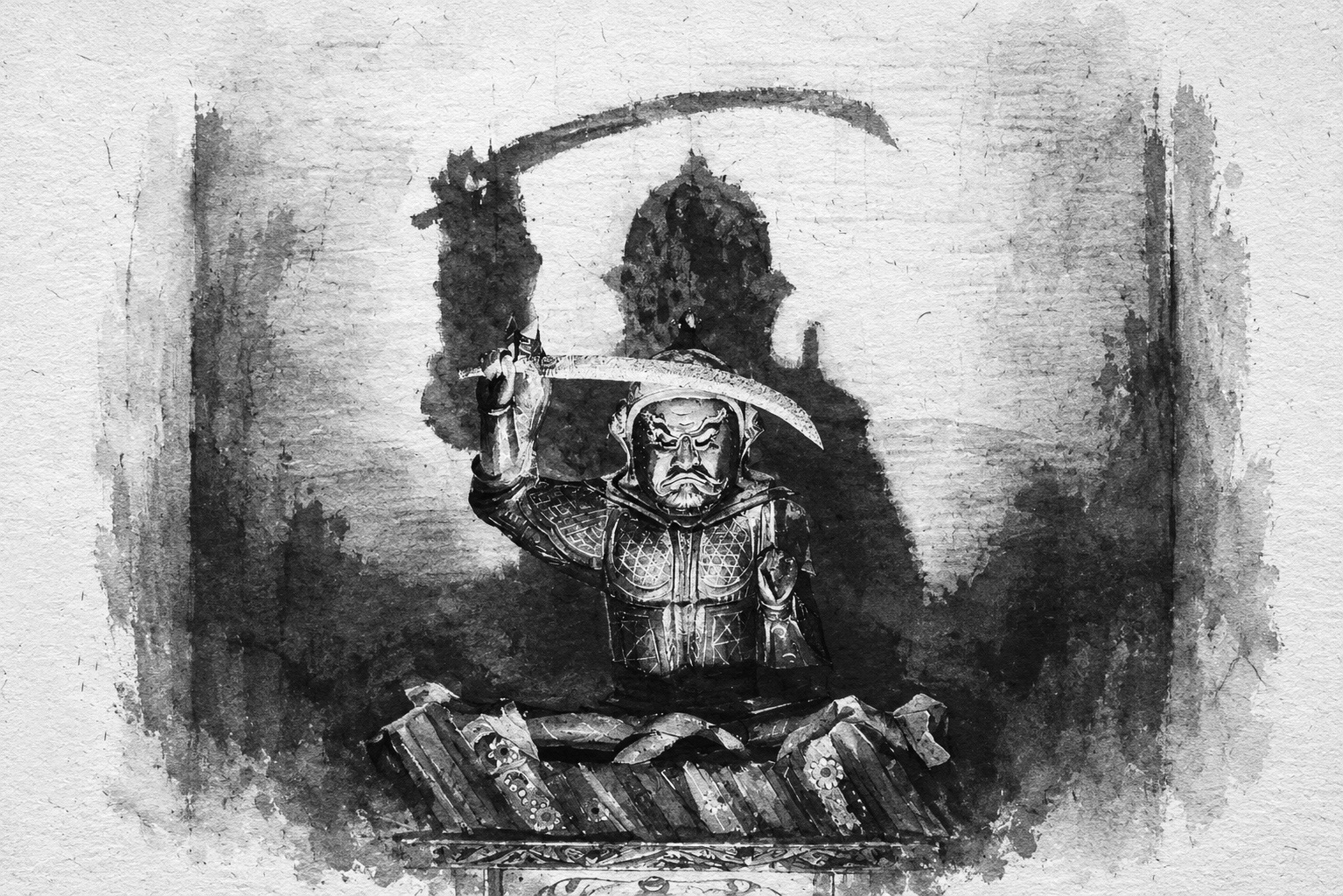
Myōken is frequently depicted as a warrior deity holding a sword raised above their head. In this representation, the sword does not necessarily signify aggression, but rather vigilance, righteous strength, and the power to confront chaos and calamity. Furthermore, it symbolizes the divine authority to overcome and strike down forces that oppose these principles, thereby serving as a protector of cosmic order and harmony through the sword.
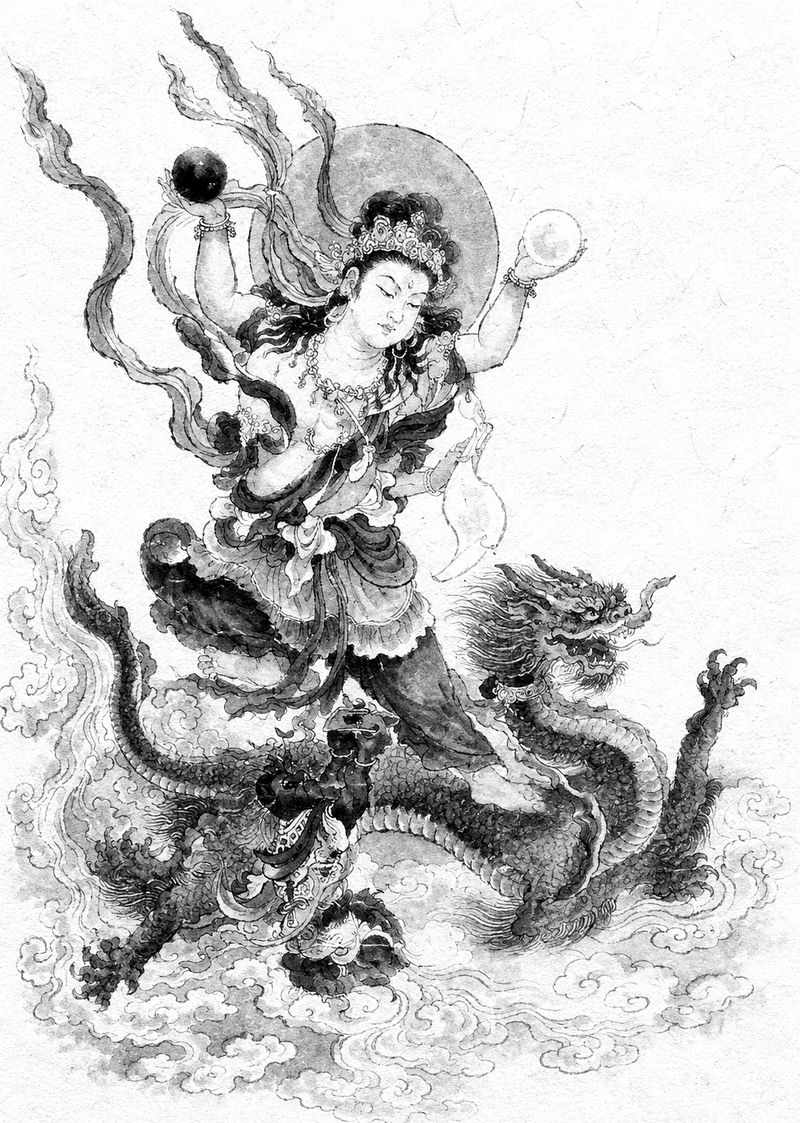
As the celestial embodiment of Hokushin (the North Star), Myōken is rarely depicted alone. By his side stands his loyal guardian, steadfast mount, and unwavering ally: Genbu (the Black Warrior)—a mythical divine being and the sacred guardian of the northern heavens. In traditional depictions, Genbu appears either as a mythical dragon-turtle entwined with a serpent or in the form of the fearsome Kokuryū (the Black Dragon of the Northern Heavens). Within East Asian cosmology, Genbu is one of the Four Celestial Guardians, representing the cardinal direction of North and the season of winter—realms associated with stillness, endurance, hidden strength, and profound wisdom.
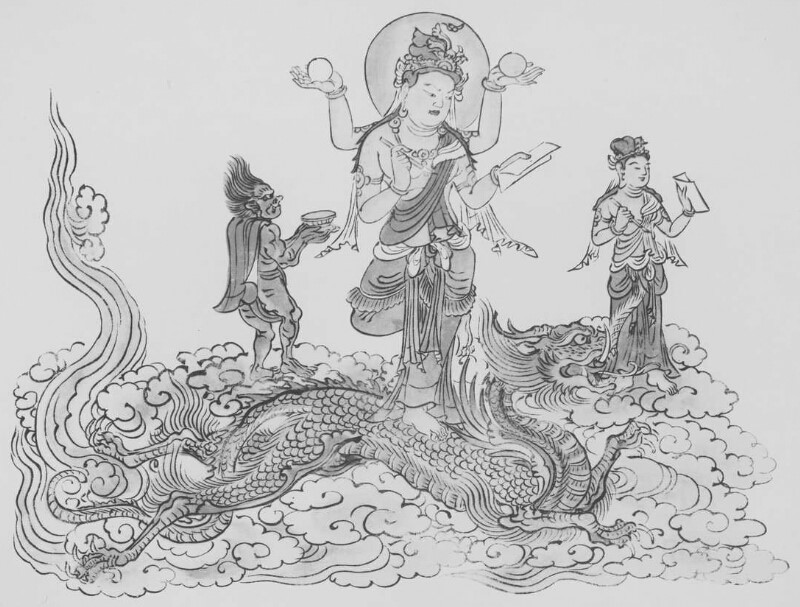
Within the Hokushin-Shinkō (worship of the North Star / 北辰信仰), Genbu is also directly revered as the deification of the Hokuto Shichisei (Big Dipper / 北斗七星), portraying its seven stars in the shape of the Kokuryū (the Black Dragon of the Northern skies / 黒龍). In such depictions, the stars themselves form the body of the dragon, transforming the celestial movement of the northern heavens into a living sacred being.
This imagery carries a profound cosmological understanding. As the Hokuto Shichisei (Big Dipper / 北斗七星) revolves through the seasons around the unmoving Hokushin (North Star / 北辰), Genbu in the shape of the Kokuryū (the Black Dragon of the Northern skies / 黒龍) came to embody the active and dynamic force of heaven itself. While Myōken represents the unmoving celestial power and the divine axis of order, Genbu manifests the movement and protective power surrounding that center. Thus, Genbu appears not merely as guardian of the northern heavens, but as the living embodiment of their strength and motion — the celestial force eternally circling and protecting the sacred center of the stars.
Together, Myōken and Genbu embody the complementary principles of the northern heavens: celestial guidance and constant support, divine authority and enduring protection. Their relationship expresses an ancient truth carried within the symbolism of the Hokushin (North Star / 北辰) and the seven stars of the Hokuto Shichisei (Big Dipper / 北斗七星): that even the highest order of heaven does not stand in isolation, but exists through harmony, trust, and the interdependence of all things beneath the celestial sphere.
Like Myōken herself, a person can radiate clarity, strength, and determination, shining like the North Star at the center of the heavens. Yet without the steadfast support of a trusted companion, this light can neither endure nor realize its will in the world. Genbu embodies this deeper principle: that true strength is found not in solitary grandeur, but in the unwavering bonds that sustain and protect it. Together, they reveal that even the guiding star of the heavens relies on the presence of a being standing by its side—constant, loyal, and unmoved through all the seasons beneath the stars.
The Many Names of Myōken
Myōken, often in worship also referred to as Myōken-sama (Lord Myōken / 妙見様), has been known by many names throughout history. Across different regions, traditions, and schools of thought, he came to be invoked under various titles, each reflecting a distinct aspect of his divine nature and celestial authority. Some names emphasize his connection to the North Star and the heavens, while others express his role as a bodhisattva, protector, and sovereign among the stars. Nevertheless, all these names point to the same sacred presence: the guiding deity of the northern heavens, whose light has inspired devotion across the centuries.
Among the most commonly used names are:
- Myōken (妙見) – “Excellent Vision” or “Marvelous Insight”, the most common name, referring to the deity’s divine perception and celestial wisdom;
- Hokushin Myōken Sonjō-ō (北辰妙見尊星王) – “Venerable Star King Myōken of the North Star”, an exalted title emphasizing the sovereignty and sacred connection of Myōken to the Hokushin (North Star / 北辰);
- Myōken Dai-Bosatsu (妙見大菩薩) – “Great Bodhisattva Myōken”, highlighting the role of Myōken within Buddhist tradition as a compassionate celestial protector and enlightened being;
- Hokushin Bosatsu (北辰菩薩) – “Bodhisattva of the North Star”, a title focusing upon Myōken as the sacred Buddhist embodiment and guiding spirit of the northern heavens;
- Hokuto Myōken (北斗妙見) – “Myōken of the Big Dipper”, emphasizing the unity of Myōken with the Hokuto Shichisei (Big Dipper / 北斗七星) and its deification in the form of Genbu (the Black Warrior / 玄武) appearing as the Kokuryū (Black Dragon / 黒龍), whose celestial movements revolve around the sacred center of the Hokushin (North Star / 北辰) and its divine embodiment, Myōken;
- Sonjō-ō (尊星王) – “Venerable Star King” or “Revered Sovereign of the Stars”, an honorific title expressing divine authority and exalted status among the celestial bodies;
- Seiō (星王) – “King of Stars”, a concise yet powerful title expressing the authority of Myōken as sovereign among the celestial stars and divine forces.
Though the names are many, the divine truth remains one; for each title is but another reflection of Myōken, whose eternal radiance continues to illuminate and guide all who turn their gaze towards the Hokushin (North Star / 北辰).