
Shrine Grounds
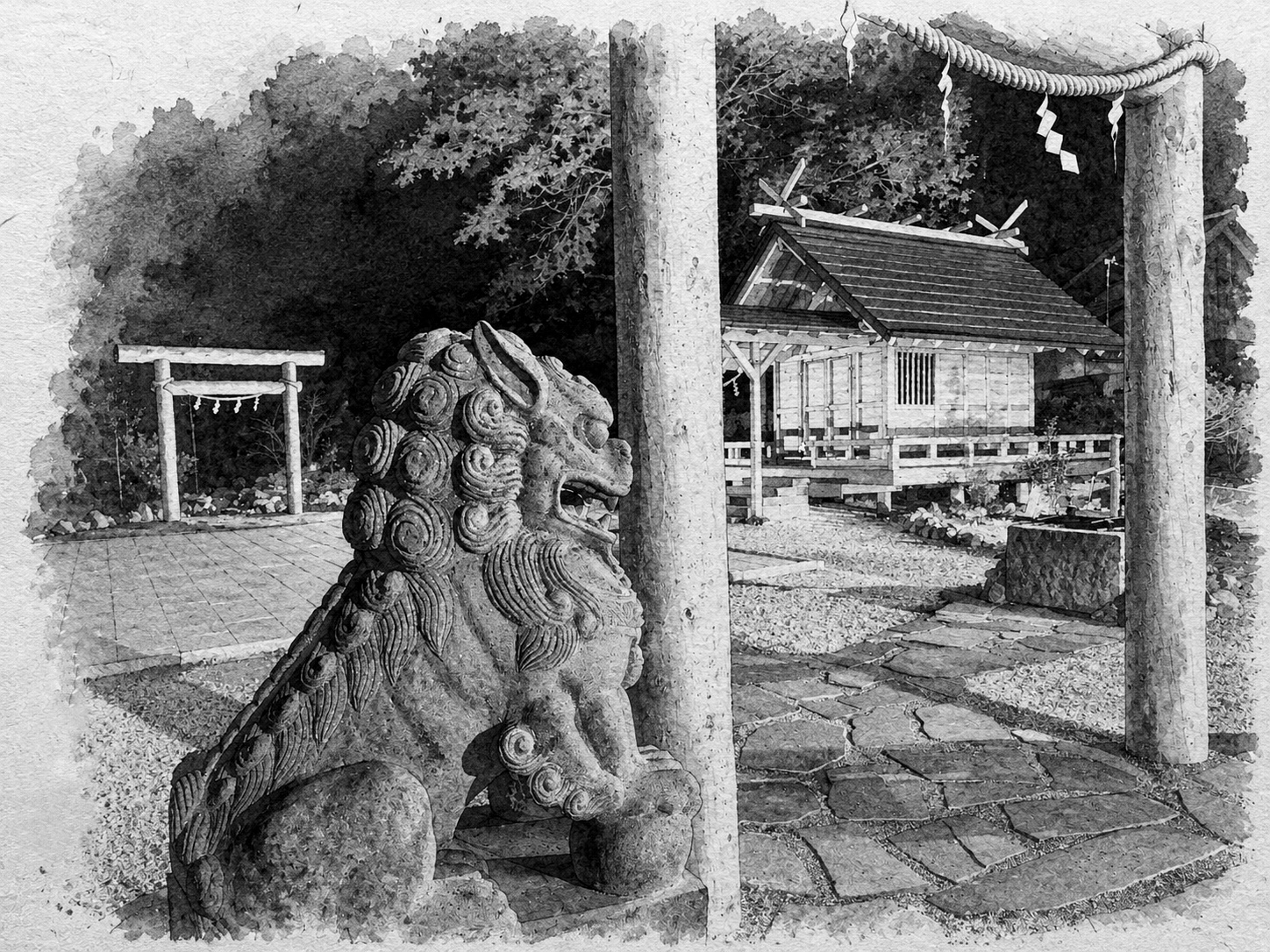
The Hokushin-Jinja (Shrine of the North Star / 北辰神社) stands in Albisried within the municipality of Lengenwang, amidst the beautiful landscape of the Allgäu region of southern Germany. Surrounded by forests, rolling hills, and the massive mountains of the Alps, the shrine was established as a place of worship, reflection, and cultural preservation. Its sacred grounds were carefully designed to embody the harmony between nature, the world of the kami (deities / 神), as well as the ancient spiritual traditions of Japan and the Hokushin Ittō-ryū Hyōhō (North Star One-Sword School of Strategy / 北辰一刀流兵法).
The Hokushin-Jinja consists of a number of important sacred structures and features, each contributing to the religious life, architectural character, and symbolic meaning of the jinja (shrine / 神社). Together, they form an integrated sacred precinct designed in accordance with traditional Japanese shrine principles, as well as with the spiritual traditions associated with the worship of Hokushin Myōken Sonjō-ō (the Venerable Star King Myōken of the North Star / 北辰妙見尊星王). Some of these structures are contemporary creations, while others are historic buildings and artefacts preserved from earlier periods, creating a harmonious union between the living traditions of the present and the cultural legacy of the past.
Designed after the Sacred Landscape of the Northern Heavens
Covering an area of approximately 1,700 square meters, the sacred grounds encompass both Hokushin-Jinja and the surrounding Kokuryū-En (Garden of the Black Dragon). Together, they were conceived as a unified spiritual landscape that expresses the relationship between Myōken—the deity venerated at Hokushin-Jinja—and Genbu (the Black Warrior of the North), the celestial guardian of the northern sky and Myōken’s divine companion.
Within this symbolic arrangement, the shrine itself embodies Myōken, the deified Hokushin (North Star / 北辰), regarded as the steadfast celestial pivot around which the countless stars of the heavens revolve. Surrounding the shrine, the Kokuryū-en (Garden of the Black Dragon / 黒龍園) represents Genbu (the Black Warrior of the North / 玄武) in the form of the Kokuryū (Black Dragon / 黒龍), the divine embodiment of the Hokuto Shichisei (Big Dipper / 北斗七星). Just as the seven stars of the Big Dipper eternally circle the North Star across the seasons, the garden embraces and encircles the shrine, expressing the sacred relationship between the unmoving celestial centre and the dynamic forces that revolve around it.
In this way, the entire shrine and its surroundings have been conceived as a living representation of the northern heavens. Myōken stands at its centre as the divine axis of celestial order, while Genbu manifests the movement, protection, and enduring power that surrounds and safeguards that sacred centre. Together, they embody the complementary principles through which the harmony of the cosmos is maintained: stillness and motion, constancy and change, guidance and guardianship.
The Hagunden
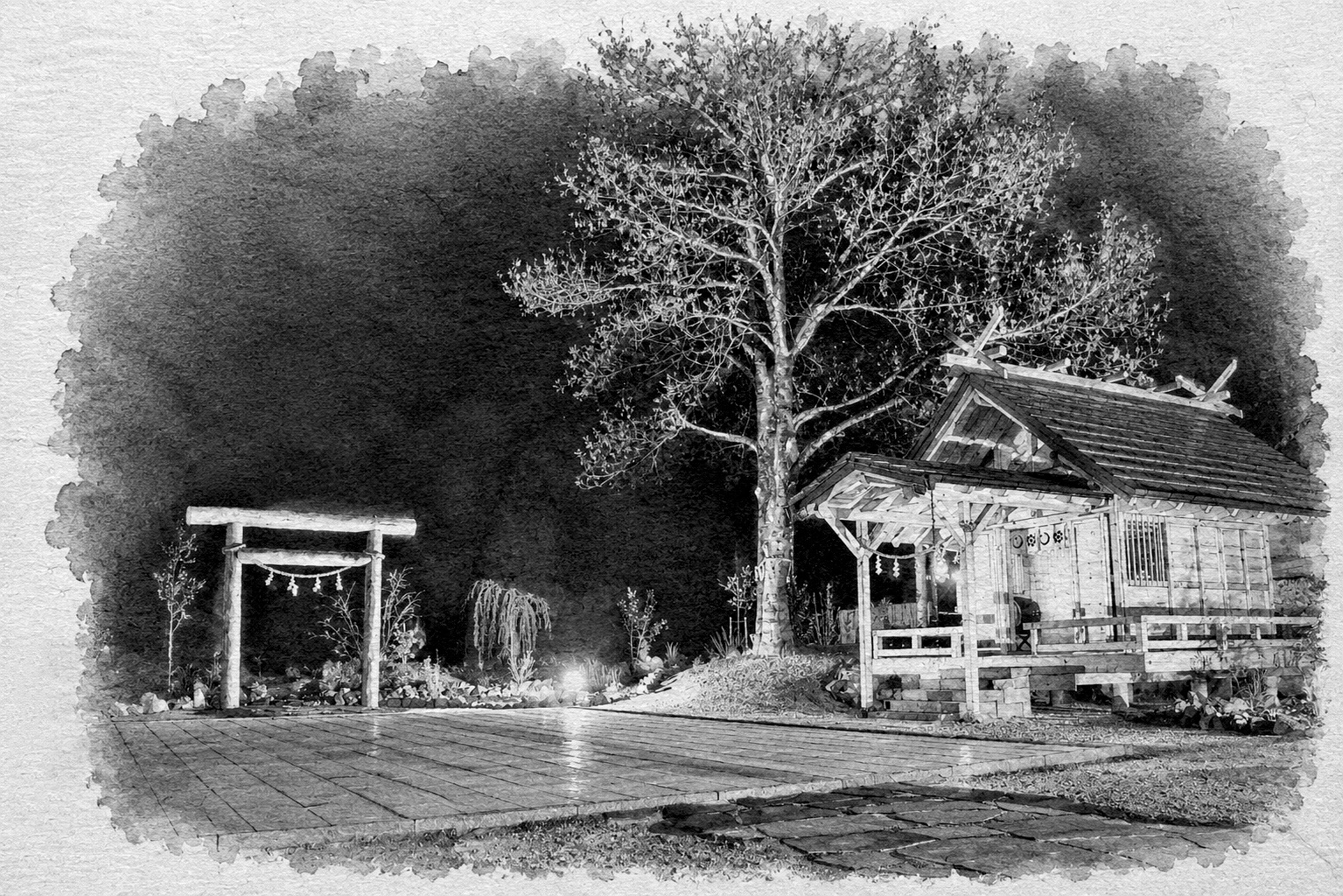
The central building of the Hokushin-Jinja (Shrine of the North Star / 北辰神社) is the shrine’s haiden (hall of worship / 拝殿), the Hagunden (Hall of the Army-Breaking Star / 破軍殿). As the principal place of worship, prayer, and ceremony, it represents the spiritual heart of the shrine and the point where worshippers approach the divine presence of the kami (deity / 神) Hokushin Myōken Sonjō-ō (the Venerable Star King Myōken of the North Star / 北辰妙見尊星王).

The name Hagunden (Hall of the Army-Breaking Star / 破軍殿) derives from Hagunsei (Army-Breaking Star / 破軍星), the seventh and final star of the Hokuto Shichisei (Big Dipper / 北斗七星). This star also forms the tail of Genbu (the Black Warrior of the North / 玄武) in the form of the Kokuryū (Black Dragon / 黒龍) as the deification of the Big Dipper. Throughout East Asian cosmology, this star has long been associated with martial power, transformation, decisive action, and the overcoming of obstacles. For centuries, such symbolism held particular significance among the bushi (warriors / 武士) of Japan, who looked to the northern heavens for guidance and protection in war and conflict. In honour of this tradition, the name Hagunden reflects both the martial heritage of the Hokushin Ittō-ryū Hyōhō (North Star One-Sword School of Strategy / 北辰一刀流兵法), one of the most renown samurai schools of history, and the enduring relationship between the warrior traditions of Japan and the celestial realm represented by Myōken.
The Architecture of the Hagunden
Architecturally, the Hagunden (Hall of the Army-Breaking Star / 破軍殿) is a carefully designed shrine building that draws its inspiration from some of Japan's oldest and most prominent sacred shrine building traditions: Shinmei-zukuri (Shinmei Style Architecture / 神明造) and Taisha-zukuri (Grand Shrine Style Architecture / 大社造).
The strongest influence derives from the Shinmei-zukuri (Shinmei Style Architecture / 神明造), the architectural style most famously associated with the Ise Jingū (Grand Shrine of Ise / 伊勢神宮), the most sacred shrine complex of Japan dedicated to the sun goddess Amaterasu Ō-Mikami (Great Divinity Illuminating Heaven / 天照大御神). Amaterasu is one of the most revered deities within Shintō (Japan’s native nature religion / 神道) and according to the Kojiki ("Records of Ancient Matters"; written in 711–712 / 古事記) and the Nihon Shoki ("The Chronicles of Japan"; written in 720 / 日本書紀) the ancestral deity of the Imperial House of Japan.
This Shinmei-zukuri (Shinmei Style Architecture / 神明造) influence within the architecture of the Hagunden can be seen in its clean and restrained lines, the use of natural unpainted timber, the simple rectangular form of the sanctuary, the straight roof, and the prominent chigi (forked roof finials / 千木) and katsuogi (roof logs / 鰹木) adorning the roof. Together, these elements create an atmosphere of purity, simplicity, and quiet dignity, reflecting the ancient Shintō (Japan’s native nature religion / 神道) understanding that sacredness is often expressed through harmony, balance, and natural beauty rather than ornamentation.
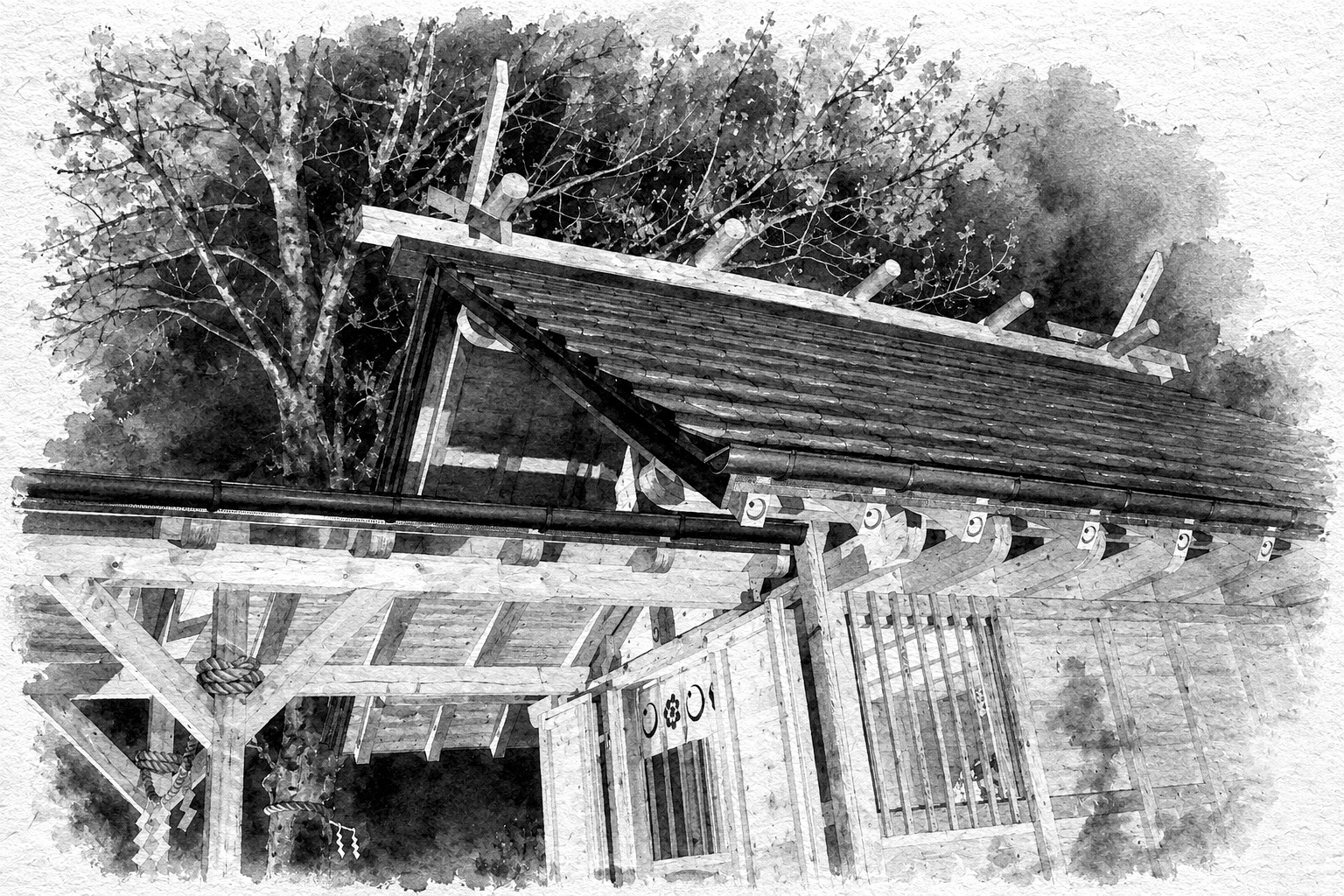
At the same time, the Hagunden incorporates several strong influences from Taisha-zukuri (Grand Shrine Style Architecture / 大社造), which is regarded as one of the most ancient forms of shrine architecture preserved in Japan. This shrine building style is most famously represented by the Izumo Taisha (Grand Shrine of Izumo / 出雲大社), dedicated to Ōkuninushi no Ō-Kami (Great Deity Master of the Great Land / 大国主大神), one of the most important deities described in the Kojiki ("Records of Ancient Matters"; written in 711–712 / 古事記) and the Nihon Shoki ("The Chronicles of Japan"; written in 720 / 日本書紀).
According to these ancient chronicles, Ōkuninushi played a central role in the creation, organization, and governance of the earthly realm before transferring its rule to the descendants of Amaterasu Ō-Mikami, the Imperial House of Japan, in the divine event known as the Kuni-Yuzuri (Transfer of the Land / 国譲り). In recognition of this act, the heavenly deities are said to have granted him the construction of a magnificent palace, traditionally understood to be the origin of Izumo Taisha (Grand Shrine of Izumo / 出雲大社).
In the architectural design of Hokushin-Jinja’s Hagunden (Hall of the Army-Breaking Star / 破軍殿), the Taisha-zukuri (Grand Shrine Style Architecture / 大社造) is represented through the elevated floor, robust timber construction, and strong frontal approach impart a sense of permanence and strength. Its powerful and uncomplicated forms reflect an architectural philosophy in which sacredness is expressed through proportion, craftsmanship, and harmony with nature. These features give the Hagunden a distinctly martial character, befitting its role as the spiritual centre of a tradition whose roots extend deeply into the culture of Japan's warrior class.
The Seiōden
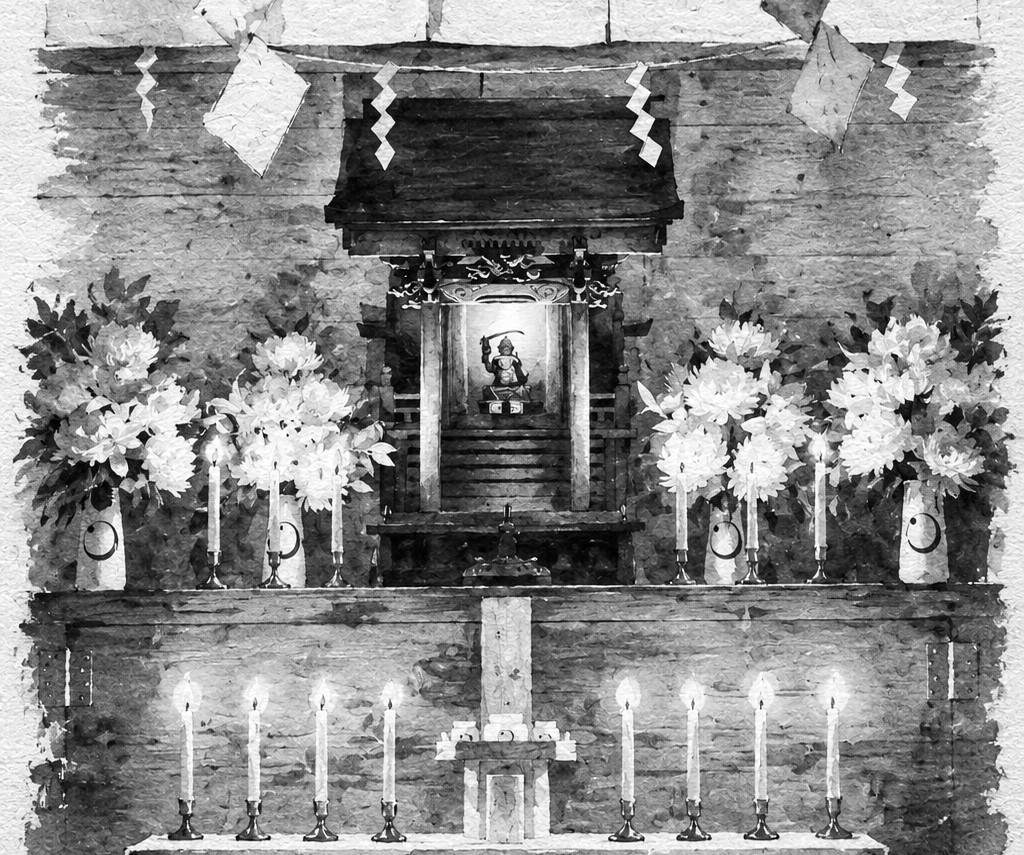
Within the Hagunden (Hall of the Army-Breaking Star / 破軍殿) stands the shrine's innermost and most sacred sanctuary, the Seiōden (Hall of the Star King / 星王殿). The Seiōden is the shinden (hall of the deity / 神殿) of the Hokushin-Jinja (Shrine of the North Star / 北辰神社) and houses the shrine's ancient go-shintai (sacred body of the deity / 御神体), a wooden statue of Hokushin Myōken Sonjō-ō (the Venerable Star King Myōken of the North Star / 北辰妙見尊星王) from the Edo period (1603–1868). As the dwelling place of the deity within the shrine, the Seiōden forms the spiritual axis around which the life of the Hokushin-Jinja revolves.
The name Seiōden (Hall of the Star King / 星王殿) derives from the title Seiō (King of Stars / 星王), one of the honorific names by which Myōken has been revered throughout history. This title reflects Myōken's role as the celestial sovereign of the northern heavens and his identity as the divine embodiment of the Hokushin (North Star / 北辰), the unmoving centre around which the stars and constellations appear to revolve. Within the cosmological traditions of the Hokushin-Shinkō (worship of the North Star / 北辰信仰), the North Star was regarded as the heavenly axis governing celestial order, while the surrounding stars of the heavens performed their eternal movements around it. As the deification of this sacred celestial centre, Myōken came to be venerated as the Seiō (King of Stars / 星王), whose divine authority maintains harmony and order throughout the cosmos. The Seiōden (Hall of the Star King / 星王殿) therefore serves not merely as the innermost sanctuary of the shrine, but as a symbolic representation of the celestial centre itself. Just as the Hokushin (North Star / 北辰) stands steadfast amidst the turning heavens, the Seiōden occupies the spiritual heart of the Hokushin-Jinja, from which the presence and blessings of Myōken extend throughout the sacred precincts.
Unlike the Hagunden (Hall of the Army-Breaking Star / 破軍殿), which was constructed together with most of the Hokushin-Jinja itself in-between 2025 and 2026, the Seiōden (Hall of the Star King / 星王殿) is a historical shrine dating from the late Edo period (1603–1868). Crafted by master artisans of its age, the Seiōden displays the remarkable craftsmanship characteristic of Japanese shrine architecture during the county’s feudal periods. It was built in the traditional Nagare-zukuri (Flowing Roof Style / 流造), one of the most common shrine styles in Japan, in which the elongated front roof is the defining feature. The asymmetrical roof of the shinden in fact extends forward over the entrance, creating a protective canopy above the staircase and approach.
Among the most remarkable features of the Seiōden there are its intricate woodcarvings. Dragons, guardian beasts and clouds emerge from the structural members beneath the eaves, transforming functional architectural elements into sacred works of art. Particularly noteworthy are the carved dragons, whose flowing forms appear to move through the clouds surrounding the sanctuary. Within the symbolism of the Hokushin-Jinja, these carvings evoke Genbu (the Black Warrior of the North / 玄武) in the form of the Kokuryū (Black Dragon / 黒龍), the celestial guardian of the northern heavens and divine companion and protector of Myōken.
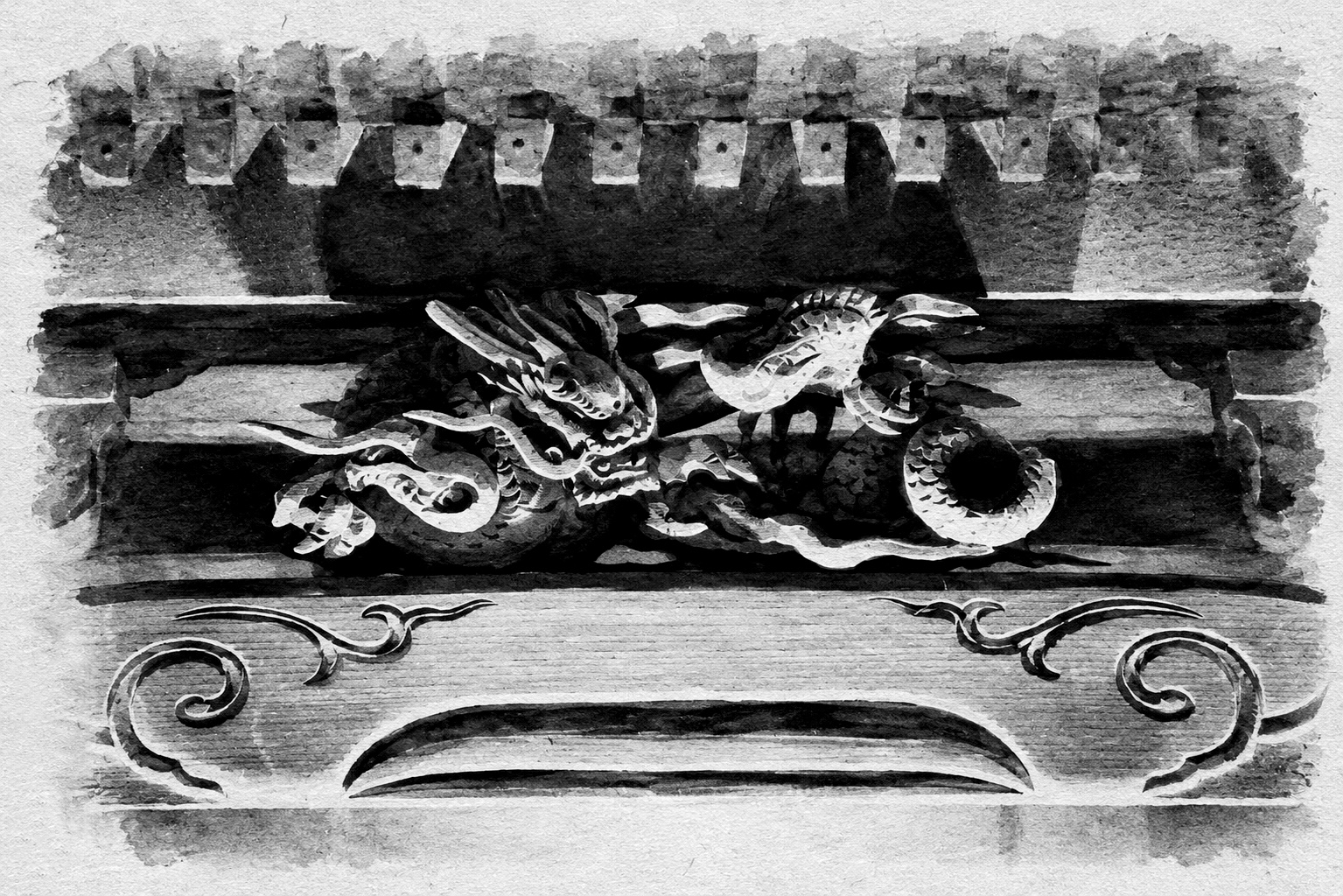
The sanctuary is further adorned with carvings of shishi (lion-dogs / 獅子) and baku (mythical dream-eating creatures / 獏), all of which serve as traditional protective symbols within Japanese shrine and temple architecture. The shishi (lion-dogs / 獅子) are revered as guardians that ward off evil influences and safeguard sacred spaces, while the baku (mythical dream-eating creatures / 獏), a legendary creature believed to devour nightmares and misfortune, is likewise regarded as a protector against harmful influences. Together, the carved shishi (lion-dogs / 獅子) and baku (mythical dream-eating creatures / 獏) express the purity of the sanctuary, serving as guardians of both the sacred structure itself and the divine presence residing within.
Through the preservation of the Seiōden a tangible piece of Japan's sacred and artistic heritage continues to endure, connecting the Hokushin-Jinja not only to the spiritual traditions of the past, but also to the generations of artisans whose work was dedicated to the service of the kami (deities / 神).
The Go-Shintai
At the heart of the Seiōden (Hall of the Star King / 星王殿) resides the shrine's go-shintai (sacred body of the deity / 御神体): an ancient wooden statue of Hokushin Myōken Sonjō-ō (the Venerable Star King Myōken of the North Star / 北辰妙見尊星王), dating from the Edo period (1603–1868). Through the sacred rite of kanjō (ceremony of invitation and transfer of a divine presence into an object / 勧請), the statue serves as the vessel through which the divine presence of Myōken is enshrined within the Hokushin-Jinja (Shrine of the North Star / 北辰神社).
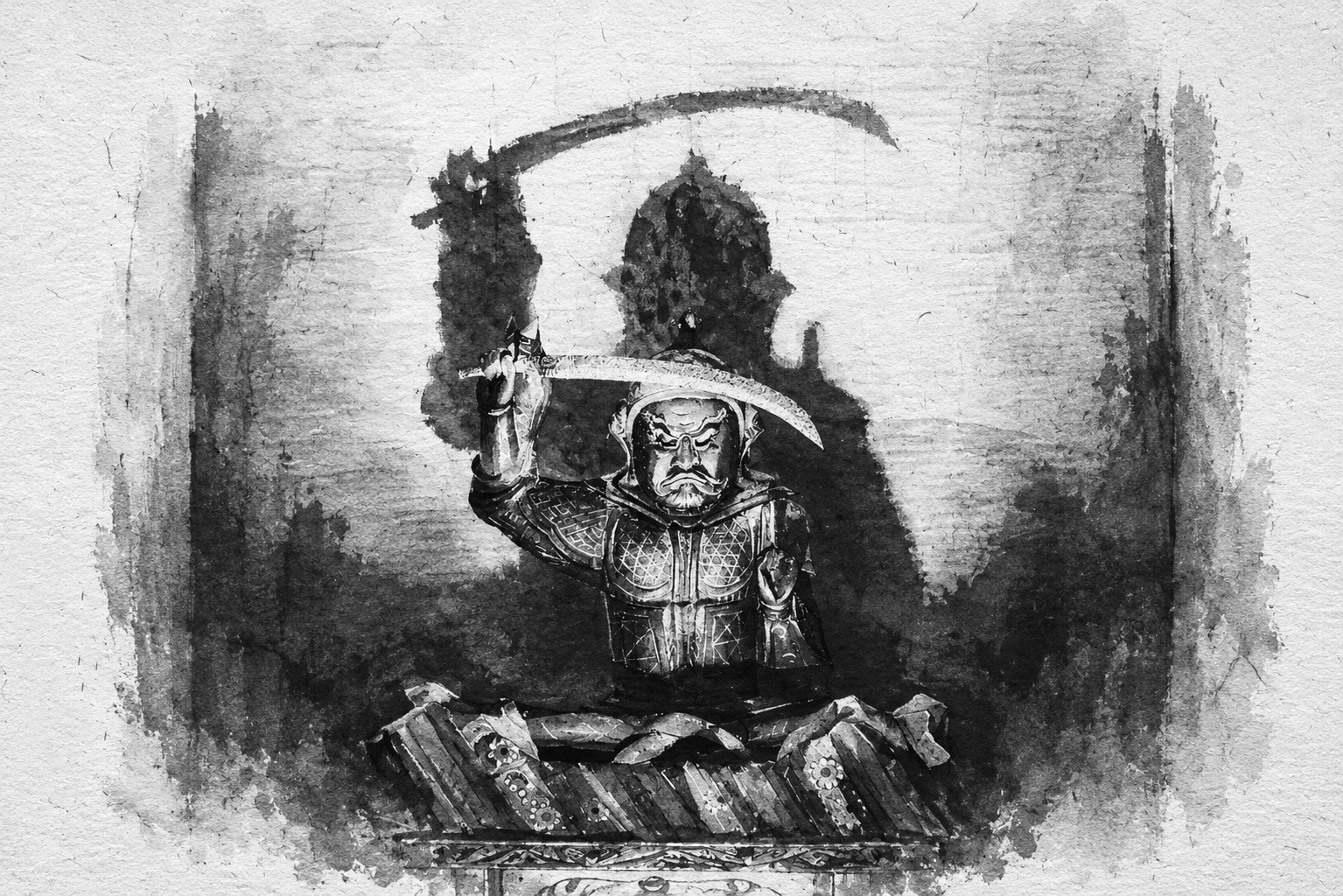
The wooden statue depicts Myōken in his traditional form as a deity of war, holding a raised sword above his head. Within the symbolism of Myōken worship, the sword represents vigilance, righteous strength, and the divine authority to overcome and strike down forces that threaten cosmic order and harmony. Furthermore, his stern expression and upright posture embody the virtues for which he has long been revered: unwavering determination, protection, and guidance amidst life's ever-changing circumstances.
Carved from a single solid block of wood, the statue bears the traces of centuries of veneration and preservation. More than merely a work of religious art, it serves as the embodiment of Myōken’s presence within Hokushin-Jinja, thus forming the focal point of all worship taking place at the shrine.
The Hokutoba
Directly before the Hagunden (Hall of the Army-Breaking Star / 破軍殿) lies the Hokutoba (Place of the Big Dipper / 北斗場), the ceremonial courtyard of the Hokushin-Jinja (Shrine of the North Star / 北辰神社). Named after the Hokuto Shichisei (Big Dipper / 北斗七星), whose eternal movement around the Hokushin (North Star / 北辰) is one of the central symbols of the worship of Hokushin Myōken Sonjō-ō (the Venerable Star King Myōken of the North Star / 北辰妙見尊星王), the Hokutoba (Place of the Big Dipper / 北斗場) comprises the sacred forecourt extending before the shrine's main hall.
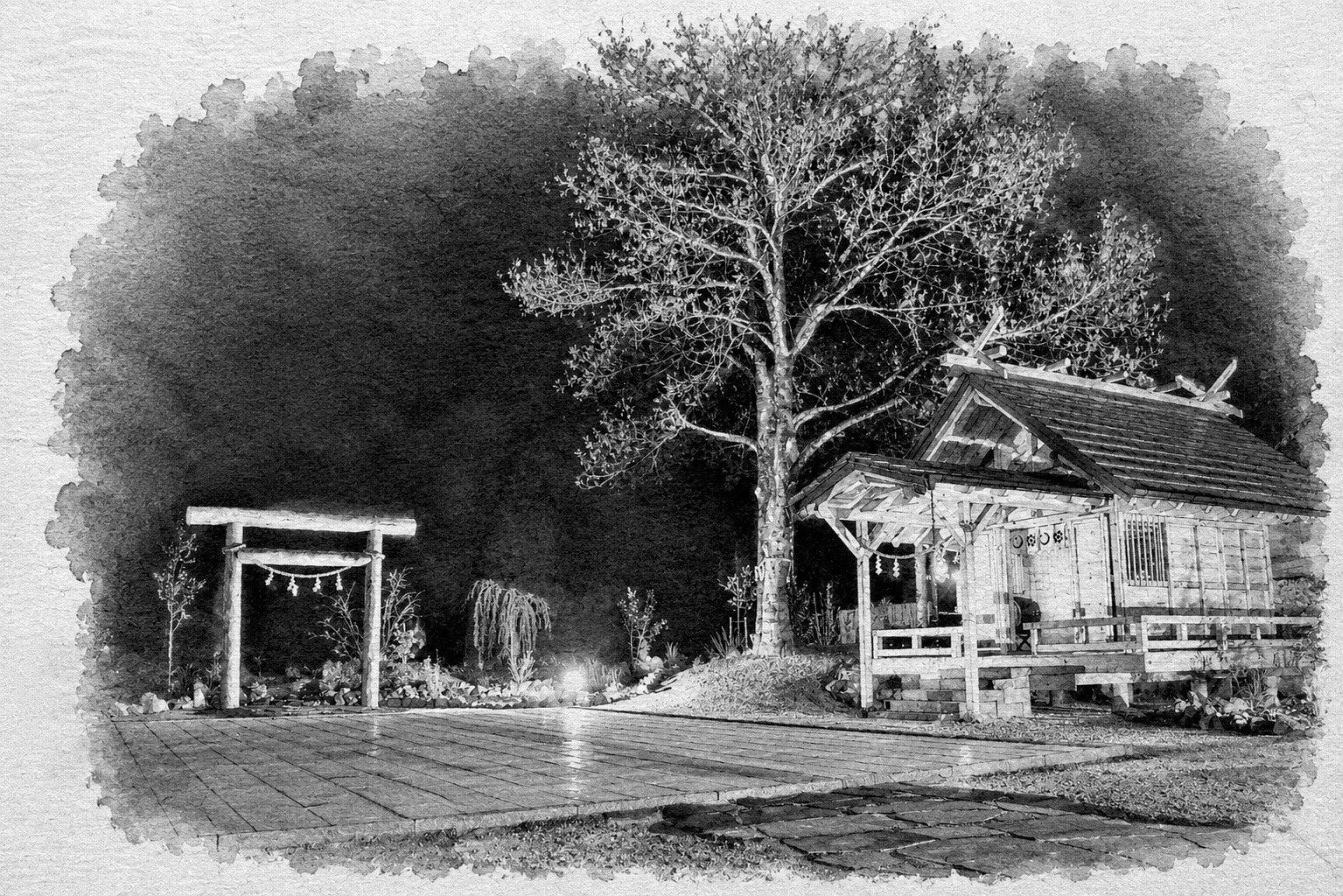
Consisting of the central granite-paved courtyard together with the surrounding ceremonial space, the Hokutoba serves as the principal venue for religious ceremonies, hōnō-enbu (dedicatory martial demonstrations / 奉納演武), hōnō-jiai (ritual matches dedicated to the deity / 奉納試合), and the regular yagai-geiko (outdoor training / 野外稽古) of the famous samurai school Hokushin Ittō-ryū Hyōhō.
The Shinmei Torii
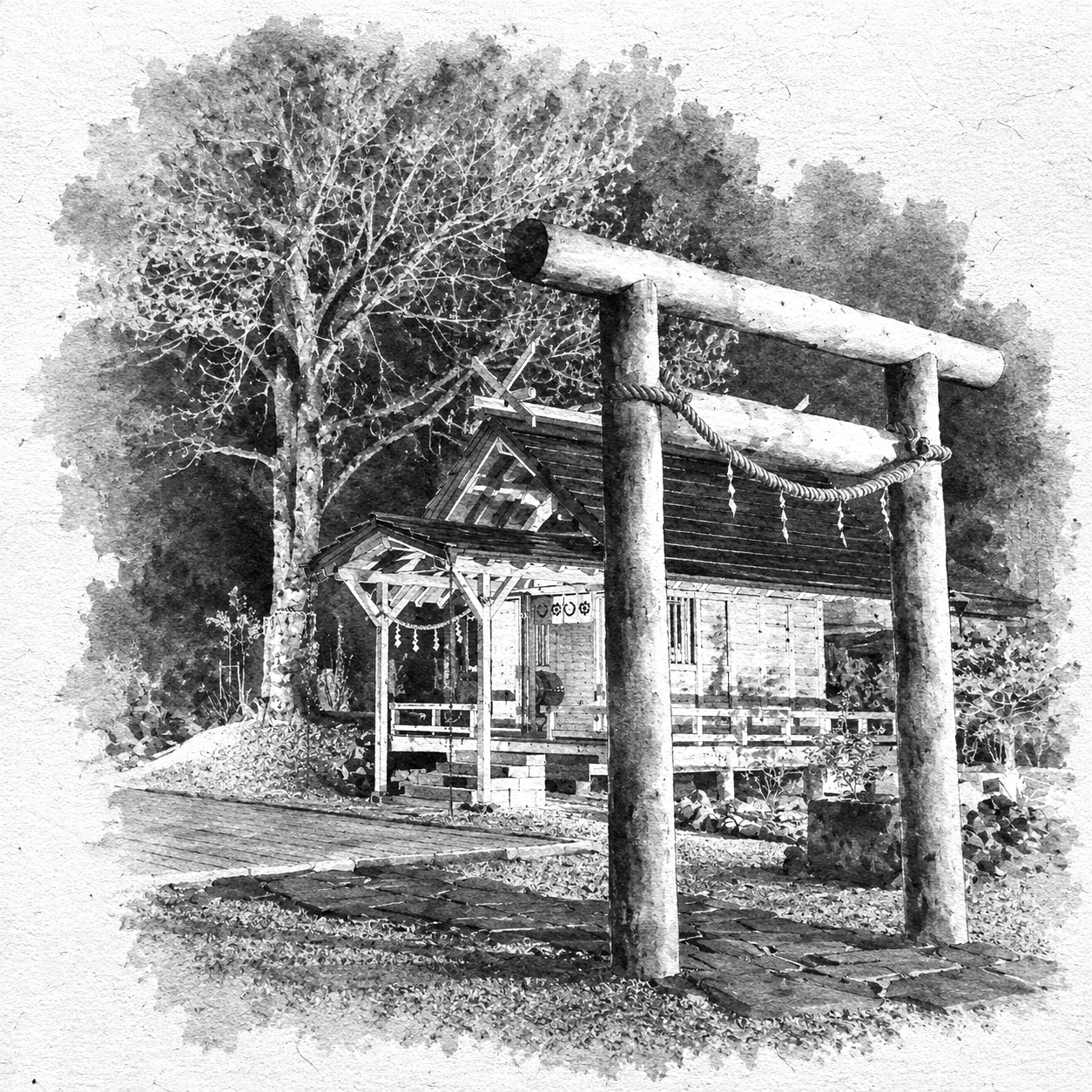
The sacred precincts of the Hokushin-Jinja (Shrine of the North Star / 北辰神社) are framed by three large shinmei-torii (shinmei-style shrine gates / 神明鳥居), whose simple and dignified form are characterized by their straight lines, unadorned construction, and emphasis upon purity and sacred simplicity. Shinmei-torii (shinmei-style shrine gates / 神明鳥居) are the oldest and simplest types of torii (shrine gates / 鳥居) in Japan, dating back to the early Heian period (794–1185).
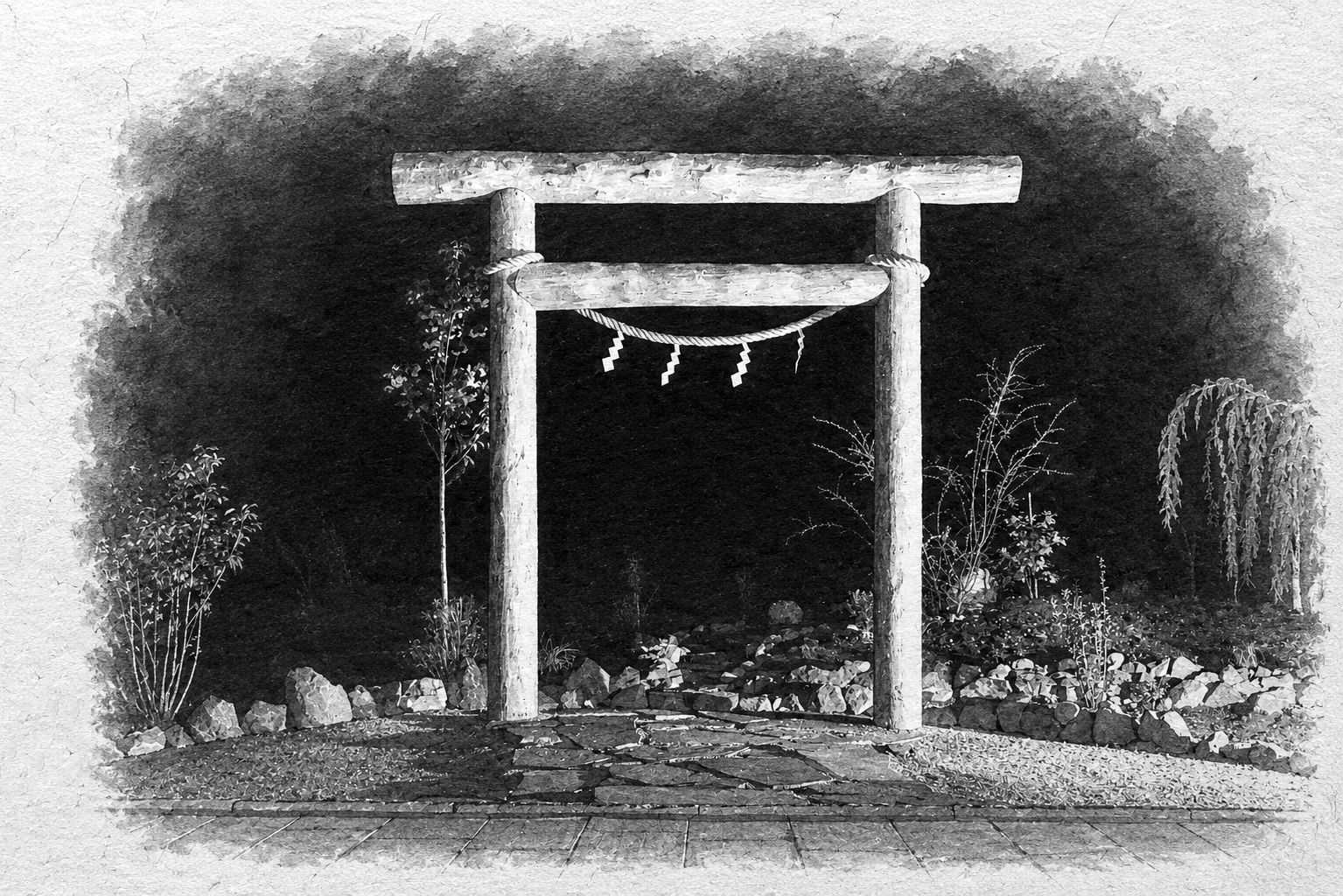
Within Shintō (Japan’s native nature religion / 神道) tradition, a torii (shrine gate / 鳥居) marks the boundary between the ordinary world and the sacred realm of the kami (deities / 神). Passing beneath a torii (shrine gate / 鳥居) therefore signifies more than merely entering a physical space; it symbolizes a transition into the realm of the divine. Crossing the gates one enters the sacred world of the kami (deities / 神), where worship, ritual, and spiritual practice take place. Beyond them extends the ordinary world of everyday life.
The three torii (shrine gate / 鳥居) are further adorned with shimenawa (sacred ropes / 注連縄) and shide (zigzag paper streamers / 紙垂), traditional symbols of purity and sanctity within Shintō (Japan’s native nature religion / 神道). Together, they signify the presence of the divine and visibly mark the space beyond as sacred ground. The shimenawa (sacred rope / 注連縄) serves as a boundary separating the sacred from the ordinary, while the shide (zigzag paper streamers / 紙垂) symbolize purification and the spiritual presence of the kami (deities / 神) dwelling within the shrine precincts.
The Ichi no Torii (First Torii / 一の鳥居) marks the principal entrance into the precincts of the Hokushin-Jinja. The Ni no Torii (Second Torii / 二の鳥居) stands at the entrance to the larger grounds of the Kokuryū-en (Garden of the Black Dragon / 黒龍園), while the San no Torii (Third Torii / 三の鳥居) marks the transition towards the Kengō no Yu (Bath of the Sword Masters / 剣豪の湯), the large private wellness area of the Chiba-Dōjō (千葉道場) of the Hokushin Ittō-ryū, situated as a separate area within the beauty of the Kokuryū-en (Garden of the Black Dragon / 黒龍園). Together, the three torii (shrine gate / 鳥居) create sacred gateways guarding the divine world of the kami (deity / 神) within the jinja (shrine / 神社) from influences of the of the ordinary outer world.
The Shishi
Standing before the Ichi no Torii (First Torii / 一の鳥居), the entrance of the Hokushin-Jinja (Shrine of the North Star / 北辰神社), is a pair of stone shishi (lion-dogs / 獅子), traditional guardian figures found at both Shintō (Japan’s native nature religion / 神道) shrines and Bukkyō (Buddhist / 仏教) temples throughout Japan. Originating from ancient lion imagery transmitted from India through China and Korea, the shishi (lion-dogs / 獅子) — also commonly referred to as komainu (Korean dogs / 狛犬) — have long been revered within the Shinbutsu-Shūgō (syncretism of Shintōism and Buddhism / 神仏習合) as protectors against evil influences, misfortune, and spiritual impurity. Positioned at entrances and sacred boundaries, they serve to guard the realm of the kami (deities / 神), butsu (buddhas / 仏) and bosatsu (bodhisattvas / 菩薩) while safeguarding those who enter with sincere hearts.
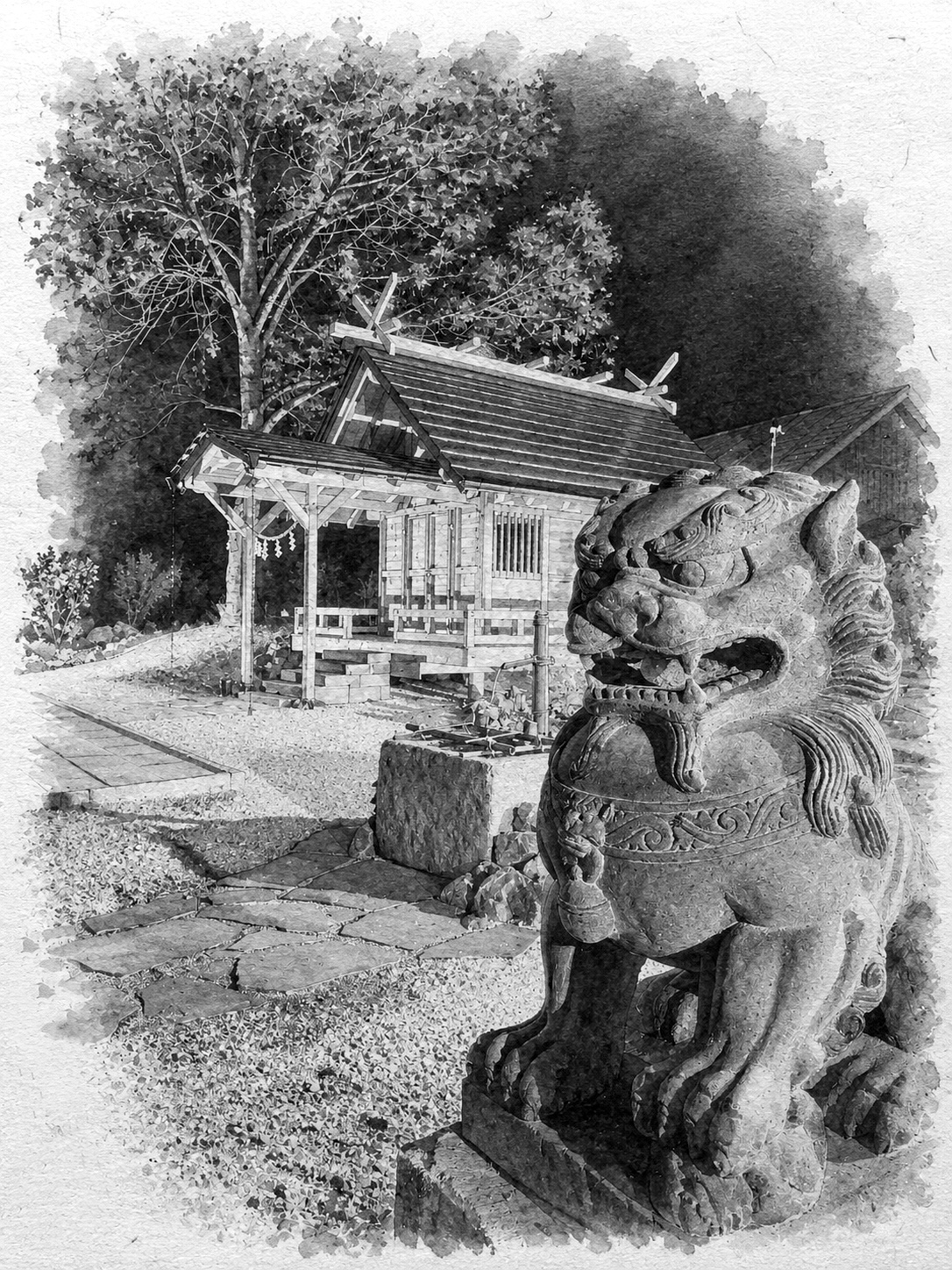
The pair at the Hokushin-Jinja are hand-carved from volcanic rock in an ancient style that preserves strong Chinese influences. Unlike the more familiar Japanese Edo-period (1603–1868) convention in which one shishi displays an open mouth and the other a closed mouth, both of these guardians possess open mouths, a feature commonly found in earlier Chinese and continental East Asian examples, which were also common in Japan during several periods. Their powerful forms and expressive features reflect a tradition that predates many of the stylistic developments that later became standard in Japan. Examples of such Chinese-influenced shishi (lion-dogs / 獅子) can still be found at a number of important shrines and temples throughout Japan, including the famous Kiyomizu-dera (Pure Water Temple / 清水寺) in Kyōto.
The presence of these guardians at the entrance to Hokushin-Jinja therefore not only fulfills their traditional protective function but also serves as a reminder of the rich cultural and artistic exchange through which many aspects of Japanese religious culture originally developed.
The Chōzuya
Immediately after entering the Hokushin-Jinja (Shrine of the North Star / 北辰神社) and to the right of the Ichi no Torii (First Shrine Gate / 一の鳥居) stands the chōzuya (purification well / 手水舎). Before approaching the shrine, the worshippers traditionally perform a ritual purification known as temizu (purification with water / 手水), a practice that has formed an essential part of Shintō (Japan’s native nature religion / 神道) worship for centuries.
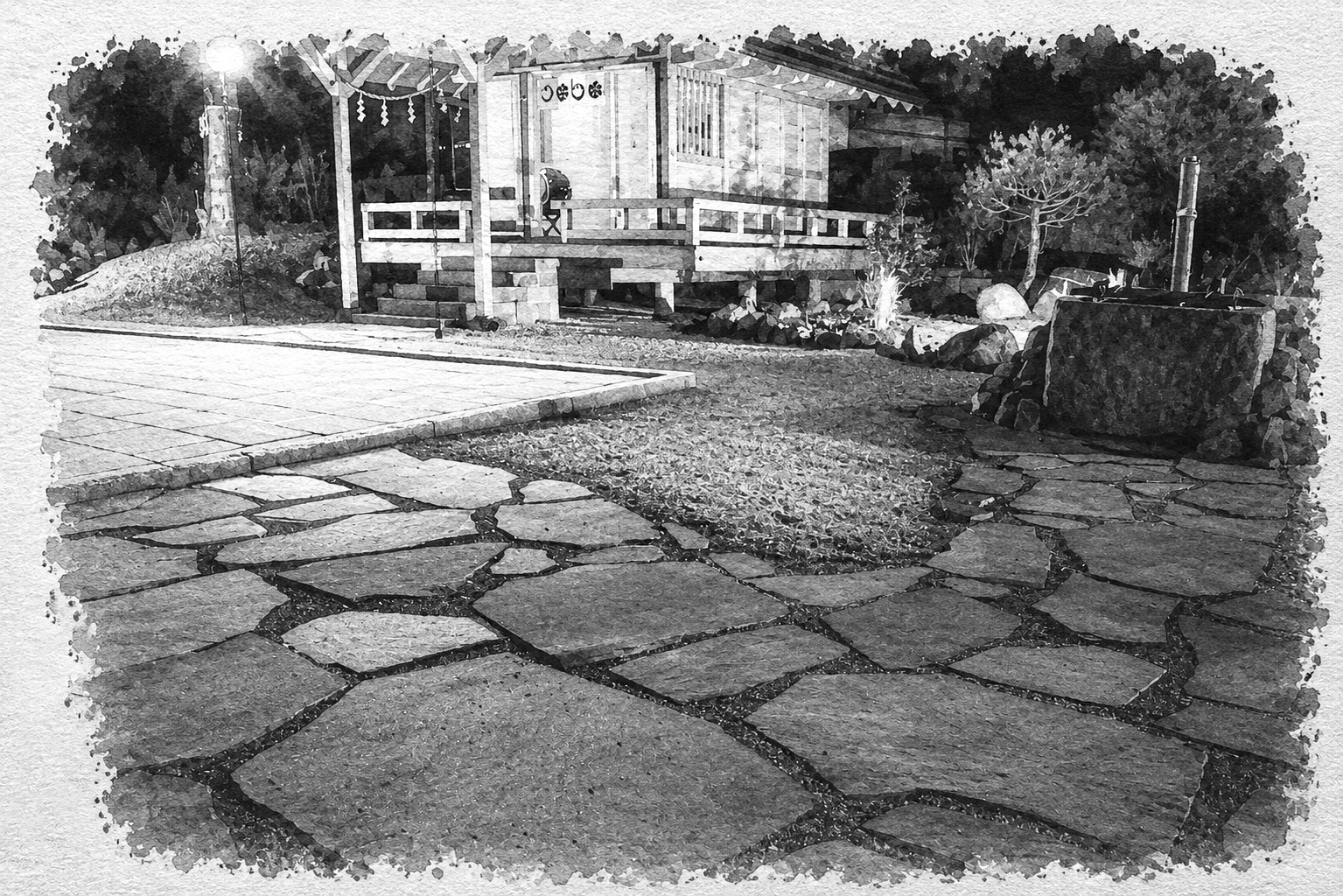
Within Shintō (Japan’s native nature religion / 神道), purity is regarded as an important prerequisite for approaching the kami (deities / 神). The purpose of this ritual is therefore not physical cleanliness alone, but the symbolic purification of body, mind, and spirit before entering the sacred presence of the deity.
During the temizu (purification with water / 手水) ritual, the water is never drunk, but used solely for ritual purification. Likewise, water that has been used to rinse the hands or mouth should never be returned to the basin. Instead, it is allowed to flow onto the ground, symbolically carrying away impurity and leaving both the worshipper and the Chōzuya (purification well / 手水舎) in a state of purity.
How to perform temizu (purification with water / 手水) at the Hokushin-Jinja:
- Approach the Chōzuya (purification well / 手水舎) and bow slightly towards it.
- Take a hishaku (wooden ladle / 柄杓) with the right hand to draw water from the flowing water. The water within the hishaku (wooden ladle / 柄杓) should be enough for the whole purification ritual.
- First, purify the left hand through rinsing it slightly with the water collected. Do so in front of the Chōzuya (purification well / 手水舎). Used water shall never be put back into the well.
- Follow up with purifying the right hand in the same way, by moving the hishaku (wooden ladle / 柄杓) to the left hand.
- After moving the hishaku back to the right hand, water is then poured into the left hand and used to gently rinse the mouth. The water is then spit out on the floor next to the Chōzuya (purification well / 手水舎). Never drink the water!
- Afterwards, the left hand is rinsed once more before the remaining water is allowed to flow down the handle of the hishaku, thereby purifying the ladle itself.
- Place the hishaku (wooden ladle / 柄杓) again on the Chōzuya (purification well / 手水舎). Never hand it directly to another person.
- Take a step back and bow slightly towards the Chōzuya (purification well / 手水舎). Now you are ready to approach the (hall of worship / 拝殿) of the jinja (shrine / 神社) and pray to the kami (deity / 神).
This simple yet profound act serves to prepare worshippers to stand before the kami (deity / 神) with a purified heart and mind, and as a reminder to leave behind worldly concerns and approach the jinja (shrine / 神社) with sincerity, humility, and reverence.
The Go-Shinboku
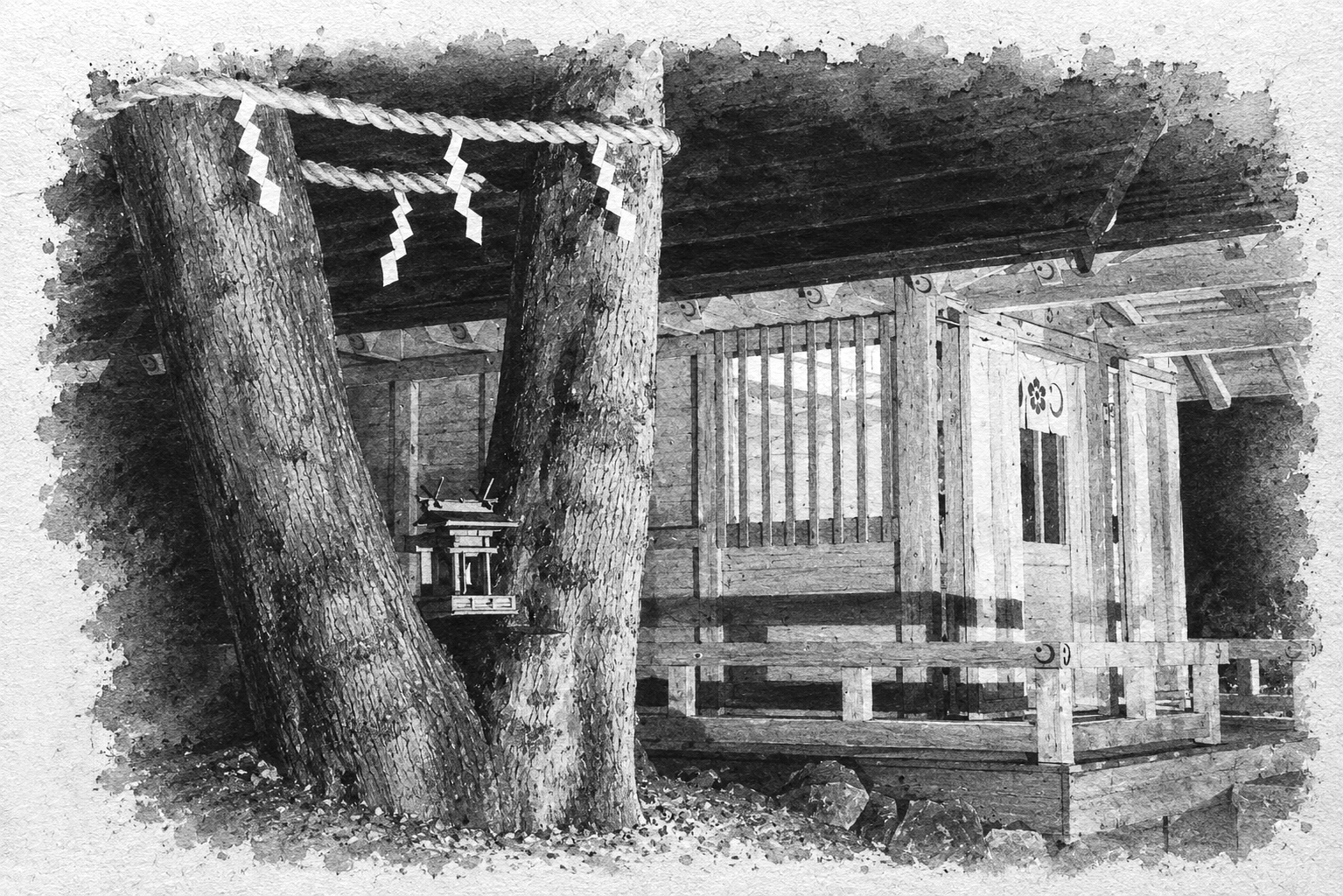
Beside the Hagunden (Hall of the Army-Breaking Star / 破軍殿) stands one of the most revered natural features of the Hokushin-Jinja (Shrine of the North Star / 北辰神社): an ancient ash-tree revered as the go-shinboku (sacred tree / 御神木) of the shrine. With its powerful trunk and broad branches extending protectively above the shrine, this more than a century old tree appears to embrace the Hagunden (Hall of the Army-Breaking Star / 破軍殿) beneath its canopy.
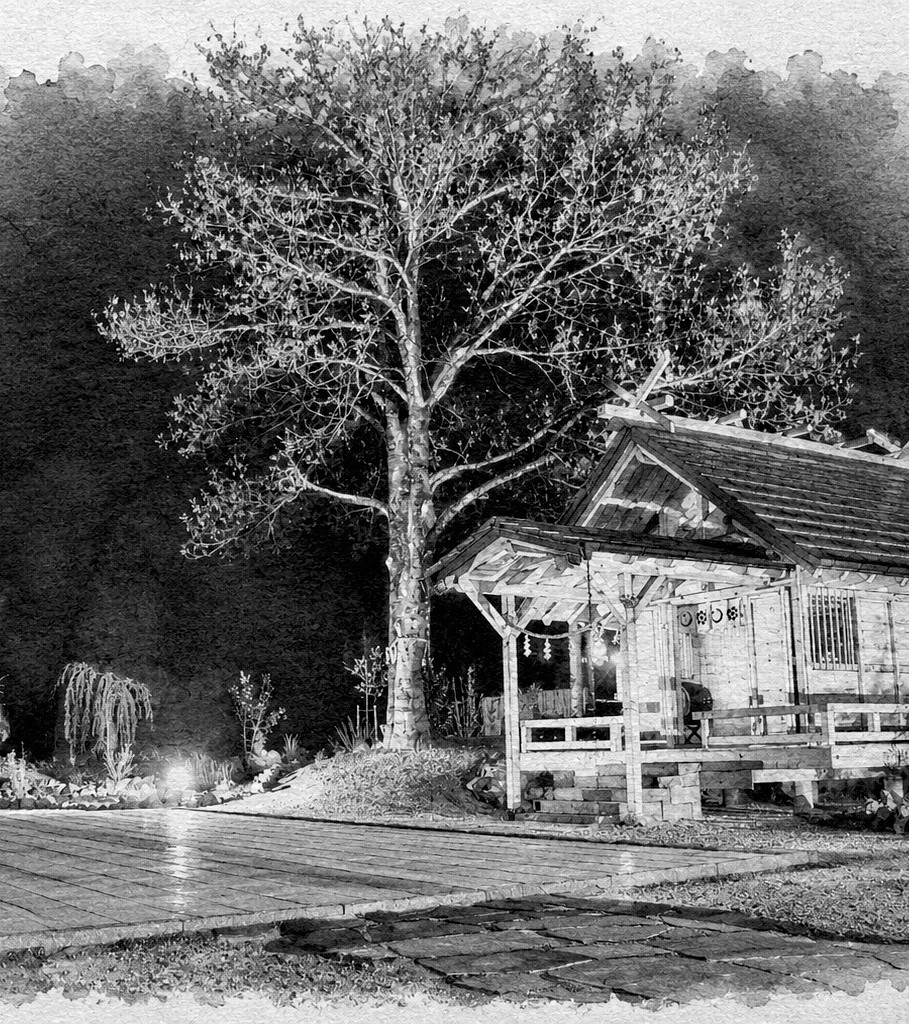
Within Shintō (Japan’s native nature religion / 神道), certain trees have long been regarded as especially sacred. Known as go-shinboku (sacred tree / 御神木), they are revered as dwelling places of the kami (deities / 神) and as visible manifestations of the divine presence within the natural world. Since ancient times, forests, mountains, waterfalls, and remarkable trees have been understood not merely as parts of nature, but as places where the sacred power of the kami (deities / 神) reveals itself most clearly.
For this reason, many jinja (shrines / 神社) throughout Japan preserve and venerate ancient trees within their sacred precincts. Such trees often predate the shrine buildings themselves, standing as silent witnesses to the passing of generations and to the continual cycle of life beneath the heavens. Their enduring presence came to symbolize longevity, stability, protection, and the unbroken continuity between the world of humanity and the realm of the divine.
The go-shinboku (sacred tree / 御神木) of the Hokushin-Jinja likewise forms an inseparable part of the shrine’s sacred landscape. Standing beside the Hagunden (Hall of the Army-Breaking Star / 破軍殿), it serves as a living reminder of the ancient Shintō (Japan’s native nature religion / 神道) understanding that the kami (deities / 神) are not separate from nature, but manifest themselves through it. Beneath its branches, the harmony between the natural world, the shrine, and the divine presence of Hokushin Myōken Sonjō-ō (the Venerable Star King Myōken of the North Star / 北辰妙見尊星王) becomes visible, thus expressing the enduring unity of heaven, earth, and all living things.
The Inari Shrine
Nestled at the foot of the go-shinboku (sacred tree / 御神木) of the Hokushin-Jinja (Shrine of the North Star / 北辰神社) stands a small Inari-sha (Inari Shrine / 稲荷社), creating a particularly evocative union between the natural and spiritual worlds. Dedicated to Inari Ō-Kami (Great Deity Inari / 稲荷大神), one of Japan's most widely venerated deities, the shrine serves as a place of prayer for prosperity, success and good fortune.
Inari Ō-Kami (Great Deity Inari / 稲荷大神) is traditionally revered as the kami (deity / 神) of rice, agriculture, fertility, prosperity, commerce, worldly success and as the guardian deity of swordsmiths. Over the centuries, the worship of Inari spread throughout all levels of Japanese society, making Inari one of the most beloved and widely worshipped deities in Japan. Closely associated with this kami (deity / 神) are the kitsune (foxes / 狐), who are regarded not as the deity itself, but as divine messengers serving Inari Ō-Kami.
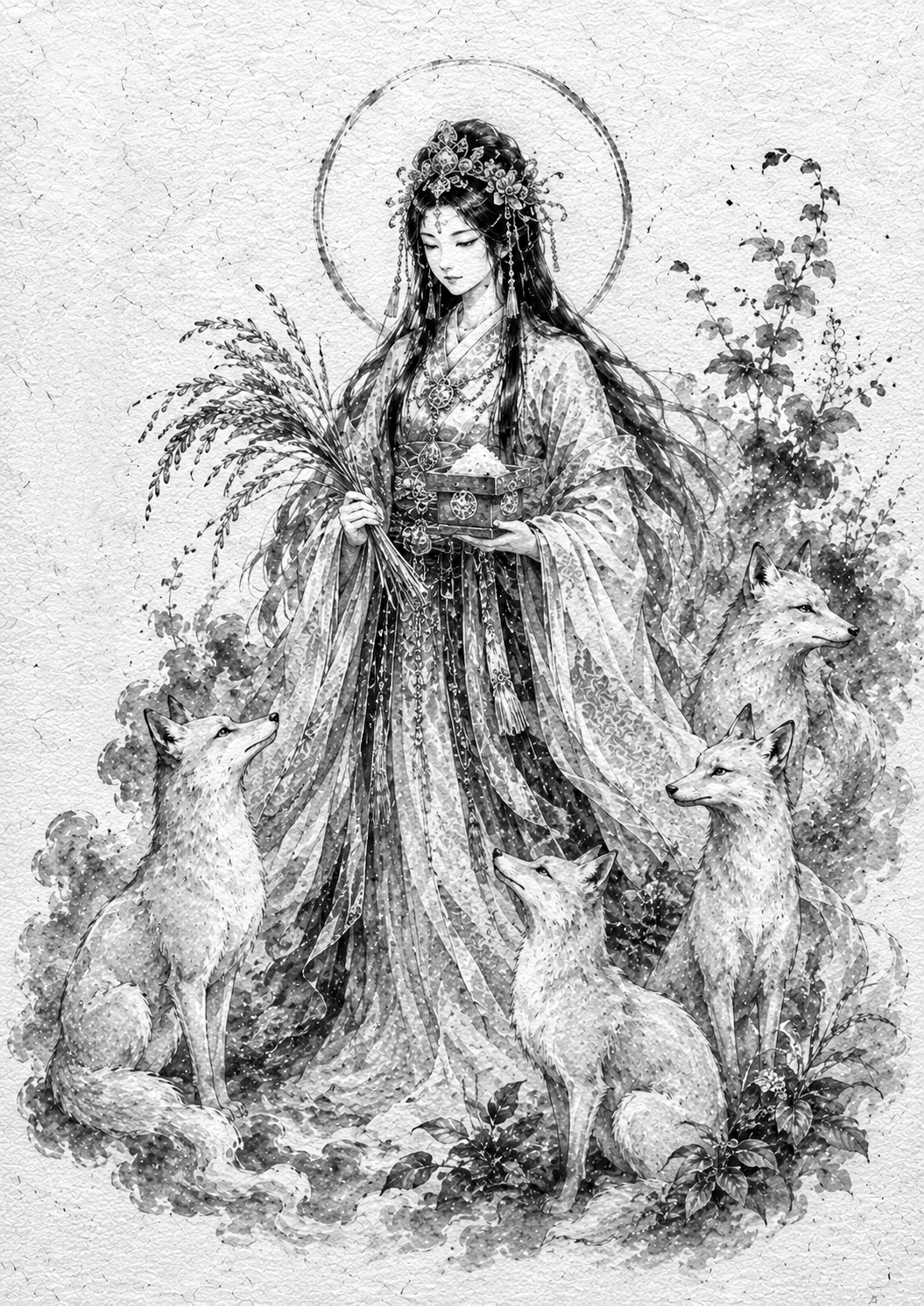
The establishment of the Inari-sha (Inari Shrine / 稲荷社) beneath the go-shinboku (sacred tree / 御神木) was inspired by the frequent appearance of a kitsune (fox / 狐) that regularly passes through the shrine grounds near the sacred tree. In accordance with the long-standing association between Inari Ō-Kami (Great Deity Inari / 稲荷大神) and the kitsune (foxes / 狐), regarded as the divine messenger of the deity, these recurring visits came to be viewed as a particularly auspicious sign of Inari's presence.
The Inari-sha was also established following the wishes of Ōtsuka Eriko, the wife of Ōtsuka Ryūnosuke, the seventh-generation sōke (headmaster / 宗家) of the Hokushin Ittō-ryū, and their joined visit and prayers for success and prosperity for their karyū (family school / 家流) at the Yūtoku Inari-jinja (Yūtoku Inari Shrine / 祐徳稲荷神社) in Saga (Saga Prefecture / 佐賀県) in 2025, which became her favourite shrine in Japan.
Today, the Inari-sha within the grounds of the Hokushin-Jinja stands as a quiet place of devotion beneath the go-shinboku (sacred tree / 御神木), where visitors can pray to Inari Ō-Kami for fertility, prosperity, and worldly success.
The Kokuryū-en
Surrounding the Hokushin-Jinja (Shrine of the North Star) on all sides lies the Kokuryū-En (Garden of the Black Dragon), a Japanese garden created as a place of beauty, contemplation, and harmony with nature. Situated in Albisried—part of the municipality of Lengenwang—and nestled amidst the rolling hills, forests, and Alpine landscapes of the Allgäu region, the garden blends the aesthetic principles of traditional Japanese garden culture with the natural character of its Bavarian surroundings.
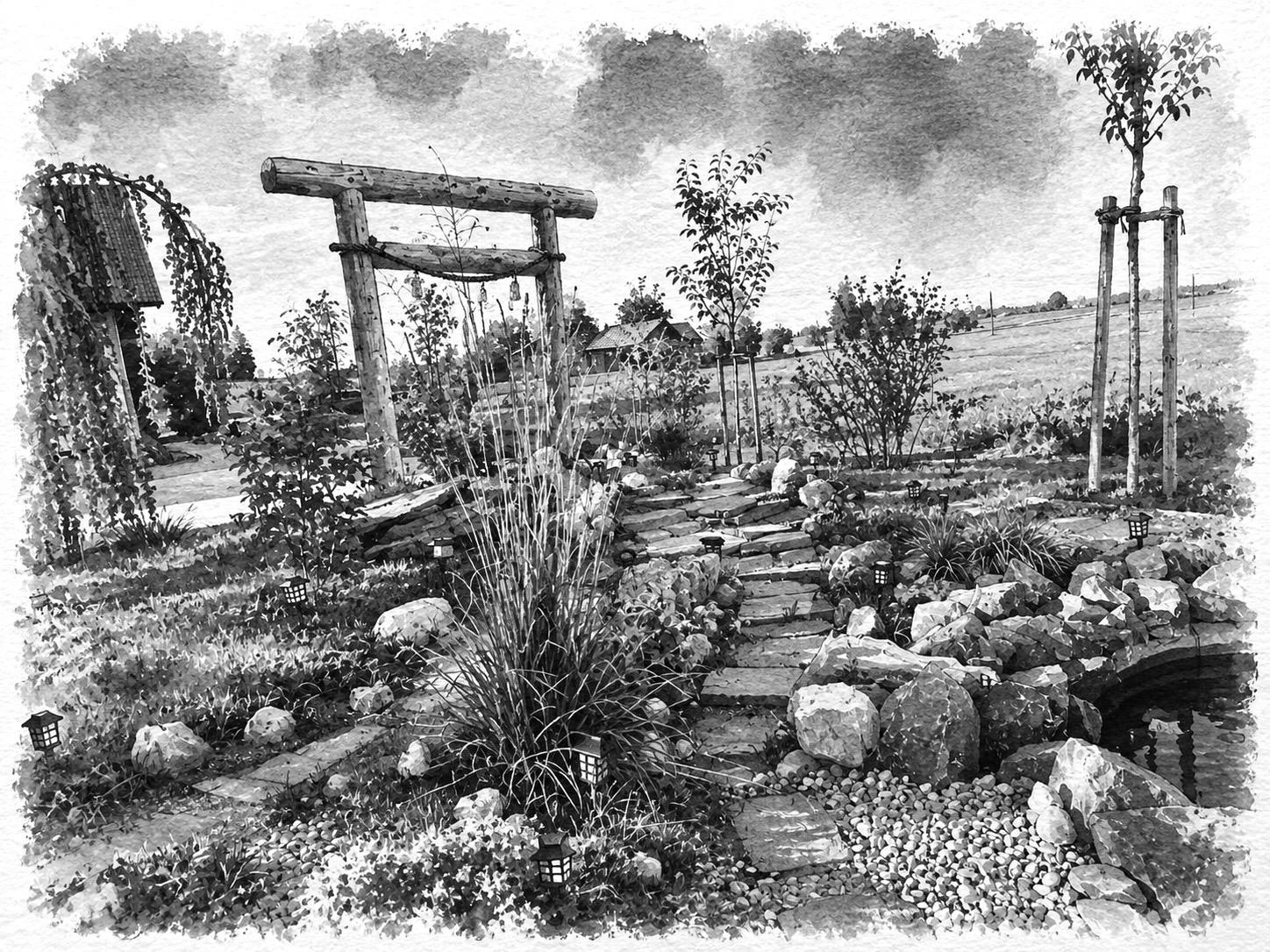
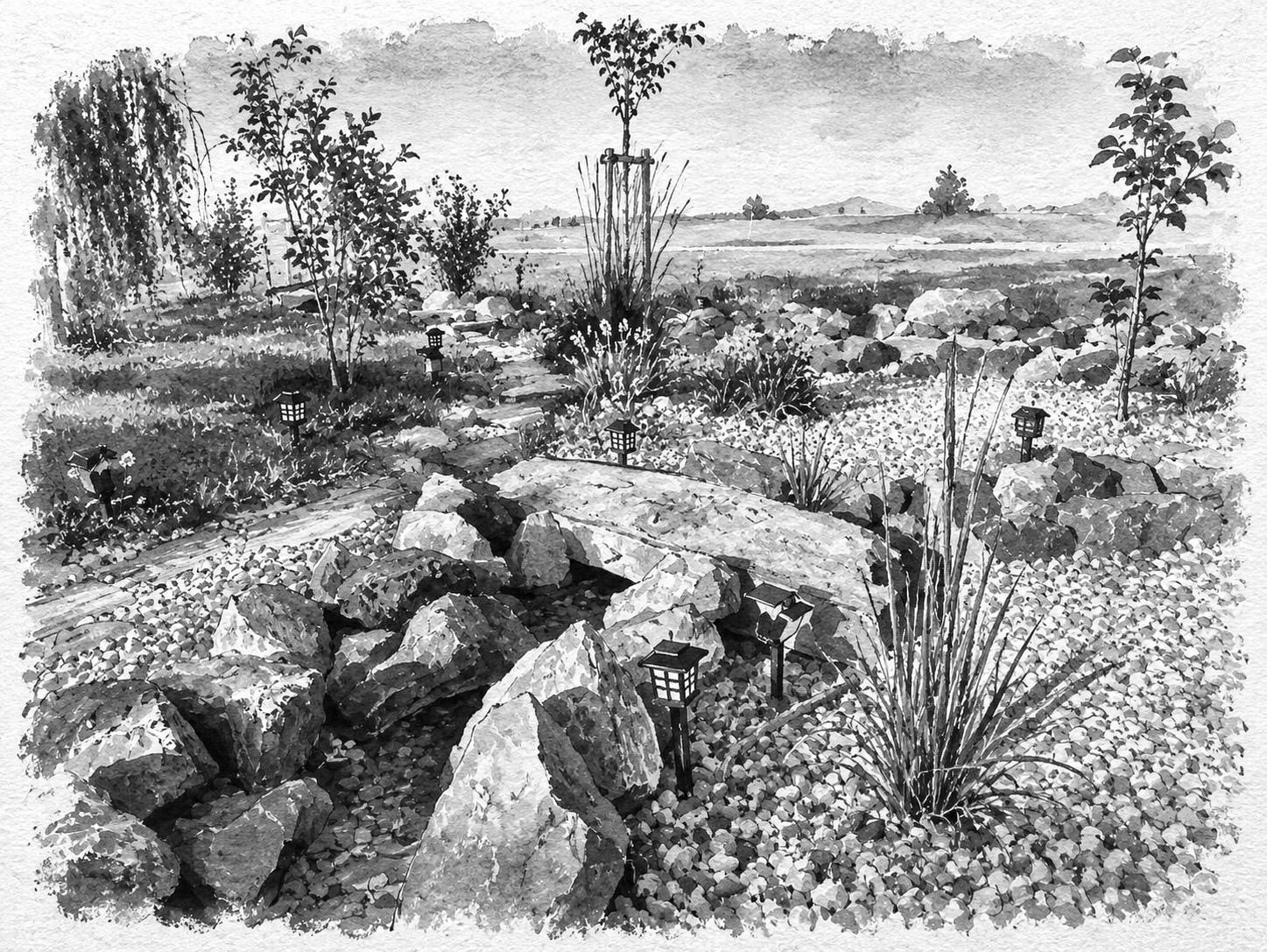
Winding natural stone paths lead visitors through the garden’s various scenes and viewpoints. Along the way, a gently flowing stream, a koi pond, carefully arranged rock formations, and a wide variety of trees, shrubs, and flowering plants create an environment that constantly changes throughout the year yet remains harmonious in every season. Although inspired by traditional Japanese garden design, the landscape also draws heavily on the natural beauty of the Allgäu region itself. The rock formations, terraced levels, and layered stone arrangements take their inspiration from the mountains, valleys, and geological features that define the surrounding area, thereby creating a unique synthesis of Japanese aesthetics and the local landscape.
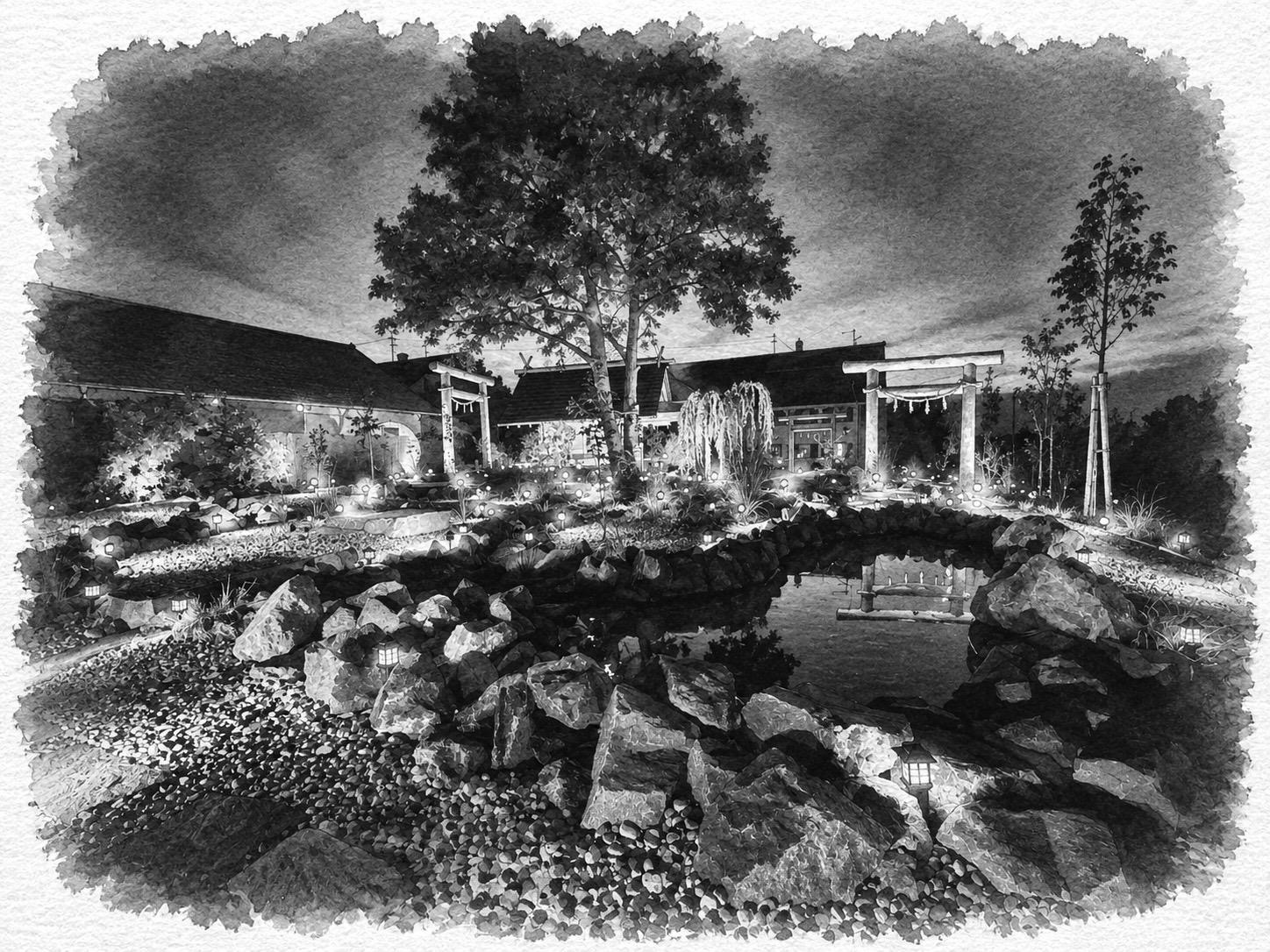
One of the most popular times to visit Kokuryū-En is during hanami (flower viewing). Because Albisried is situated at an elevation of 809 meters above sea level at the foot of the Alps, spring arrives later there than in many other parts of Germany, allowing visitors to enjoy the blooming season from mid-April to mid-May. During this time, numerous sakura (Japanese cherry trees), fuji (Japanese wisteria), and lilacs transform the garden into a landscape filled with color and fragrance. Each season holds its own unique charm: summer brings lush greenery and a lively pond; autumn bathes the garden in brilliant shades of red and gold; and winter reveals a quieter beauty, as winter-blooming plants bring life and color to the landscape even during the coldest months.
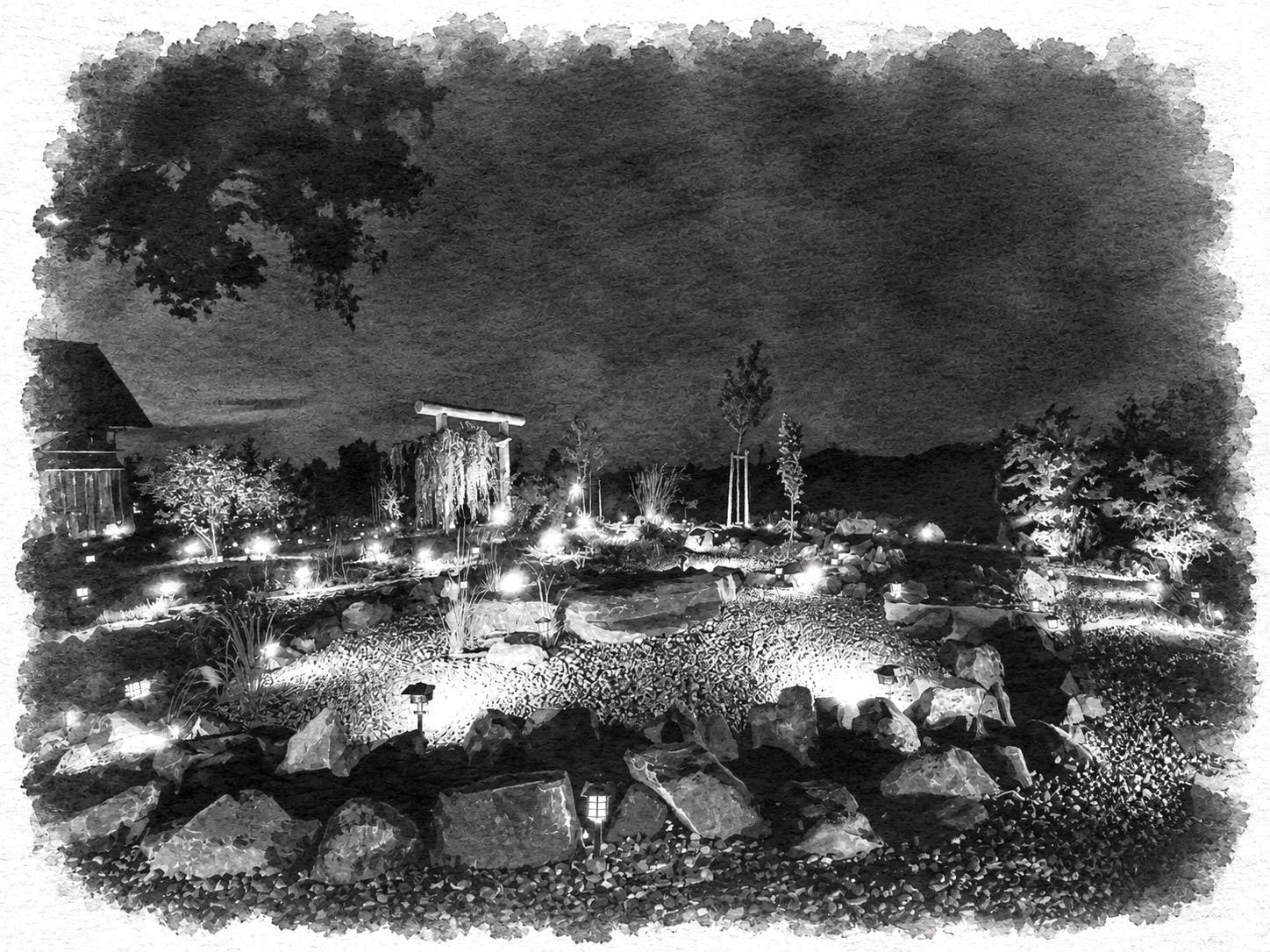
Situated on an island within the flowing stream of Kokuryū-En is the Enmei-Seki (Stone of Perfect Clarity). Surrounded by the sound of running water and the garden's serene beauty, it serves as a place for mokusō (silent meditation), offering visitors an opportunity for quiet reflection and contemplation amidst nature. The term Enmei (perfect clarity) embodies the ideal of a mind that is unhindered, calm, and illuminated by insight. In keeping with this symbolism, the Enmei-Seki provides a secluded spot to cultivate inner stillness while reflecting on the harmony between the natural and spiritual worlds—a harmony that Kokuryū-En seeks to embody.
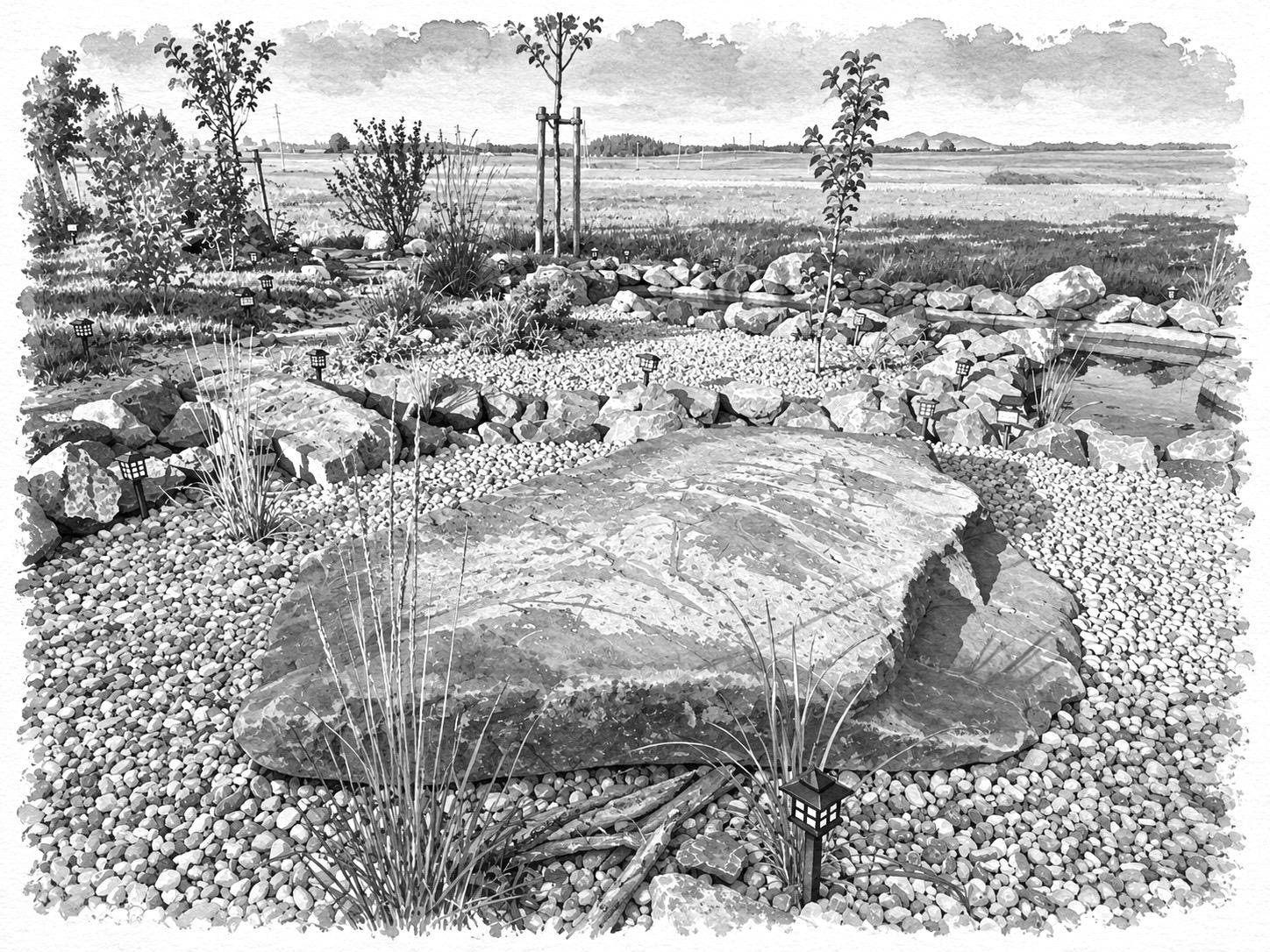
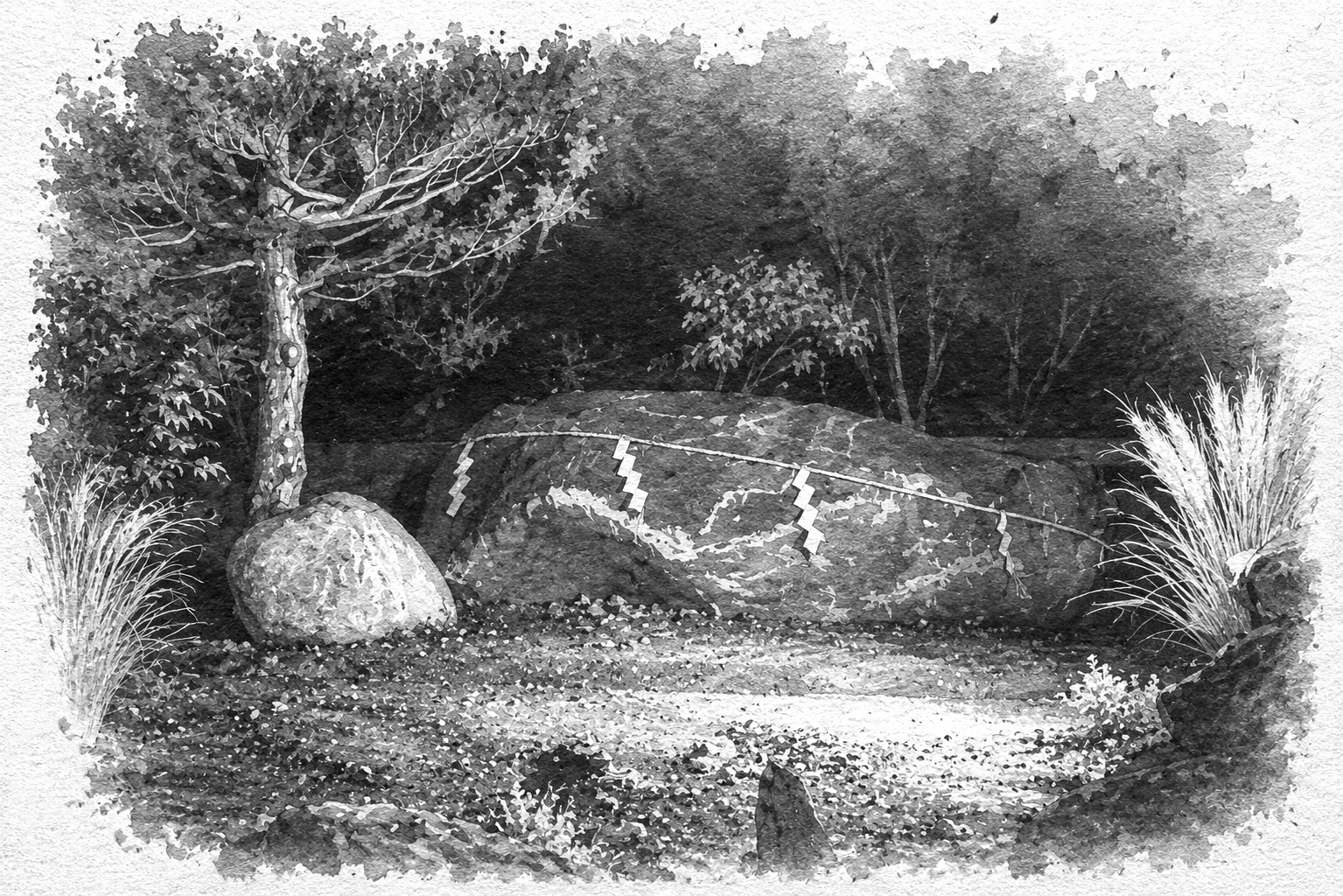
To the right of the main hall of Hokushin-Jinja stands the Genbu-Seki (Genbu Stone), from which the garden itself takes its name. This iwakura (a sacred rock serving as a dwelling place for a deity) is a massive rock formation revered within Shinto—Japan’s indigenous nature religion—as a site where a kami (deity) reveals itself and resides. Iwakura represent one of the oldest forms of worship in Japan—predating the construction of shrine buildings—and reflect the ancient belief that the divine is present within the natural world itself. Revered as a natural yorishiro (an object capable of attracting the presence of a deity), it serves as a site where the divine presence of Genbu (the Black Warrior of the North) can manifest within the garden landscape. Adorned with a shimenawa (sacred rope) and shide (zigzag paper streamers) that mark the divine, the Genbu-Seki is regarded as a natural shrine dedicated to the celestial guardian of the northern sky. Its enduring form symbolizes the steadfastness, strength, and protective power traditionally associated with Genbu.
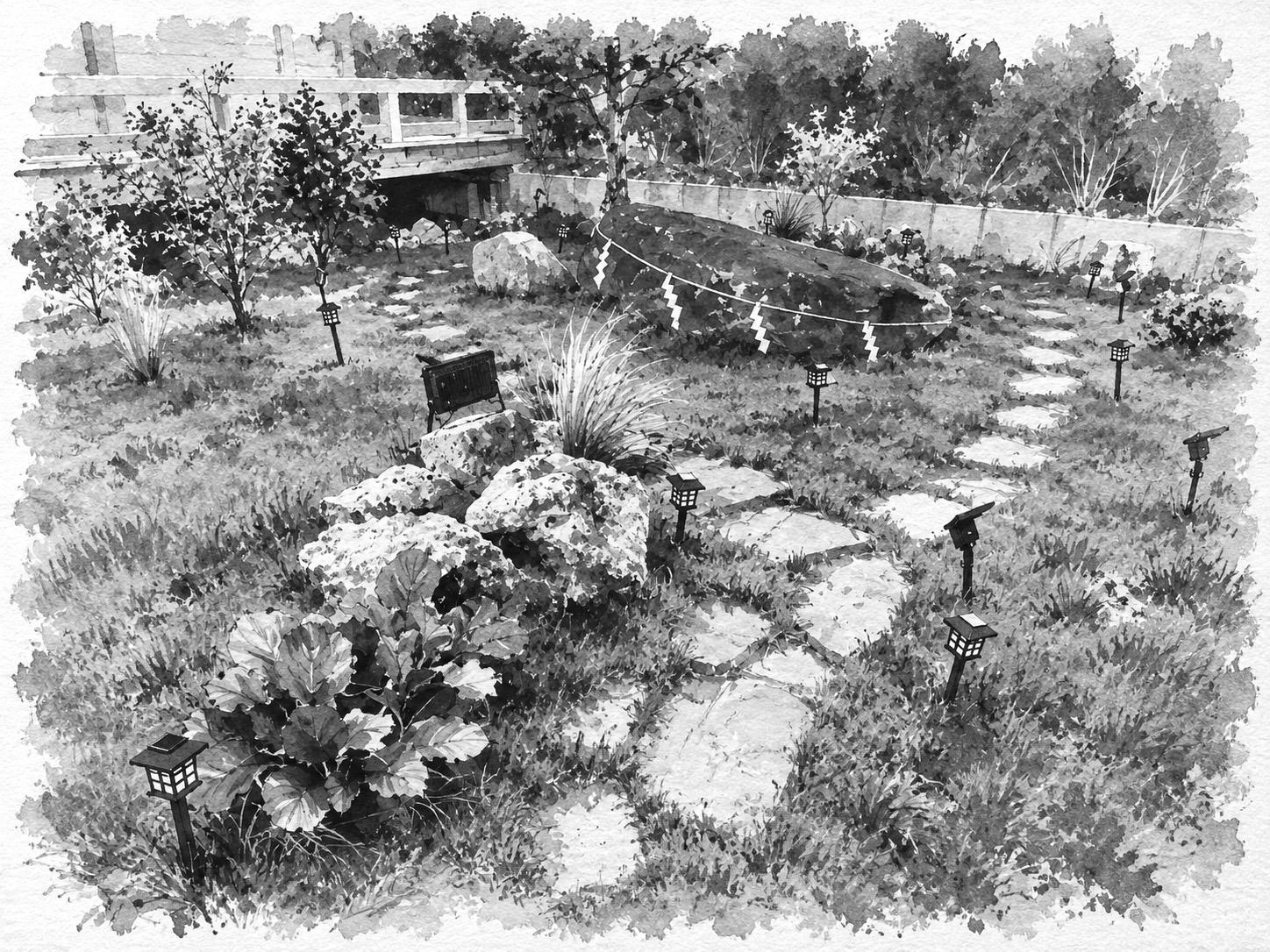
Among the many features of the Kokuryū-en is the Kengō no Yu (Bath of the Sword Masters / 剣豪の湯), a secluded area dedicated to relaxation, recovery, and contemplation. Situated within the tranquil surroundings of the garden, it features a rotenburo (hot open-air bath / 露天風呂), a mizuburo (cold-water bath / 水風呂), a sauna, and a relaxation area. Reserved for the private guests, the Kengō no Yu (Bath of the Sword Masters / 剣豪の湯) offers a place to unwind amidst the beauty and serenity of the Kokuryū-en. Inspired by the long-standing Japanese tradition of combining physical well-being with mental and spiritual renewal, it provides a peaceful retreat where guests may enjoy the restorative qualities of nature while reflecting upon the harmony and tranquillity embodied throughout the sacred landscape of the garden.
The garden owes its beauty and distinctive character to the vision, dedication, and tireless work of Ōtsuka Eriko Taira no Masayuki (born 1993), who designed and created the garden herself and continues to tend it with unwavering devotion. Through countless hours of labor and a deep connection to both Japanese garden traditions and the natural world, she has transformed the site into a living sanctuary whose beauty grows with the changing seasons. Her attention to detail is evident in every corner of the garden, from the meticulous placement of stones and plants to the harmonious balance that unites the entire landscape. Without her extraordinary commitment, Kokuryū-En would not exist in its current form.
Today, the Kokuryū-en offers visitors a rare opportunity to experience the atmosphere of a traditional Japanese garden in the heart of the Allgäu. Together with the Hokushin-Jinja, it forms a unified sacred landscape where Japanese tradition and Bavarian nature, spirituality and beauty, exist in harmonious balance.